


Industrial Station Clock
An industrial station clock brings robust utility and substantial scale to a modern interior, offering a distinct mechanical presence drawn from railway and municipal heritage.
Industrial Station Clock
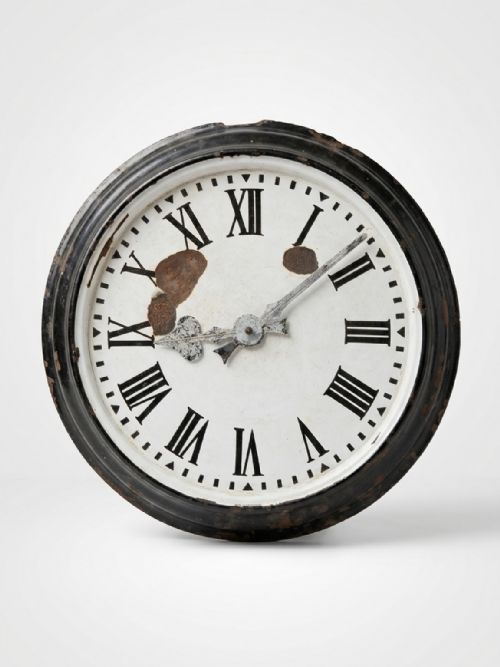
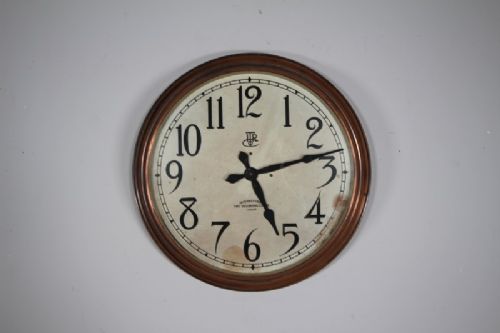
An industrial station clock encompasses large wall-mounted timepieces and architectural dials originating from public transport hubs, factories, and municipal buildings. The examples seen on this page span several decades, featuring pieces from the Victorian era, the Edwardian period, and the mid-twentieth century.
Buyers frequently encounter robust wall clocks and oversized clock dials reflecting British and French utilitarian design. These pieces often bear the marks of railway companies, post offices, and industrial manufacturers, maintaining their original functional character.
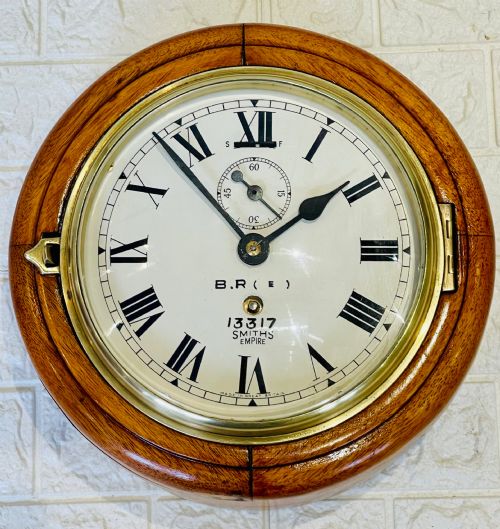
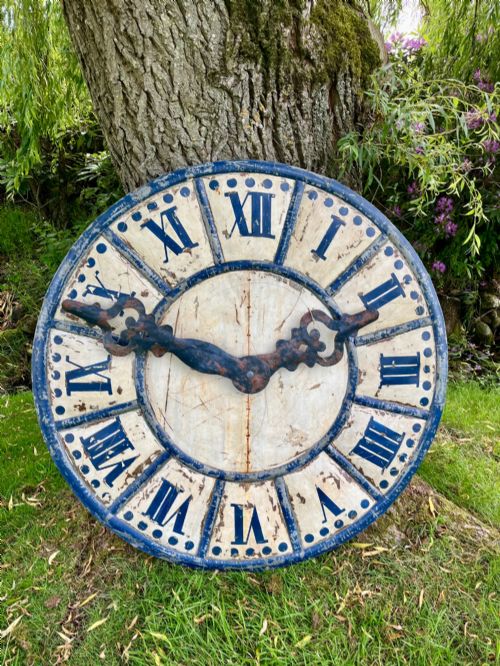
The selection ranges from traditional fusee dial mechanisms to double-sided factory units and massive tower clock faces. Materials and formats vary from crisp enamel dials set in metal frames to substantial timber surrounds.
Materials and Construction
These timepieces were built using durable metals such as iron, steel, and brass to withstand heavy public use and industrial environments. Glass protected the vital dials, whilst robust timber surrounds in oak or mahogany housed the more refined fusee movements.
Enamel played a central role in the creation of large outdoor and station dials, providing a clear, legible surface that resisted weathering. Bakelite appears in later mid-century iterations, marking a shift toward modern moulded polymers in utilitarian design.
Some double-sided factory clocks allowed workers to check the hour from opposite ends of a long workshop floor.
Assessing Quality and Authenticity
Quality in these large timepieces rests in the integrity of the original components and the clarity of the dial face. Original enamel work and unaltered hands distinguish a piece that served in an active municipal setting from later reproductions or heavily modified examples.
The calibre of the movement, whether a specialised fusee mechanism or an electric conversion, dictates the mechanical sophistication of the piece. Heavy metal bezels, substantial casting, and intact maker signatures elevate the standing of an individual clock.
Joyce Whitchurch·John Walker·Gents of Leicester·Smiths Sectric
The Industrial Station Clock Glossary
- Fusee dial
- A clock movement featuring a cone-shaped pulley that ensures even tension on the chain as the mainspring unwinds, commonly found in railway timepieces.
- Clock dial
- The visible face of the timepiece where numbers and markers indicate the hours, often preserved independently as architectural salvage.
- Enamel
- A glassy substance fused to metal under high heat, providing a durable, wipe-clean surface for large public clock faces.
- Architectural salvage
- Building elements and fixtures rescued from structures slated for demolition, including massive tower clock faces and station fittings.
Industrial Station Clock: Frequently Asked Questions
Where were these clocks originally used?
These timepieces hung in busy railway termini, post offices, municipal buildings, and large factories where precise timekeeping was essential for public operations. Their heavy construction allowed them to endure decades of constant vibration and public exposure.
Many bear specific regional railway stampings or institutional names, reflecting their deployment across vast transport and civic networks during the nineteenth and twentieth centuries.
How do I mount a heavy wall clock safely?
Due to the substantial weight of cast iron frames, thick glass, and hardwood surrounds, these clocks require direct fixing into masonry or structural timber studs. Professional installation ensures the wall brackets can bear the considerable load securely.
Positioning the clock at a height that complements its scale allows the dial to become a focal point within the room without overwhelming the surrounding space.
Are these clocks still in working order?
Many retain their original mechanical movements, whilst others have been fitted with modern movements for reliable daily timekeeping without the need for manual winding. Mechanical versions require regular maintenance by a specialist to keep the gear trains functioning smoothly.
Checking individual listings clarifies whether a piece maintains its historical mechanism or operates on a contemporary electrical system.
How do I distinguish between different periods?
Victorian and Edwardian examples often feature classic timber surrounds and traditional fusee movements, whereas pieces from the nineteen-thirties and nineteen-fifties lean toward streamlined metal housings and early electric mechanisms. Materials also shift over time, moving from heavy brass and mahogany toward industrial steel and moulded Bakelite.
Design cues on the dial face, such as font styles and company ciphers, help pinpoint the era of manufacture.