
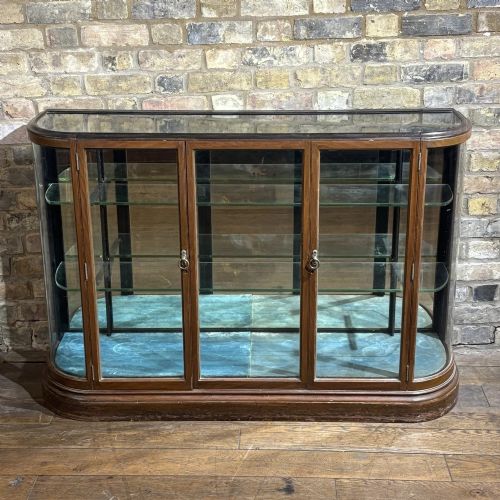


Commercial Retail Counter
A commercial retail counter organises trade and displays goods, bringing tactile presence and authentic period utility to domestic and commercial spaces alike.
Commercial Retail Counter
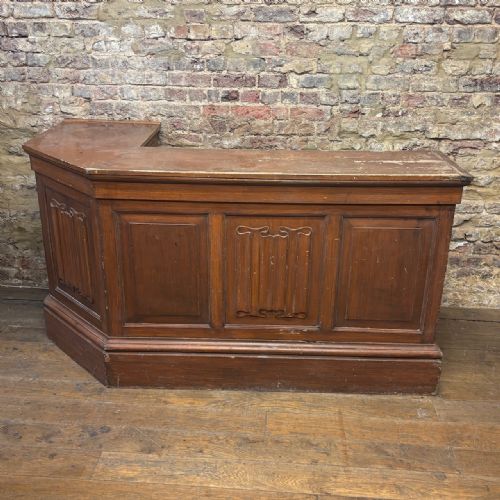
A commercial retail counter encompasses heavy timber shop fittings, glazed display cabinets, serving counters and specialised drapers units designed for trade. These items originate from the nineteenth century, the Edwardian era and the interwar decades up to the 1930s.
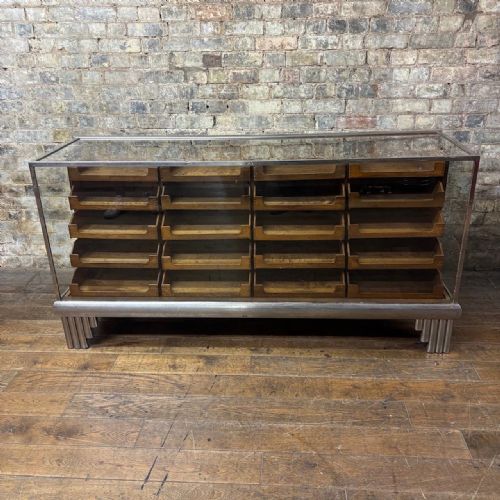
The versions most frequently encountered on this page include mahogany and oak shop counters, glazed countertop display cases, and bank of drawer units from Victorian and early twentieth century commercial premises.
Materials and construction
Construction relies heavily on sturdy timbers such as mahogany, oak and pine, often joined with robust cabinetry techniques suited to heavy daily use in shops. Glazed sections utilise large panes of glass supported by timber frames, brass or aluminium, while interiors occasionally incorporate mirrored backings.
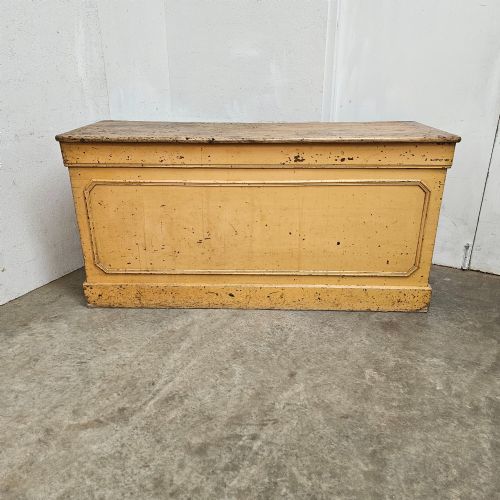
Specialised trade pieces integrate specific metals and finishes, including chrome, bronze, brass framing and original painted surfaces. Details such as panelled sides, bow ends and fitted interior shelving define the architectural character of these counters.
Listings feature items spanning the 19th century through the 1930s, constructed from mahogany, oak, pine, brass, aluminium and glass.
Defining qualities
The distinction between standard utility items and finer examples rests on the sophistication of the timber, the presence of original branded details, and the integrity of the glazing and hardware. Superior pieces exhibit well-figured mahogany or oak, crisp commercial signage, and specialised configurations like pentagonal shapes or mirrored interiors.
Makers and shopfitters of note bring an elevated level of design and structural joinery that separates standard regional joinery from branded retail architecture of the period.
Dudley & Co·G H Gledhill Halifax·John Stow Ltd of Bradford·F. Sage & Co. London·Saml. Elliott & Sons·QUINCY SHOWCASE WORKS ILLINOIS·E. Pollard & Co. Ltd.
The Commercial Retail Counter Glossary
- Haberdashery counter
- A low timber shop counter traditionally fitted with numerous shallow drawers for storing textiles, ribbons and small wares. These units often feature glazed tops or panelled fronts.
- Countertop display cabinet
- A smaller glazed showcase designed to sit upon a main retail counter to protect confectionery, tobacco or jewellery from handling while remaining visible to customers.
- Bow end
- A curved convex end section found on display cabinets and counters, softening the rectangular geometry of the shop interior.
- Drapers counter
- A long timber serving or cutting table originating from nineteenth century cloth merchants, typically built from pine or mahogany with generous work surfaces.
Commercial Retail Counter: Frequently Asked Questions
What is a commercial retail counter?
A commercial retail counter is a piece of antique shop furniture designed for trading, serving, or displaying goods in Victorian and early twentieth-century shops. These range from heavy timber drapers counters to glazed tabletop display cabinets.
They were built by commercial outfitters to withstand the rigours of daily retail trade while presenting merchandise attractively to the public.
How were these counters used originally?
Shopkeepers utilised these counters to separate the working staff area from customers while serving goods, wrapping purchases, or showcasing confectionery and dry goods.
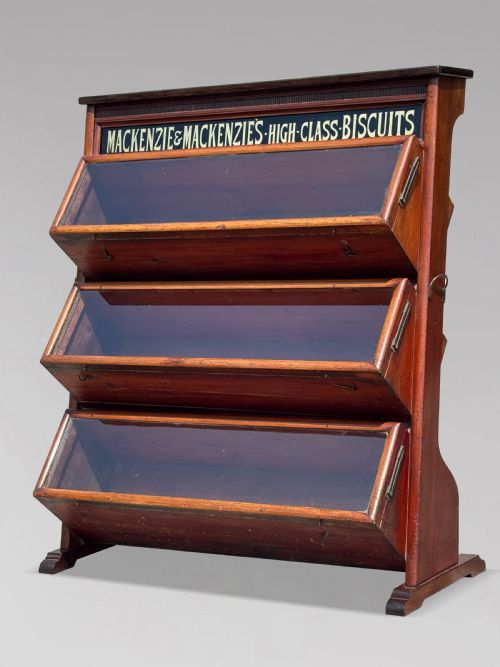
Specialised variants like haberdashery units stored small textiles in banks of drawers, while advertising cabinets promoted specific chocolate, biscuit or pharmaceutical brands directly to shoppers.
How do I fit a shop counter at home?
These counters work effectively as kitchen islands, sideboards, or central display tables in large domestic rooms. Their deep drawers and glass tops offer practical storage and display space.
Placing them in open-plan areas allows the period timber and glazed panels to function as room dividers or focal points.
How do I identify the period of a counter?
Dating relies on timber choices, hardware materials, and stylistic cues such as Victorian joinery, Edwardian proportions, or Art Deco legs from the 1930s. Branded maker plates and advertising signage also provide direct evidence of manufacture.
Later twentieth-century examples often incorporate aluminium framing or chrome, contrasting with the solid mahogany and oak of the nineteenth century.