


Commercial Glass Cabinet
A commercial glass cabinet brings practical shop retail presence into a domestic interior, housing collections behind clear glazing.
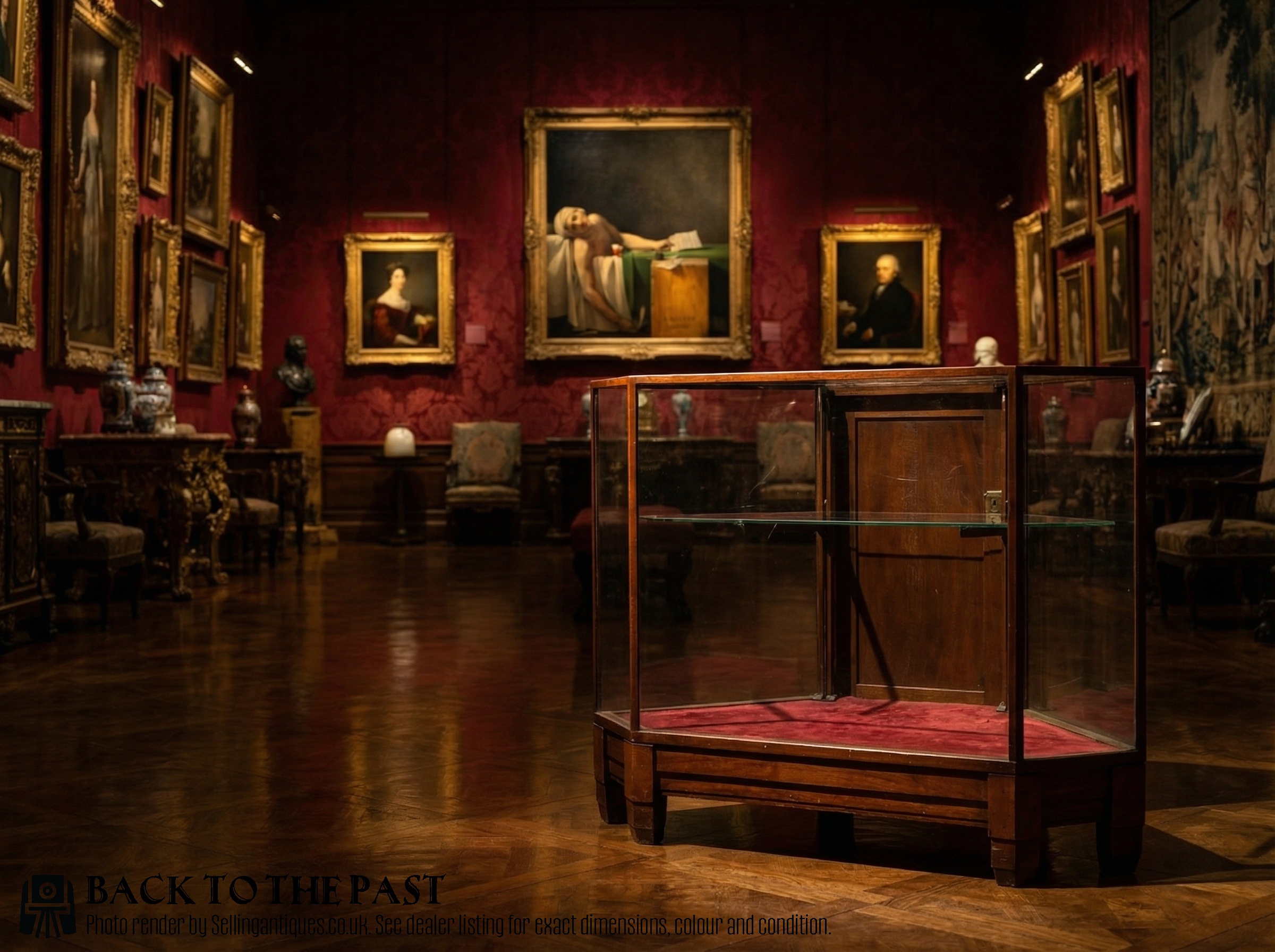
Commercial Glass Cabinet
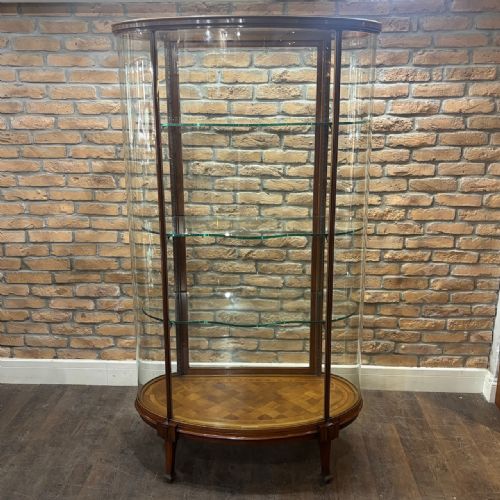
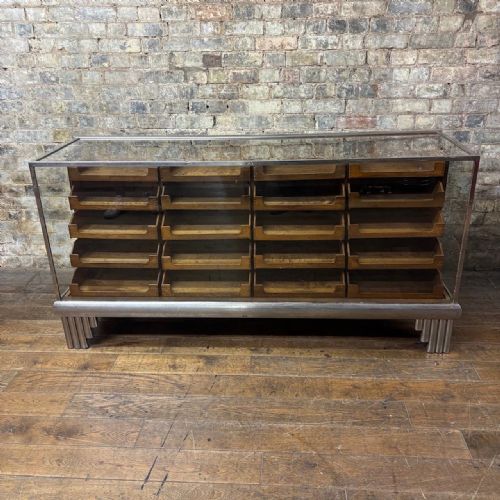
When you search for a commercial glass cabinet, you encounter display counters, haberdashery cabinets, and shop vitrines originally built for retail trade. The selection runs from late Victorian table top cases to 1930s floor-standing counters and wall units.
Mahogany remains the dominant timber across the Victorian, Edwardian, and Art Deco periods, accompanied by oak, brass, chrome, and aluminium framing. Specific makers and retailers supplied everything from chemist shops to drapers and confectioners.
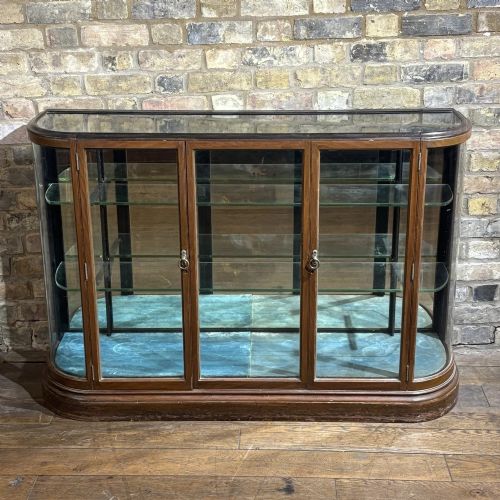
The layout typically combines heavy glazing with timber bases, mirrored interiors, and fabric linings, designed to draw light across merchandise.
Materials and construction
Makers utilised solid mahogany and oak for structural carcasses, jointed to bear the weight of heavy plate glass panels and mirrored backs. Brass, chrome, and aluminium framing emerged on later 1920s and 1930s examples to support cleaner industrial profiles.
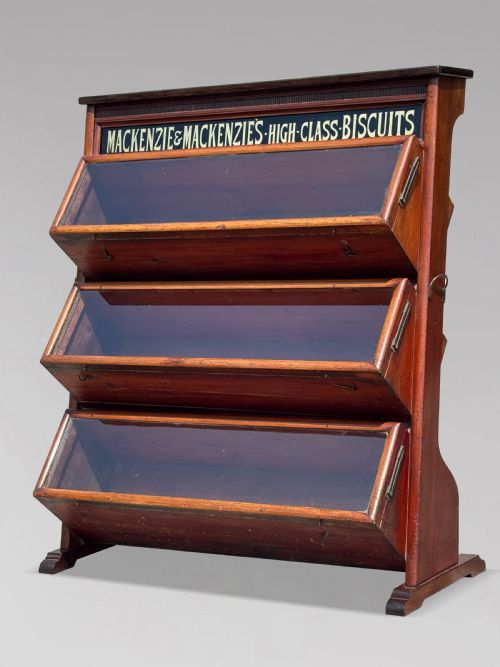
Interiors frequently incorporated velvet or fabric lining alongside adjustable shelving systems. Cabinet makers applied hand sign-writing directly to glass or timber fascias for chocolate, pharmacy, and gunsmith brands.
Several cabinets retain their original chocolate branding, ready to tempt visitors just as they did in Edwardian sweet shops.
Judging quality
Distinction lies in the original commercial joinery, such as bentwood bow ends, precise mitred metal framing, and heavy brass hardware. Maker plates from established shopfitters indicate workshop pedigree.
The proportion of timber to glass and the presence of original mirrors or branded advertising panels elevate the architectural character of the piece.
F. Sage & Co·Dudley & Co·John Stow Ltd·Saml. Elliott & Sons·E. Pollard & Co. Ltd·Quincy Showcase Works
The Commercial Glass Cabinet Glossary
- Haberdashery cabinet
- A specialised retail storage unit containing multiple shallow drawers with glass fronts, originally designed for textiles and sewing accessories.
- Bow end
- A curved glass or timber termination at the corner of a counter or display case, softening the rectangular geometry.
- Shop vitrine
- A freestanding glazed cabinet intended for the display of fine goods, utilising glass on multiple sides for maximum light.
- Countertop display
- A smaller scale cabinet designed to sit upon a main retail serving counter for impulse purchases.
Commercial Glass Cabinet: Frequently Asked Questions
How do I style a commercial glass cabinet at home?
These cabinets provide deep shelving and bright glass enclosures that suit ceramics, books, or collections. Their retail proportions anchor a dining room or hallway effectively.
Keep the surrounding furniture simple to let the structural timber and polished glazing remain the focal point of the room.
What periods do these shop counters come from?
The available stock spans from the mid nineteenth century through the Edwardian era and into the 1930s Art Deco period. Victorian and Edwardian examples lean heavily toward polished mahogany with traditional joinery.
Later pieces from the 1920s and 1930s introduce chrome, aluminium, and simplified geometric legs associated with modern commercial design.
Are the advertising signs on the glass original?
Many cabinets feature hand sign-writing for historical brands like Fry's, Cadbury's, or local chemists, applied during their working retail life. Some inscriptions date to the original manufacture, while others reflect subsequent commercial use.
Examining the paint adherence and wear around the lettering helps determine whether the branding dates to the active shop period.
How do I clean and maintain the glass and wood?
Use standard glass cleaner on the interior and exterior panels, taking care near painted advertising script or mirrored backs. Feed the mahogany or oak timber frames with appropriate wax to preserve the finish.
Check the sliding or hinged doors periodically to ensure the brass tracks and hinges remain free of dust.