




Mahogany Glass Counter
A mahogany glass counter serves as a commercial display case, combining glazed timber framework with clear panes to showcase retail goods.
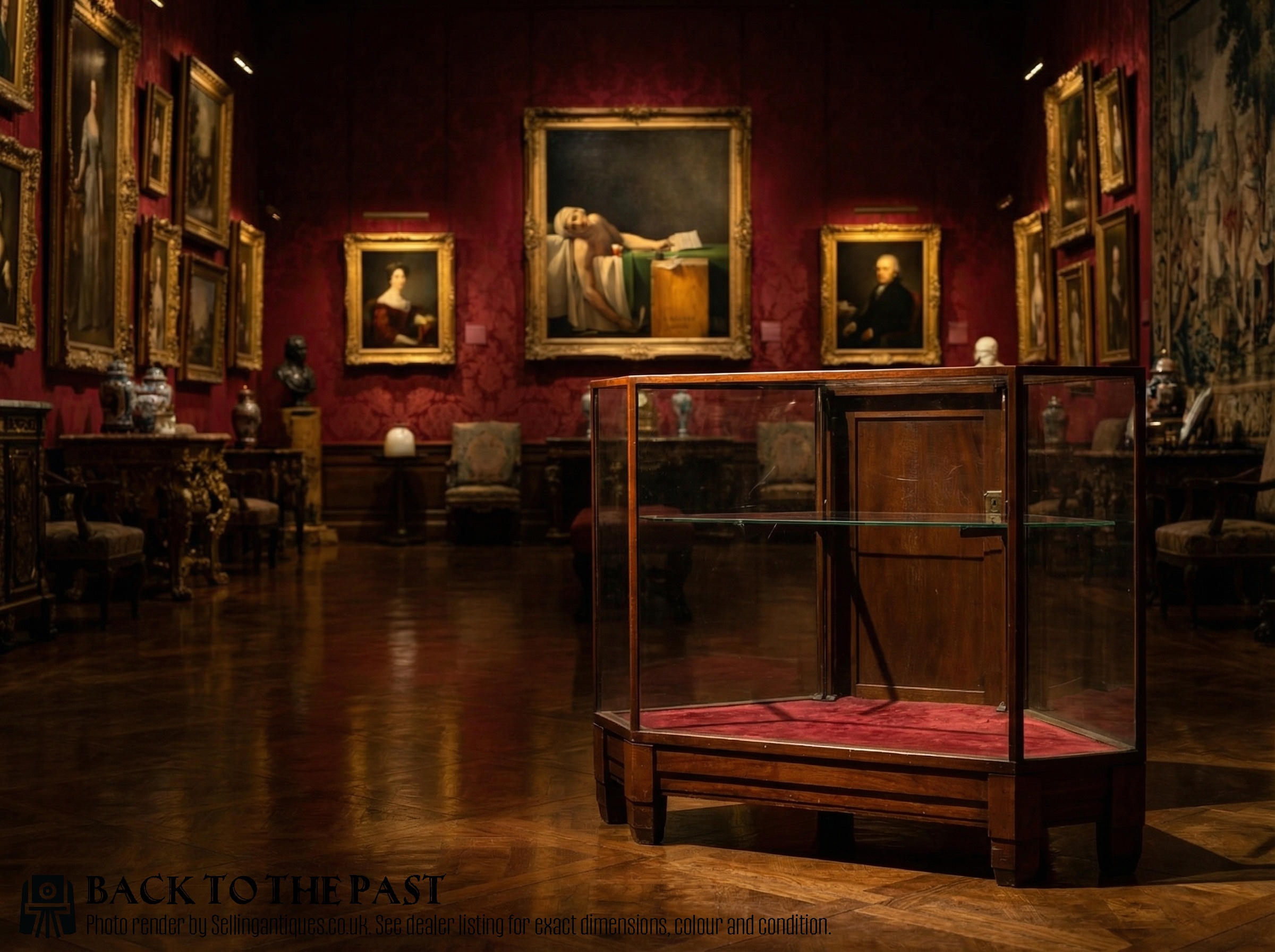
Mahogany Glass Counter
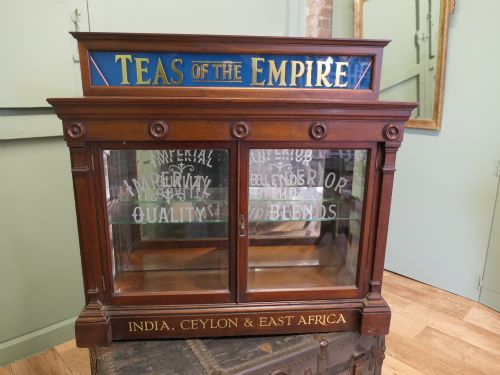
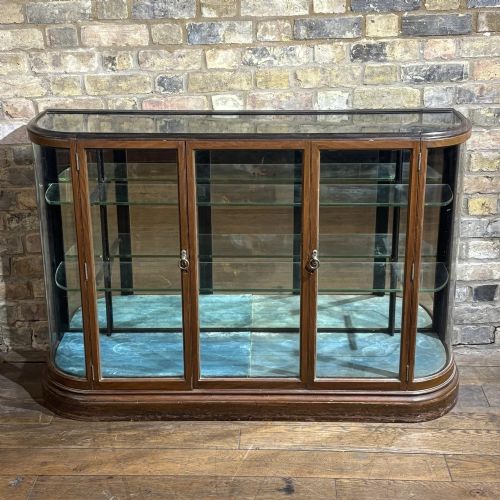
A mahogany glass counter is a specialised retail fixture designed for merchants to exhibit goods while keeping merchandise secure behind transparent panes. These units span tall freestanding display cabinets, countertop showcases, and long shop serving counters intended for commercial interiors.
The selections encountered here originate from the Victorian and Edwardian eras, extending into the 1920s and 1930s commercial periods. Buyers frequently encounter tabletop display cases and bow fronted shop counters produced by notable commercial shopfitters of the nineteenth and early twentieth centuries.
How they were made
Makers constructed the primary framework using solid mahogany and hardwood timbers, often framing large expanses of clear glass panels to maximise interior visibility. Structural integrity relied on precision joinery, reinforced by brass fittings and occasionally mirrored interior backs to reflect light across displayed items.
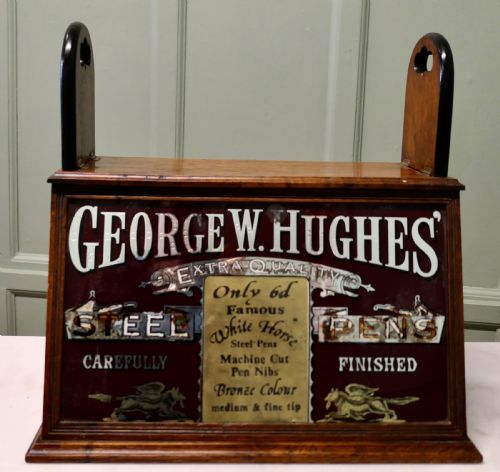
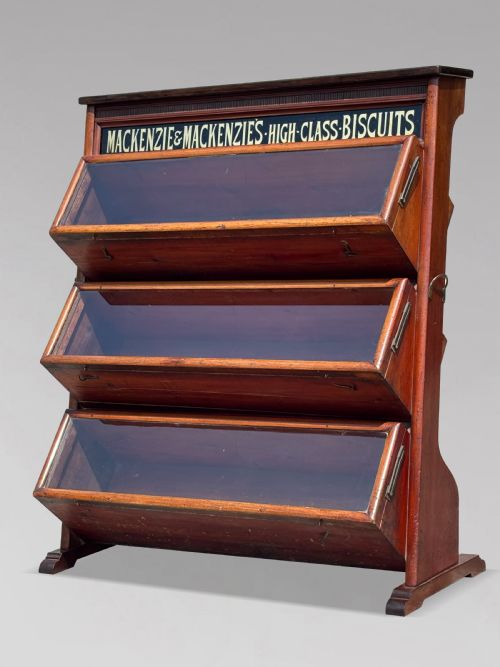
Interior shelving utilised glass or matching timber, while internal linings incorporated velvet, felt, or fabric surfaces suited for delicate wares. Cabinets intended for specific merchants featured painted advertising signage directly onto glass panels or wooden friezes.
Mahogany Glass Counter Retail Price Guide 2026
Typical asking prices for mahogany glass counter among the pieces listed under this phrase on Sellingantiques today, from the lower quarter to the upper quarter. They describe what is for sale here now, not the wider market.
Several counters retain surviving sign-written advertisements for cocoa and chocolates, preserving the exact sweetshop temptations of a century ago.
What varies in quality
Quality rests upon the structural ambition of the timber framework and the scale of the glazed surfaces, distinguishing standard commercial furniture from bespoke mercantile fittings. Pieces featuring curved bow ends, pentagonal geometries, or specialised maker branding demonstrate superior workshop execution.
The integration of original bevelled mirror panels, robust brass hardware, and specialised internal tiering elevates the standard of construction. Simpler utilitarian counters contrast with sophisticated Louis XVI Revival or Adam style architectural detailing found on high-end retail showcases.
F. Sage & Co.·John Stow Ltd of Bradford·Pollards·E. Pollard & Co. Ltd.
The Mahogany Glass Counter Glossary
- Vitrine
- A glass display cabinet used primarily for exhibiting fine objects or merchandise. These enclosures protect contents while offering all-around visibility through glazed panels.
- Haberdashery cabinet
- A multi-drawer retail storage unit designed for textiles and small dry goods. They often incorporate glass fronts or glazed drop-down compartments for stock visibility.
- Bow end
- A curved cabinet termination shaped in a convex sweep. This curved glass technique softens linear shop interiors and enhances display angles.
- Shopfitter
- A commercial contractor specialising in the interior layout and cabinetry of retail premises. Firms like F. Sage and Co. built standardised counters and display cases for chemists, drapers, and confectioners.
Mahogany Glass Counter: Frequently Asked Questions
Where were mahogany glass counters used?
These fixtures populated nineteenth and twentieth-century retail environments, including drapers, chemists, tea rooms, and sweet shops. Merchants utilised them to present confectionery, tobacco, sewing cottons, and pharmaceuticals.
Today, these units adapt easily to domestic interiors for displaying collections, serving as kitchen islands, or functioning as hallway display furniture.
How do I identify the period?
Dating relies on architectural styling, timber patination, and construction methods. Victorian examples display heavier proportions and simpler glazing, whereas Edwardian and 1920s pieces often incorporate refined neoclassical details or specialised commercial branding.
Manufacturer plaques, patent brass hinges, and surviving sign-written advertisements for period brands like Fry's or Rowntree's provide precise chronological markers.
Are the glass panels original?
Many surviving counters retain their original float or cylinder glass panes, identifiable by minor surface ripples and tiny air bubbles within the material. Replacement panes appear in clear modern glass during restoration work.
Inspecting the putty lines and interior rebate joints helps determine whether the glazing dates to the original manufacture of the cabinet.
How do I care for the timber?
Maintain mahogany surfaces by applying natural beeswax sparingly to preserve the depth of the grain and the rich reddish-brown colour. Avoid placing furniture in direct sunlight to prevent timber fading and fabric lining degradation.
Keep glass panels clean using standard non-abrasive glass cleaner applied to a cloth rather than sprayed directly near antique wooden joints.