
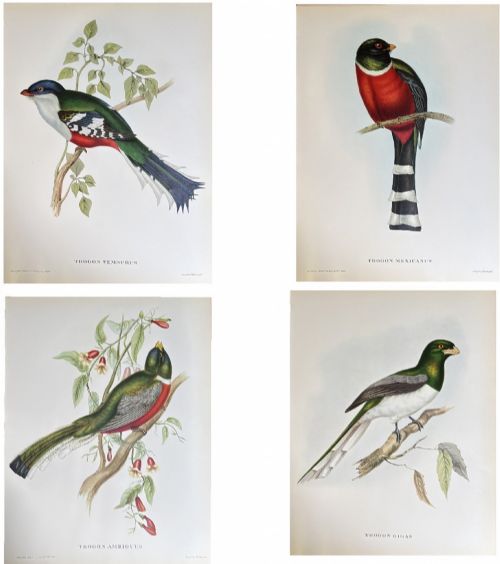
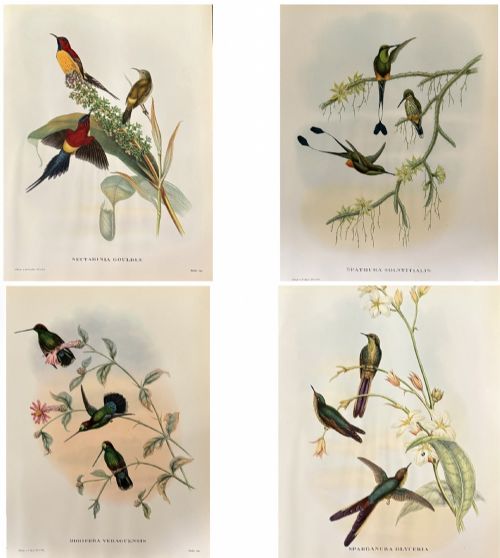
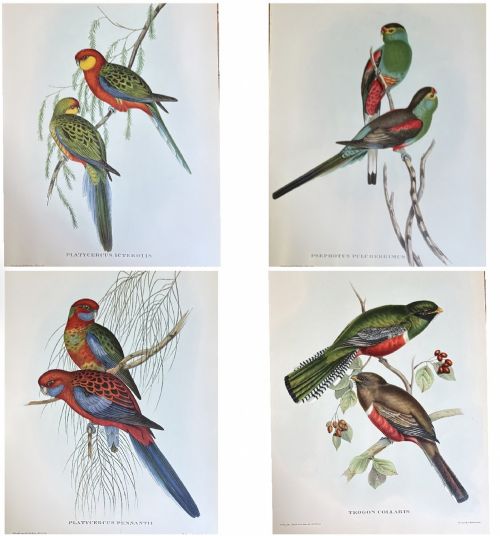
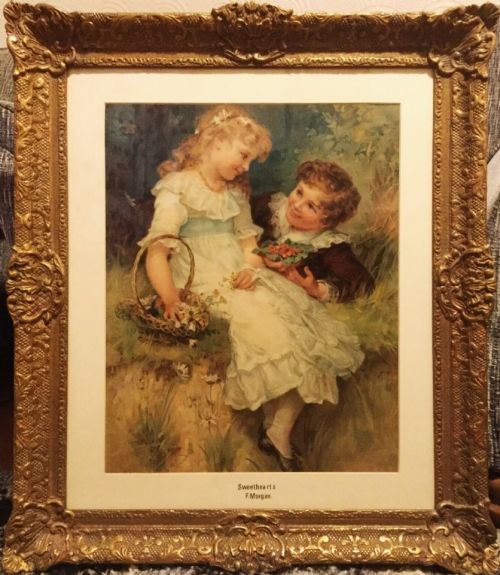


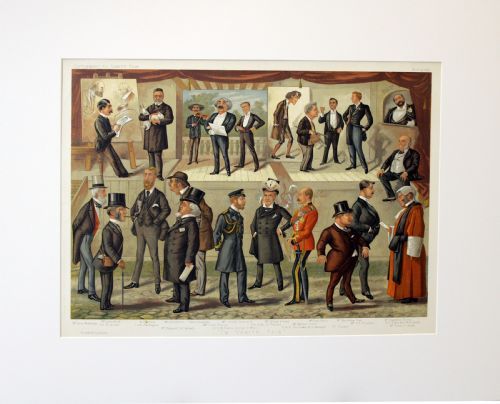


Coloured Victorian Lithograph
A coloured victorian lithograph brings vivid nineteenth-century printmaking into your rooms with hand-finished pigments and detailed social history.
Coloured Victorian Lithograph
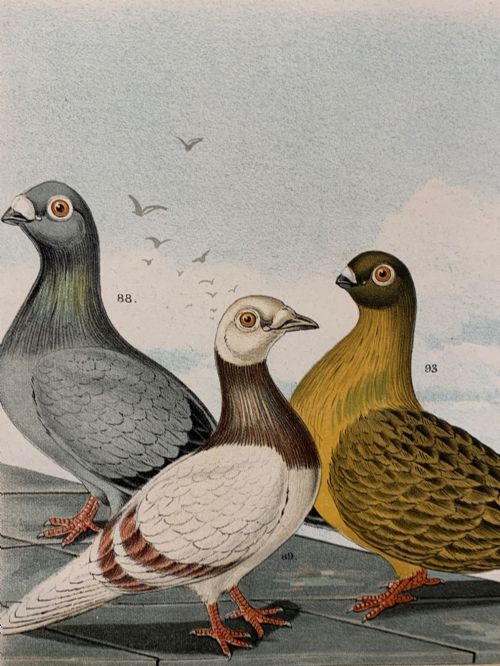
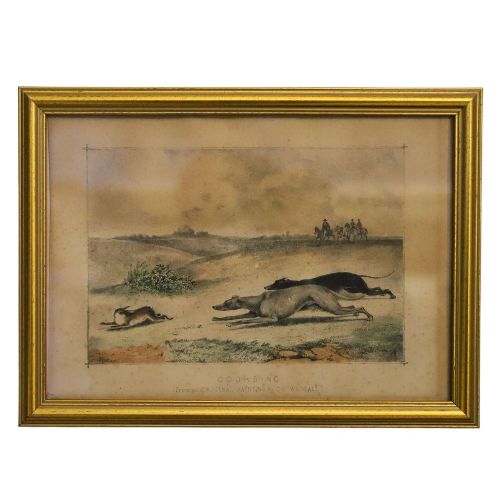
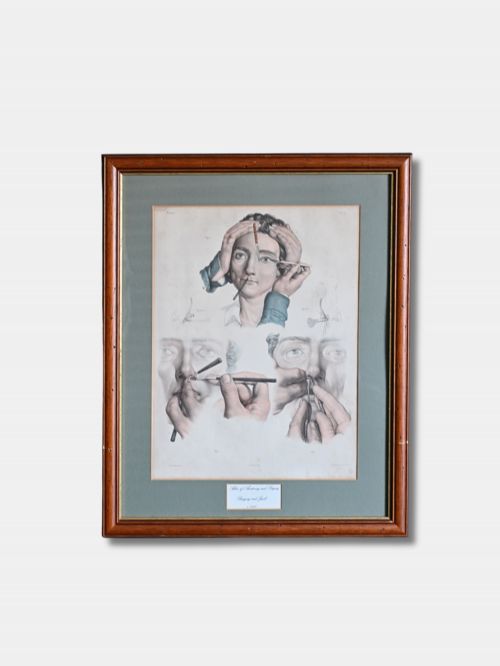
When you search for a coloured victorian lithograph, you encounter framed art and antique prints depicting natural history, sporting scenes, and portraiture. These works span nineteenth-century production, capturing everything from ornithology to theatrical melodrama on paper.
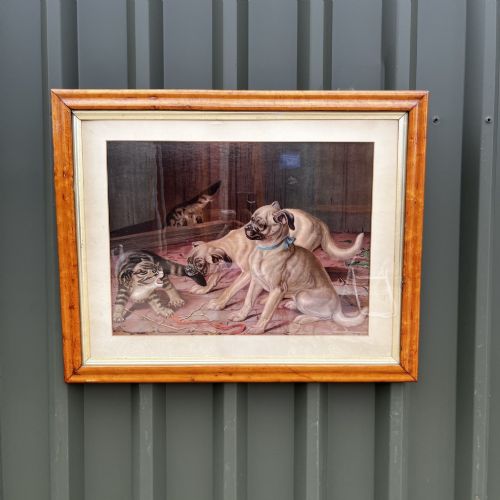
The selections available here range from single sheets to sets of prints, often mounted behind glass in wood or gilt frames. Subjects stretch across domestic animal studies, political caricatures, and topographical views.
Many examples arrive with hand-applied watercolour washes enhancing the inked design, while others utilise multi-stone chromolithography for vibrant colour saturation. These pieces reflect the expanding commercial print culture of the Victorian era.
Materials and technique
Printers drew designs onto prepared limestone blocks using greasy crayons or inks, which accepted printing ink while repelling water during the press run. Artisans frequently applied watercolour highlights by hand over the printed base to add depth and warmth.
Paper serves as the primary support, varying from lightweight journal pages to heavier sheets designed for framing. Finished pieces often sit within gilded wood or simple wooden frames, protected beneath glass.
The listings on this page span the 19th Century and mid-20th Century, utilising paper, ink, watercolour, and gilt wood.
Assessing quality
The distinction between ordinary and superior pieces rests on the crispness of the underlying stone impression and the skill of any added hand-colouring. Subtle tonal gradations and precise registration across multiple ink applications elevate a plate well above mass-produced copies.
Condition plays a vital role, where clean margins, stable paper without heavy toning, and original framing elements preserve the integrity of the work. Early impressions direct from the primary press run retain sharper detail than later re-strikes.
Frederick Morgans·Horatio Henry Couldrey·David Roberts·William Powell Frith·Thomas Worth·Thomas Sutherland
The Coloured Victorian Lithograph Glossary
- Chromolithography
- A planographic printing technique that uses multiple limestone blocks, one for each colour, to produce a multi-coloured image without hand-tinting. This method allowed mass publication of vibrant artistic reproductions during the Victorian period.
- Lithograph
- An image printed from a flat stone or metal plate treated to repel and accept ink selectively. The process relies on the mutual aversion of oil and water.
- Hand-coloured
- A monochrome print enhanced after printing with washes of watercolour applied by brush. This technique added realism and visual richness to botanical and subject prints.
- Aquatint
- A printmaking method that produces tonal areas resembling watercolour washes through acid etching on a copper plate. It frequently appears alongside related nineteenth-century print formats.
Coloured Victorian Lithograph: Frequently Asked Questions
How do I care for antique lithographs?
Keep framed prints away from direct sunlight to prevent the watercolour tints and inks from fading over time. Maintain stable indoor humidity levels to protect the historic paper supports from warping or foxing.
Ensure that backing materials are acid-free if you ever need to have a piece re-framed by a professional conservator. Gentle dusting of the glass surface is all that is required for routine maintenance.
Were these prints originally published in books?
Many nineteenth-century lithographs and chromolithographs were issued as unbound plates in periodicals, serialized portfolios, or specialised natural history volumes. Publications like Vanity Fair distributed satirical portraits as loose inserts for their readership.
Later collectors often separated these plates for individual framing and display. The presence of binding margins or central folds frequently indicates this original book format.
How can I tell hand-coloured from printed colour?
Examine the surface under a magnifying glass to check for the fine brushstrokes and pooling pigment characteristic of applied watercolour. Printed chromolithography reveals a distinct dot pattern or solid flat ink layers under magnification.
Hand-applied washes often overflow the printed boundary lines slightly. This subtle irregularity confirms human intervention rather than mechanical colour separation.
What subjects are most common?
Bird and animal studies form a significant category, alongside sporting events, theatrical scenes, and satirical character portraits. Natural history illustration flourished as publishers catered to growing Victorian interest in science and exploration.
Topographical views of the Middle East and domestic genre paintings also appear frequently. These varied themes document the visual tastes of the nineteenth-century middle class.