

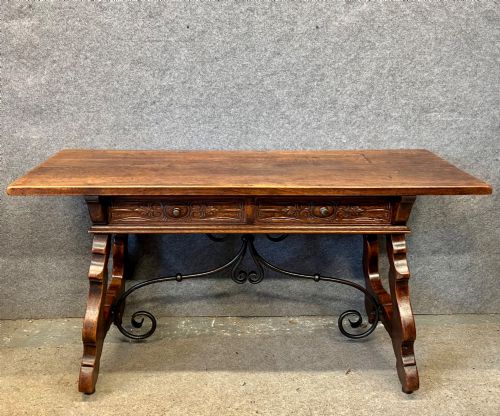


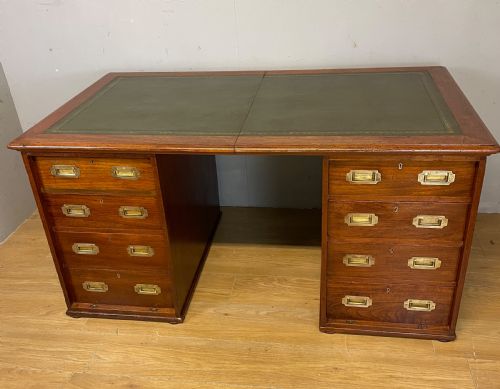


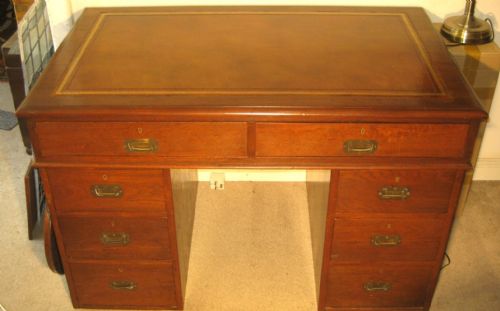


Colonial Writing Desk
A colonial writing desk offers robust portability and rich timbers, connecting you directly to centuries of global trade and travel.
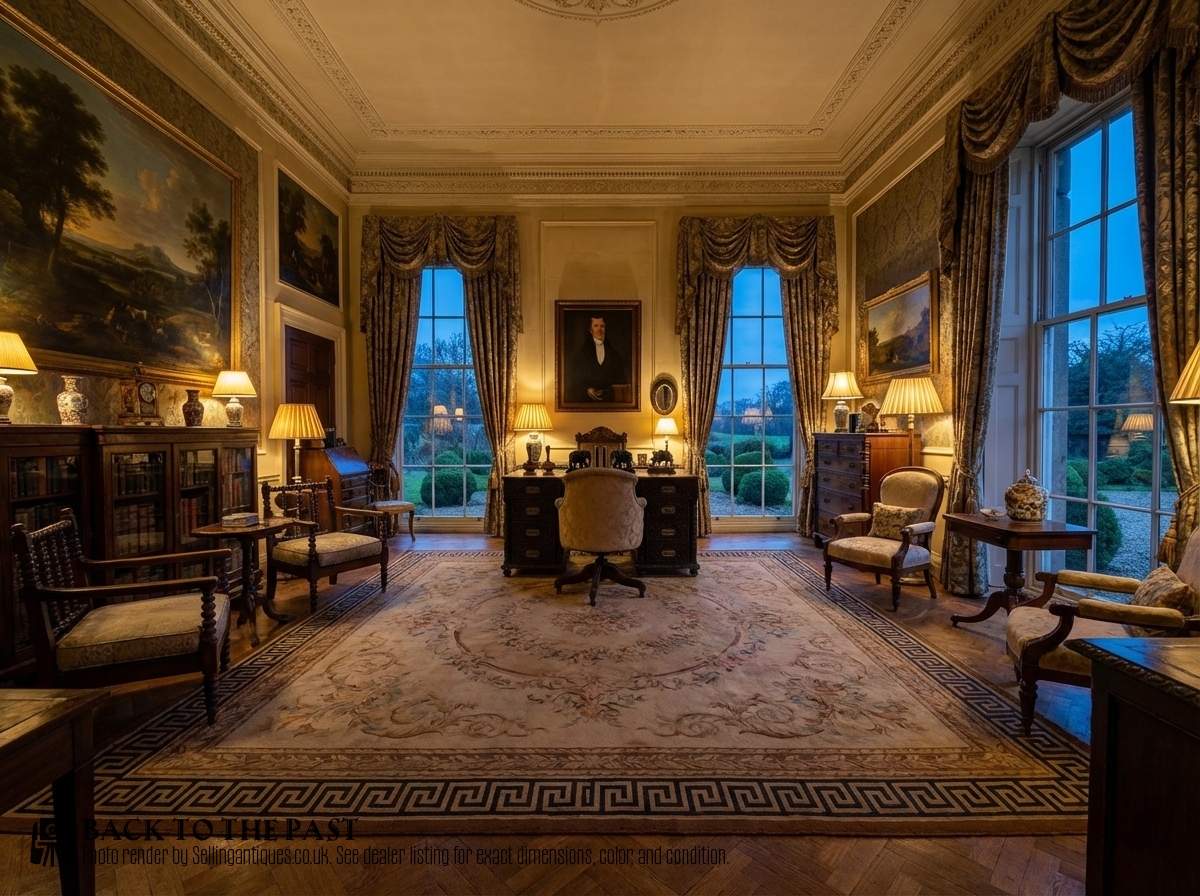
Colonial Writing Desk
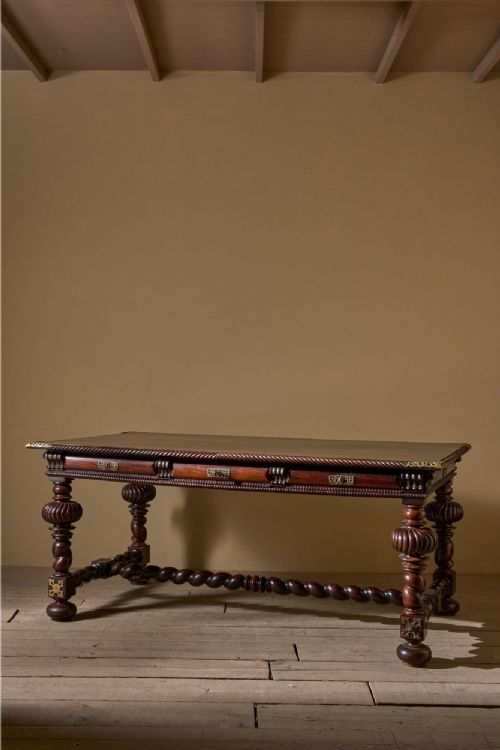
A colonial writing desk encompasses campaign furniture, Davenport desks, and secretaire chests designed for mobility or colonial administration. These pieces originate from various global influences, spanning Anglo-Indian, Ceylonese, Portuguese Colonial, and Spanish traditions.
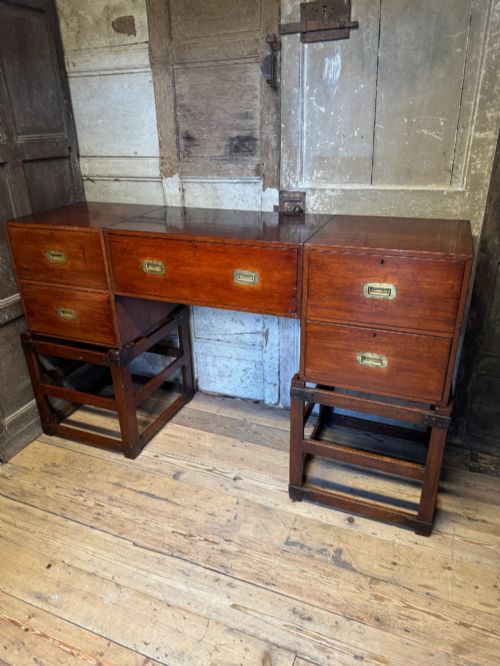
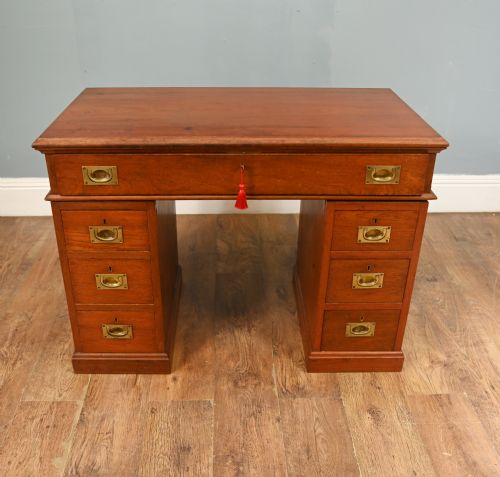
On this page, you are most likely to meet pieces from the nineteenth century, including Victorian campaign desks made in sections for travel. Alongside large pedestal desks, smaller portable writing boxes and writing slopes appear frequently in dense tropical hardwoods.
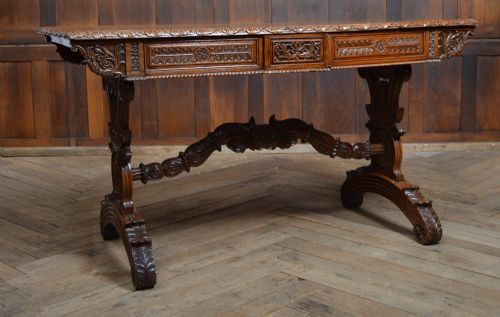
The forms adapt for correspondence and record-keeping in distant outposts, often combining drawers, pigeonholes, and fitted compartments. Many examples display regional carving styles that distinguish them from standard domestic European furniture of the same period.
Materials and construction methods
Craftsmen utilised dense tropical timbers such as teak, padauk, rosewood, ebony, and camphor wood to withstand humid climates and rigorous travel. These heavy hardwoods are frequently paired with contrasting bone, ivory, or brass mounts that reinforce corners and handles.
Campaign construction relied on modular design, dividing large pedestal desks and secretaire chests into two or three portable sections with recessed brass fittings. Writing slopes and boxes incorporated secret drawers and clever internal mechanisms built by hand.
Some nineteenth-century writing slopes include ingenious hidden spring-loaded levers that pop open secret drawer compartments when pressed in a specific sequence.
Distinctions in craftsmanship and design
Quality rests in the precision of the joinery and the complexity of the carved ornamentation, such as deep floral motifs on padauk or intricate inlay on ebony boxes. Superior pieces maintain their original fitted interiors, secret compartments, and working brass locks.
The choice of timber and the crispness of reeded decoration or bone inlay separate standard utilitarian campaign pieces from high-status executive desks commissioned for colonial officials.
The Colonial Writing Desk Glossary
- Campaign desk
- A modular desk built in sections with recessed brass handles and corner brackets designed for military officers on the move. These pieces dismantle easily for transport.
- Writing slope
- A portable box with a sloping lid that opens to reveal a slanted writing surface, inkwell compartments, and storage for stationery. Victorian examples often feature leather inserts.
- Secretaire chest
- A chest of drawers where the top drawer pulls out and folds down to reveal a fitted writing desk with pigeonholes and small drawers. It combines storage with a functional workspace.
- Padauk
- A heavy, durable tropical hardwood with a reddish-brown colour that darkens with age, frequently carved with elaborate floral or foliate patterns. It was favoured for high-end Anglo-Indian furniture.
- Vargueno
- A traditional Spanish cabinet on a stand, featuring a drop-front panel that opens to numerous small drawers and compartments. These seventeenth-century pieces often display ornate mounts and rich walnut construction.
Colonial Writing Desk: Frequently Asked Questions
What is a campaign desk?
A campaign desk is a portable piece of furniture designed for military officers and officials on active service or travel.
These desks typically divide into separate modular sections held together with brass brackets and flush handles for easy packing.
How do I identify colonial timber?
Colonial furniture frequently uses dense, heavy hardwoods native to regions like India, Ceylon, and the Caribbean, including teak, padauk, ebony, and rosewood.
These woods possess natural oils that resisted humidity and insect damage, often showing deep, rich colourations without extensive staining.
What is a writing slope?
A writing slope is a portable desktop box featuring an angled lid designed to hold paper and provide a slanted surface for writing letters.
Inside, you usually find fitted compartments for inkwells, pens, and stamps, alongside hidden secret drawers beneath the stationery partitions.
How do these differ from standard Victorian desks?
Colonial and campaign desks incorporate specific structural adaptations for travel, such as removable legs, screw-in feet, and recessed brass carrying handles.
They also frequently display regional carving techniques or exotic hardwood constructions not commonly found on standard domestic British furniture of the Victorian era.