



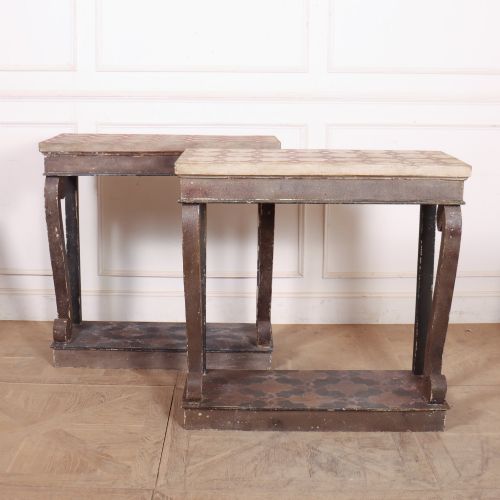
Colonial Wooden Side Table
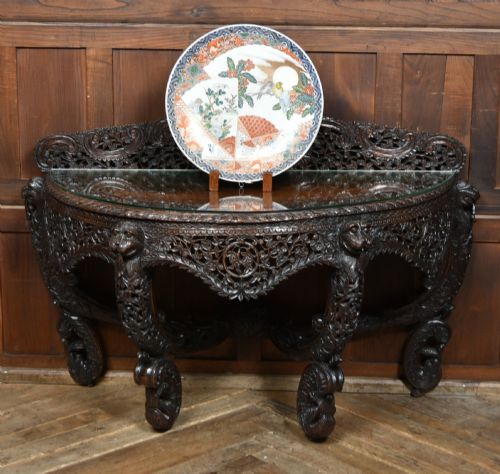
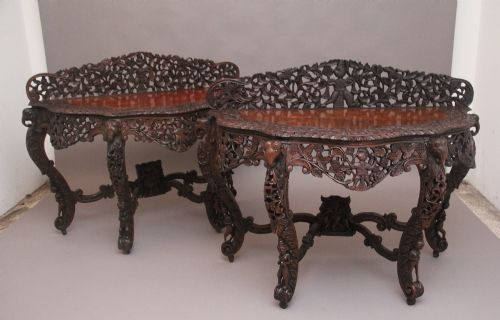
These colonial wooden side table examples combine dense tropical hardwoods with intricate regional carving traditions.
Colonial Wooden Side Table
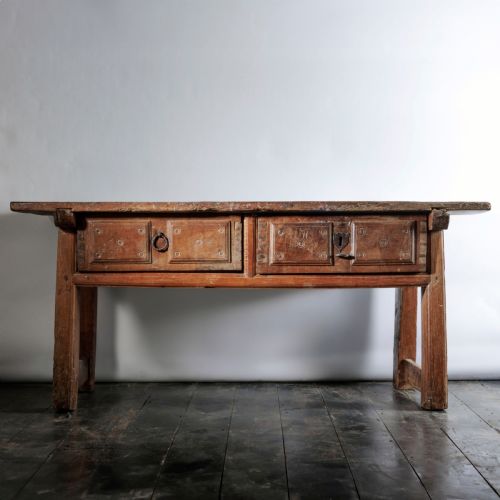
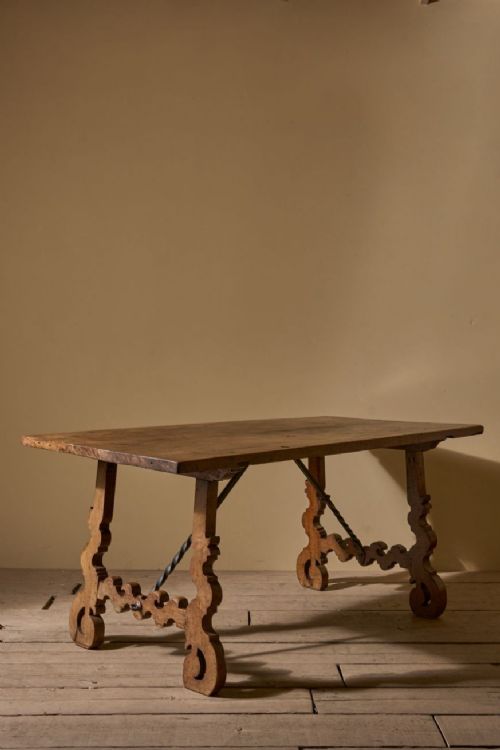
A colonial wooden side table bridges European furniture forms with the decorative arts of the British Empire and Spanish territories. Buyers seeking this phrase typically encounter Anglo-Indian, Burmese, and Spanish colonial examples spanning the seventeenth to the twentieth centuries.
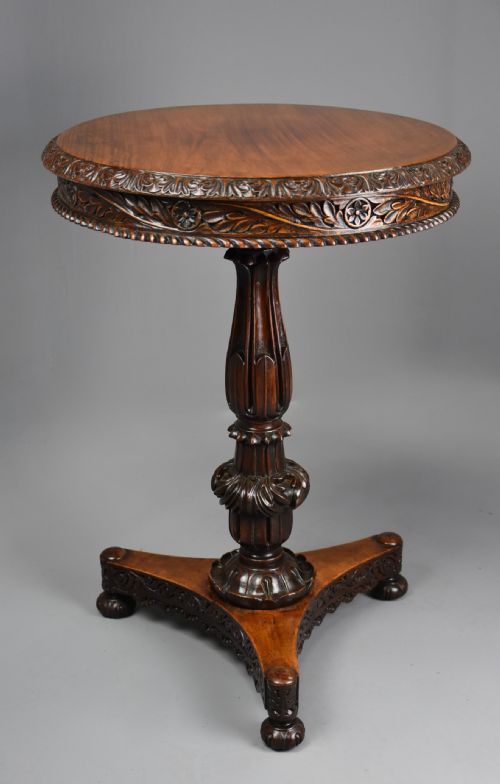
The selection ranges from simple occasional tables to elaborate carved pedestal designs, chess boards, and octagonal surfaces. Teak, padouk, and rosewood dominate the construction, often paired with bone inlay or brass details.
Materials and construction methods
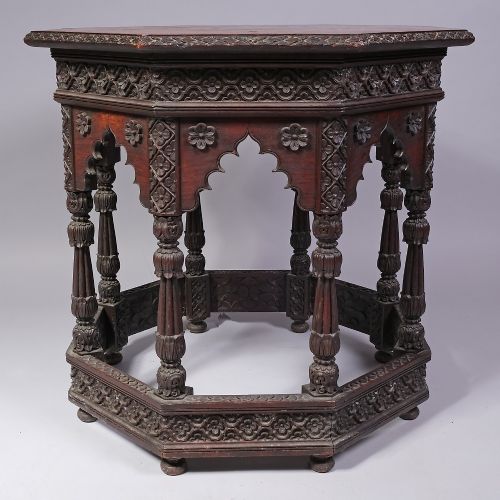
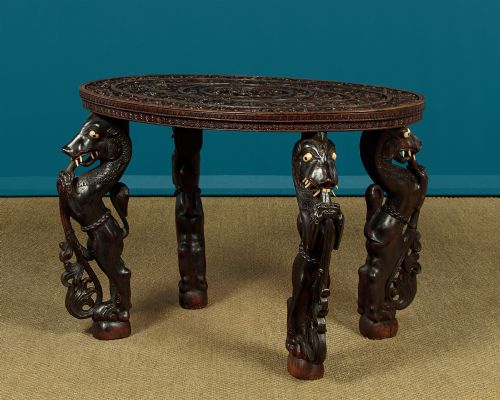
Carpenters utilised dense exotic timbers such as solid rosewood, padouk, and teak to withstand humid climates and support deep carving. These heavy woods allowed artisans to carve intricate foliage, animal motifs, and geometric patterns without compromising structural integrity.
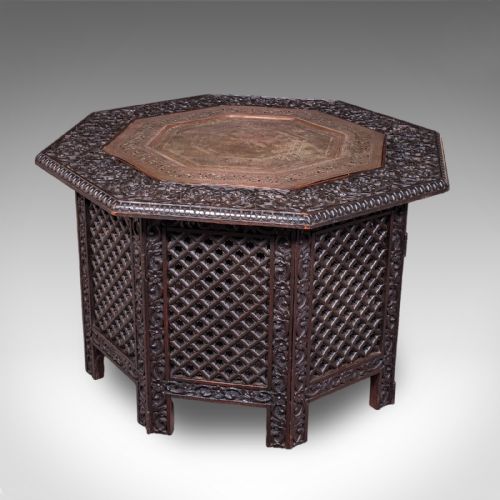
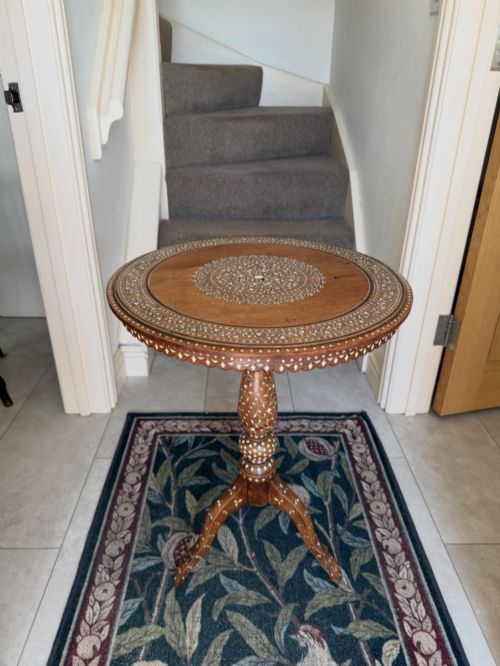
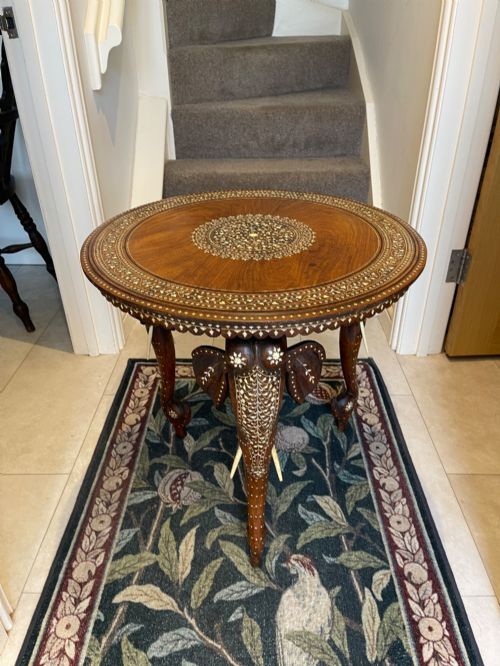
Surface ornamentation involved intricate bone inlay, brass wire, and copper inserts set flush into the timber. Turning and relief carving defined regional workshops, creating textured surfaces on occasional and pedestal tables.
Colonial Wooden Side Table Retail Price Guide 2026
Typical asking prices for colonial wooden side table among the pieces listed under this phrase on Sellingantiques today, from the lower quarter to the upper quarter. They describe what is for sale here now, not the wider market.
Listings feature timbers including teak, rosewood, padouk, and walnut across periods from the 17th to the 20th century.
Judging the range
Quality rests upon the depth and precision of the hand carving, alongside the selection of timber. Tables featuring intricate geometric bone inlay or crisply rendered animal figures demonstrate superior workshop output.
Construction methods also separate standard production from finer pieces, particularly the stability of tilt-top mechanisms and the snugness of joined corners. Uniform colour and sound timber seasoning prevent warping across tropical hardwoods.
The Colonial Wooden Side Table Glossary
- Padouk
- A dense tropical hardwood with a reddish hue used frequently in Anglo-Indian furniture. It takes a fine carved finish.
- Hoshiarpur
- A region in Punjab known for intricate wood carving and bone inlay work on occasional tables. Artisans created dense geometric patterns across the entire surface.
- Teak
- A durable, oil-rich hardwood native to South and Southeast Asia utilised for heavy colonial tables and buffets. It resists moisture and insect damage effectively.
- Teapoy
- A small occasional table or stand originating in India, often fitted with compartments or carved tops for serving tea. They gained popularity during the nineteenth century.
- Bobbin turned
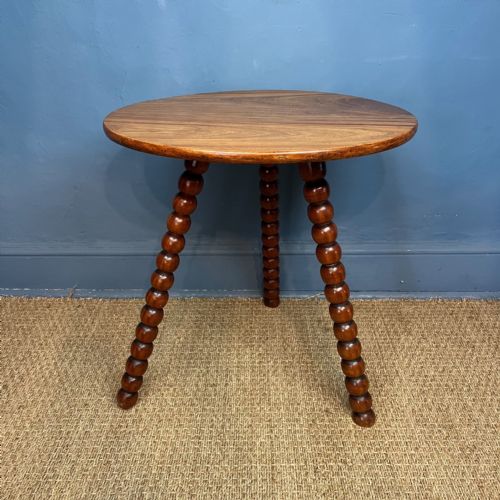
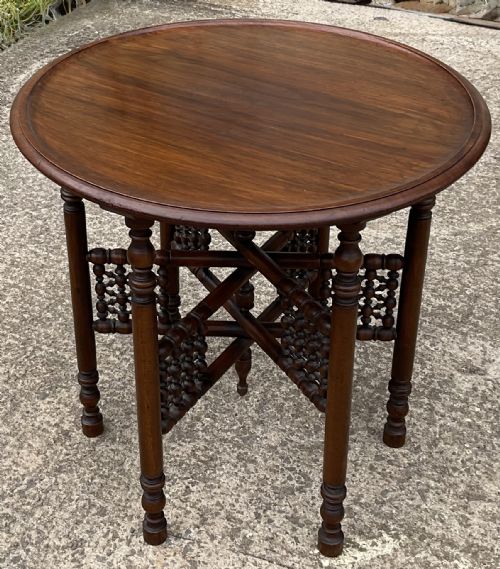
- A style of turning wood on a lathe to create a series of rounded spheres resembling bobbins. This decorative method appears on nineteenth-century frames.
Colonial Wooden Side Table: Frequently Asked Questions
What is an elephant table?
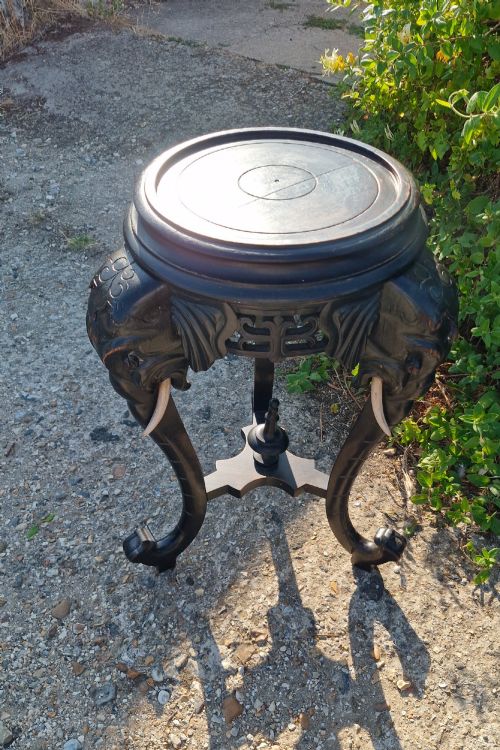
An elephant table is an occasional or side piece featuring carved elephant heads or wooden tusks supporting the top.
These tables originate primarily from nineteenth-century Anglo-Indian workshops and reflect distinct regional decorative styles.
Where were colonial tables made?
Colonial tables were produced across British India, Burma, and Spanish territories like Spain and its colonies.
Local workshops adapted European furniture forms using native timbers such as teak, rosewood, and padouk.
How do I date a wooden side table?
Dating relies on timber choice, construction joints, and stylistic markers such as turning patterns or carved motifs.
Nineteenth-century pieces often display dense regional carving, whereas earlier examples show simpler lines in walnut or oak.
Can I use an occasional table daily?
Occasional tables suit daily use for lamps or drinks provided you protect the polished surface from moisture.
Solid hardwoods handle regular placement well, though inlaid bone or copper sections require gentle dusting and care.