


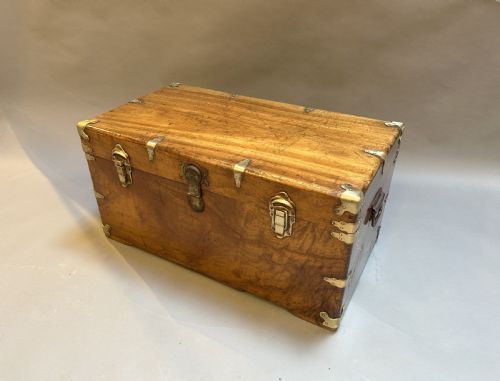
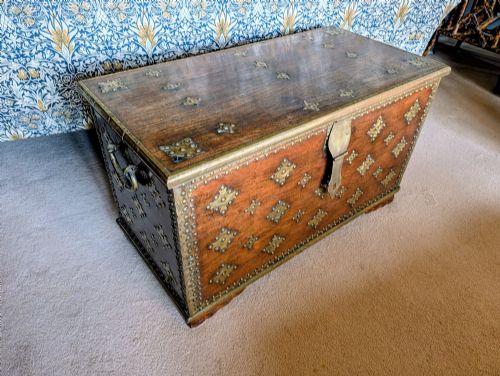
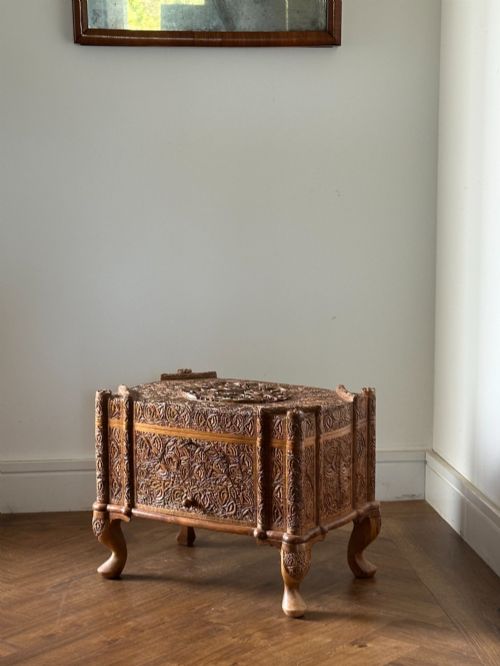
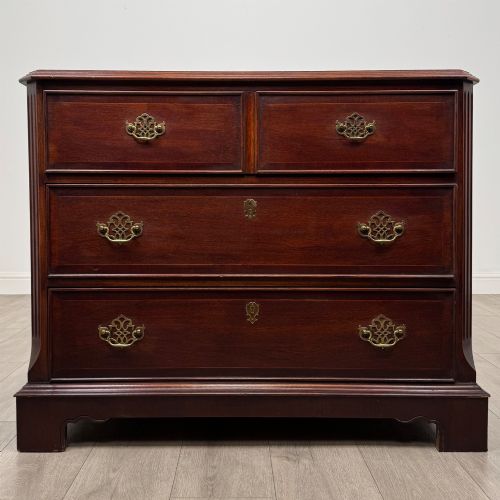
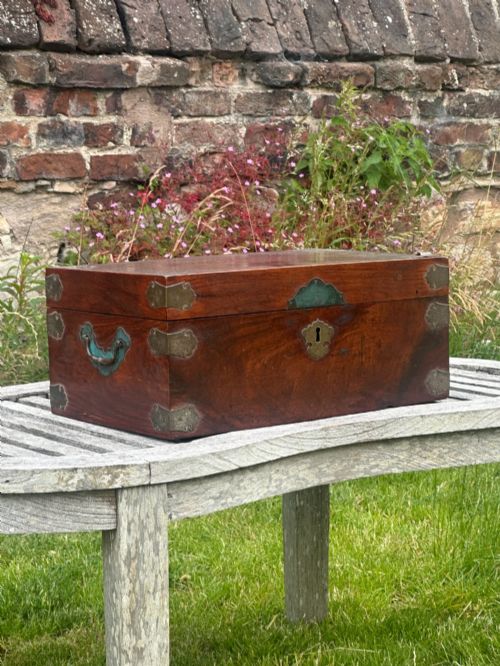
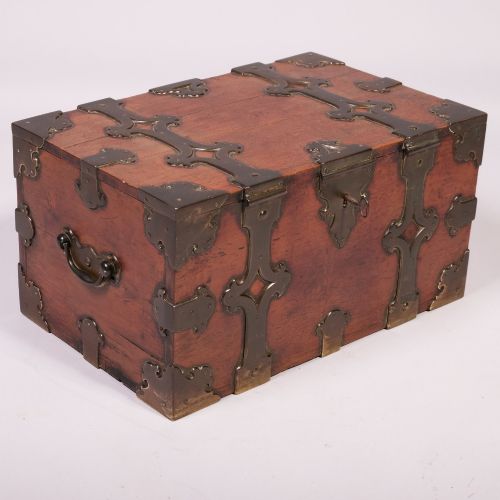
Colonial Wooden Chest
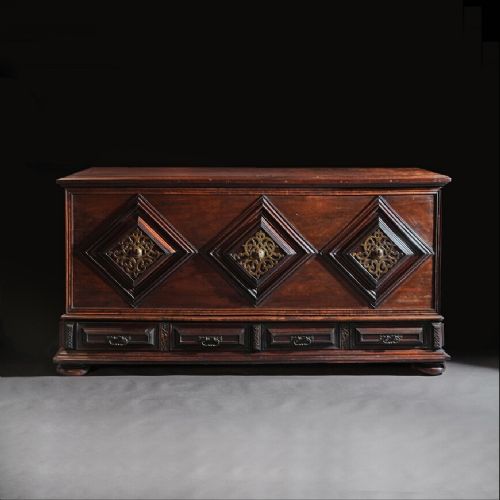
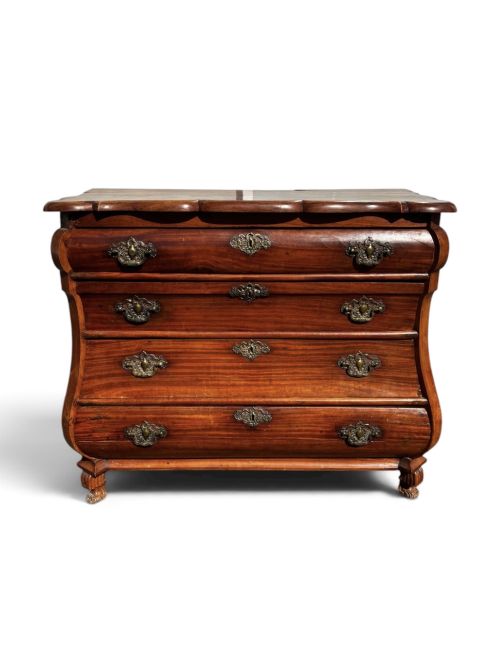
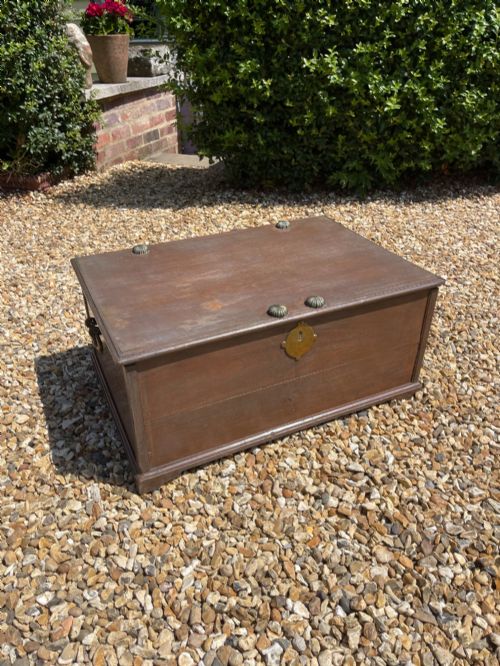
A colonial wooden chest brings solid presence and practical storage, offering dense tropical timbers and robust metal mounts.
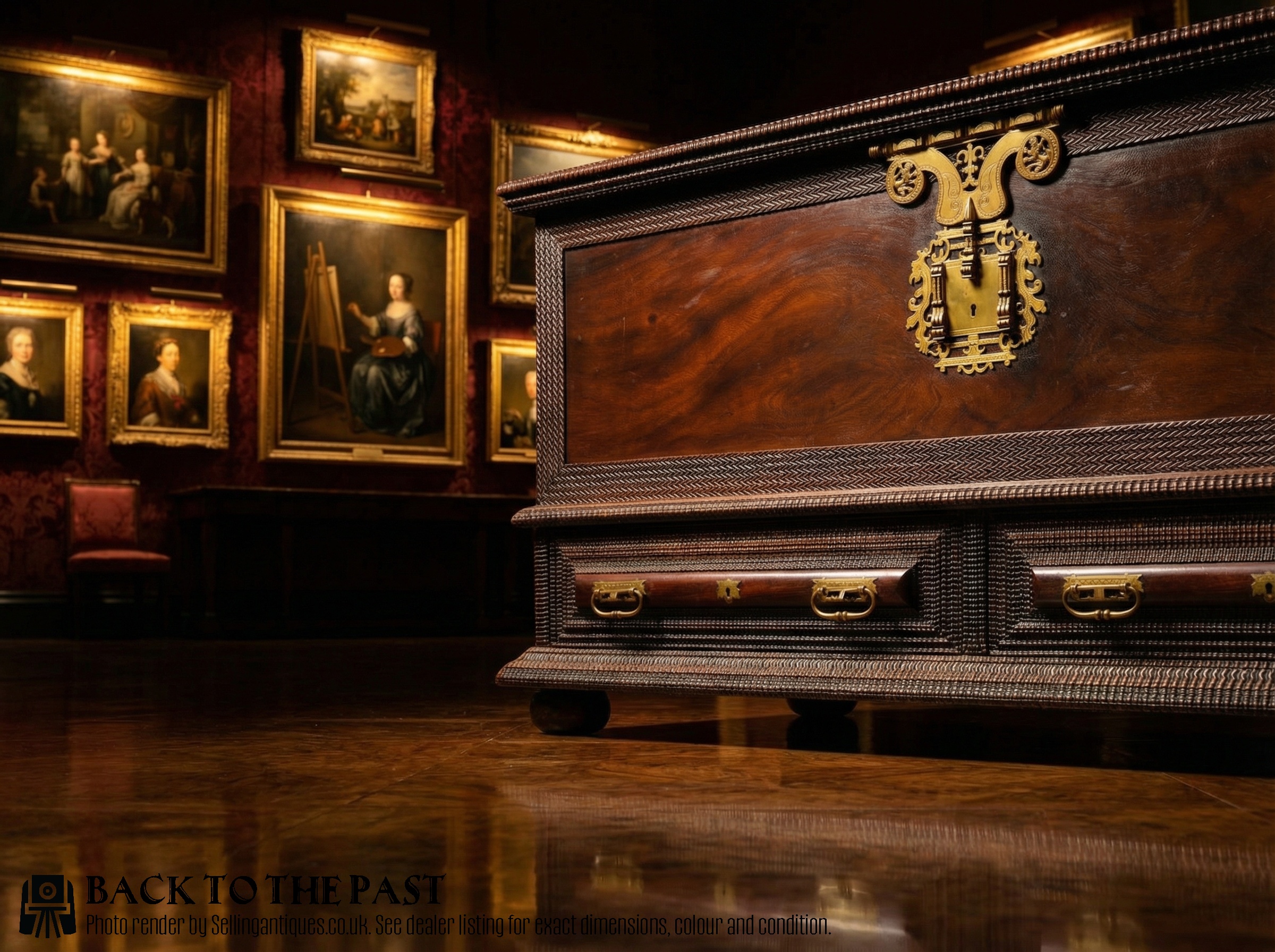
Colonial Wooden Chest
A colonial wooden chest satisfies practical storage needs while bringing centuries of global trade history into a room. These sturdy containers range from simple blanket boxes to fitted campaign trunks and heavy strong boxes.
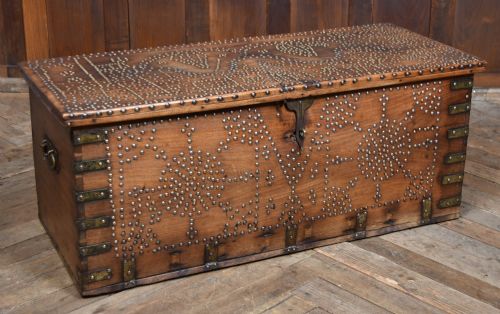
Buyers browsing this selection encounter pieces originating from diverse regions under colonial influence, spanning the seventeenth century through to the early twentieth century. Trunks and chests constructed from dense Asian hardwoods dominate the selection, alongside campaign pieces designed for travel.
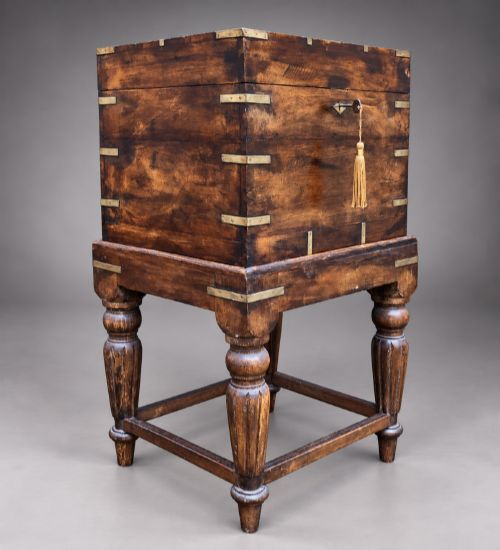
The assortment includes specialised forms such as wine chest cellarettes, spice boxes, and multi-drawer filing cabinets alongside large storage trunks. The frequent presence of brass binding and carrying handles reveals the utilitarian origins of these furnishings.
How they were made
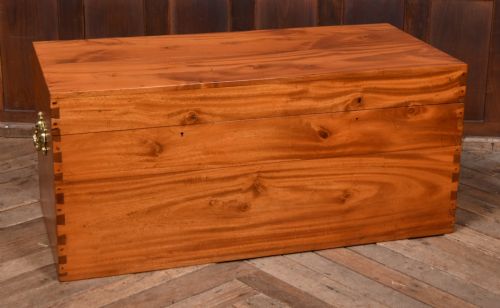
Carpenters utilised durable tropical timbers such as teak, padouk, camphor wood, and ebony to withstand humid climates and insect damage. Solid satinwood and walnut also appear in sophisticated domestic forms.
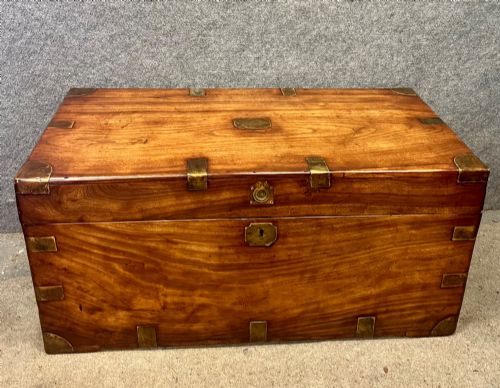
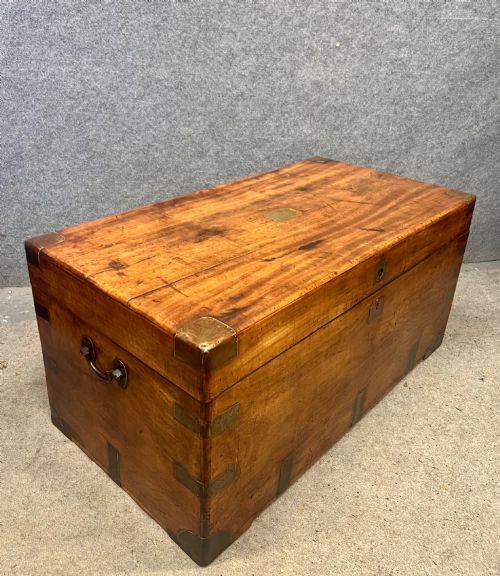
Metal reinforcement defines construction, employing heavy brass corners, strapwork, hinges, and carrying handles to protect joints during transit. Iron fittings provide additional security on strong boxes and coffers.
Listings feature eighteenth and nineteenth century camphor wood, teak, and padouk, alongside Victorian campaign furniture and Dutch colonial designs.
What varies in quality
The refinement of carving and joinery distinguishes everyday utilitarian trunks from bespoke cabinetwork intended for wealthy households. Elaborate sandalwood caskets and inlaid collector cabinets display meticulous hand-chiselled detail.
The integrity of original hardware alters the character of a piece, with heavy cast brass mounts and inset campaign handles holding greater appeal than later replacements. The choice of dense secondary timbers and retained internal fittings also elevates standard storage boxes.
The Colonial Wooden Chest Glossary
- Padouk
- A heavy, dense reddish-brown hardwood sourced from tropical regions and frequently employed in Anglo-Indian furniture. It takes a fine polish and resists wear.
- Campaign trunk
- A portable chest built for military officers or travellers, typically featuring recessed brass handles and reinforced corners for frequent transit. These often separate into modular sections.
- Coffer
- A large, strong box used historically for storing valuables, money, or precious documents. They usually include heavy iron or brass locking mechanisms.
- Cellarette
- A specialised storage container designed to hold bottles of wine securely during transport or dining. Examples include fitted interior compartments for individual bottles.
Colonial Wooden Chest: Frequently Asked Questions
What is a colonial wooden chest?
A colonial wooden chest is a storage trunk or box produced during periods of European expansion and trade, utilising regional hardwoods like teak and camphor wood.
These pieces often feature robust brass mounts and corner brackets designed to protect the container during overseas transit.
How were camphor wood chests used?
Camphor wood chests served primarily as blanket boxes and travel trunks for individuals relocating across continents. The natural aroma of the timber kept moths and insects away from stored textiles.
Merchants and military personnel relied on them to protect clothing, documents, and valuables from humidity and pests.
What is an Anglo Indian campaign trunk?
An Anglo Indian campaign trunk is a portable storage box made in India during British rule for officers on the move. They incorporate flush-fitting brass handles and reinforced edges to withstand rough journeys.
Many examples separate into smaller sections or contain fitted drawers for practical daily organisation.
How do I identify a 17th century chest?
Seventeenth century chests are identified by dense primary timbers such as mahogany, heavy brass or iron mountings, and early construction methods like hand-cut joinery. They often present as strong boxes or heavy coffers.
Such early pieces display Portuguese colonial or Dutch East Indies influences rather than later Victorian styles.
Where should I place a storage chest?
A storage chest functions well at the foot of a bed for spare blankets, or serves as a coffee table in a living room while holding books. The flat top provides a stable surface for display.
Keep these wooden pieces away from direct heat sources to prevent the tropical timber from splitting.