
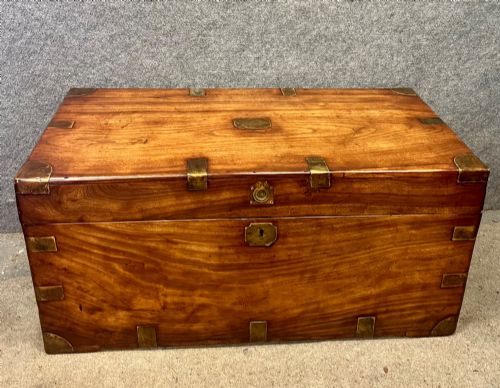
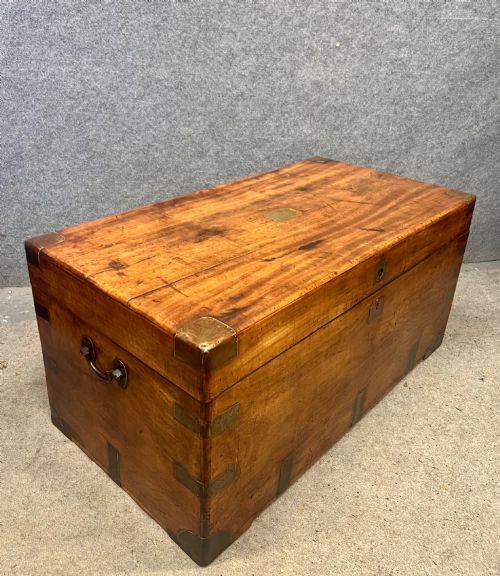
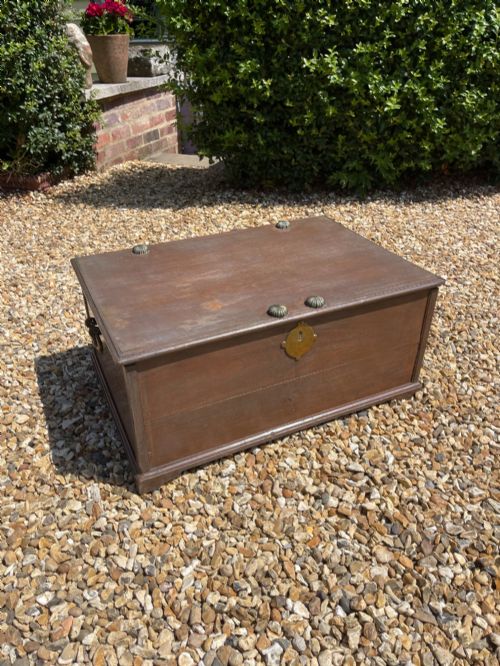
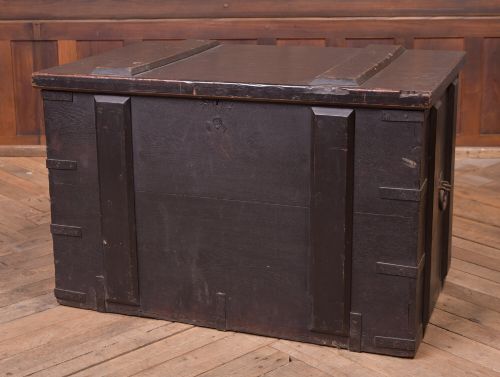
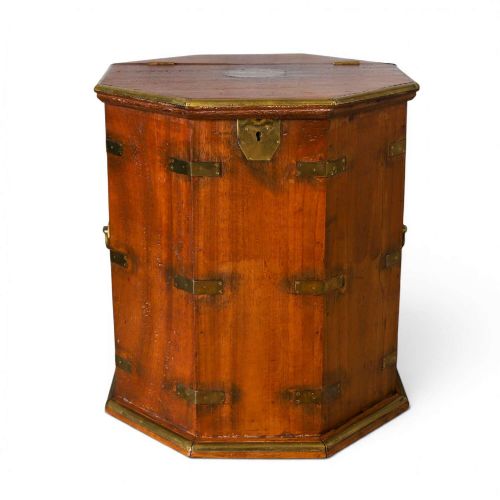
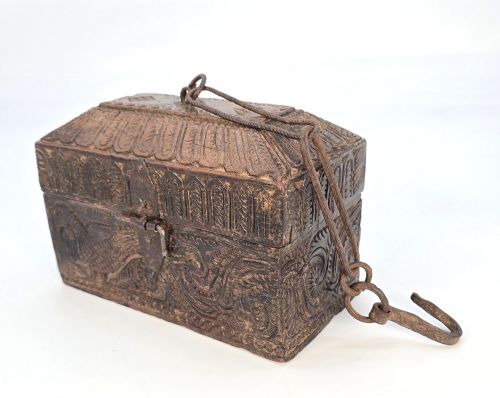


Colonial Teak Storage Box
A colonial teak storage box brings substantial timber, metal bindings, and distant trade routes directly into a modern interior.

Colonial Teak Storage Box
A colonial teak storage box serves as a robust receptacle designed for travel, trade, or domestic storage across British, Dutch, and Portuguese territories during the eighteenth and nineteenth centuries. Buyers searching this phrase encounter substantial trunks, blanket boxes, and campaign chests shaped by Anglo-Indian, Dutch Colonial, and Victorian military influences.
The version most commonly met on this page is the nineteenth-century campaign trunk or storage chest, constructed from dense timber and reinforced for arduous journeys. These pieces range from large iron-bound coffers to smaller spice boxes and miniature display chests.
Origins span across India, Zanzibar, Burma, and the wider colonial sphere, bringing distinct regional carving styles and hardware arrangements together. Their primary function remains straightforward, offering deep interior wells for blankets, linens, or valuables.
How they were made
Makers utilised dense tropical timbers, predominantly teak alongside occasional hardwood and ebony, selected for their resistance to humidity and wear. Boards were joined solidly to withstand long voyages, frequently paired with secondary woods for internal compartments.
Metal reinforcement defines the construction, incorporating brass corners, straps, and strapping alongside iron or wrought iron bands and studs. These mountings provided structural rigidity while protecting edges from heavy impact during transport.
Surface treatments varied from plain polished wood to intricate carving, decorative brass decoration, and lacquer finishes on specific regional forms. Stands were occasionally supplied to elevate larger coffers and trunks above damp floors.
Listings span the eighteenth, nineteenth, and early twentieth centuries, capturing periods from Georgian colonial production through to Victorian campaign manufacturing.
What varies in quality
The standard of metalwork marks the primary distinction between ordinary utilitarian containers and exceptional examples made for merchants or officers. Fine brass binding, flush handles, and intricate corner brackets demonstrate superior craftsmanship compared to plain iron sheeting.
Carving depth and precision separate regional workshops, with sharply chiselled foliage and geometric patterns indicating skilled handwork. Plain or roughly hewn surfaces reflect standard utility output rather than bespoke commissions.
Originality of hardware and internal fittings influences the overall integrity of a piece. Retained locks, hinges, and fitted interior trays preserve the historical completeness of the storage box.
The Colonial Teak Storage Box Glossary
- Campaign chest
- A modular chest designed to dismantle or travel easily with military officers on active service, typically featuring recessed brass handles.
- Coffer
- A heavy wooden chest traditionally used for storing valuables, linens, or documents, often reinforced with metal straps.
- Zanzibar chest
- A distinct type of heavily studded wooden trunk associated with East African trade routes, featuring brass ornamentation and compartmented interiors.
- Cellarette
- A specialised container or box designed for holding wine bottles or decanters securely during transit or dining use.
- Ripple moulded
- A decorative woodworking technique where undulating patterns are cut directly into the timber frame, seen on specific Portuguese-influenced pieces.
Colonial Teak Storage Box: Frequently Asked Questions
How were these boxes used?
These boxes served as portable wardrobes, military luggage, and secure strongboxes for merchants travelling across colonial territories. Officers and traders relied on them to protect clothing, documents, and valuables from moisture and rough handling.
In domestic settings, they transitioned into stationary storage for blankets, linens, and personal effects. Their sturdy construction allowed them to double as occasional furniture or tables within colonial homes.
What distinguishes an Anglo-Indian piece?
Anglo-Indian pieces combine traditional British furniture forms with indigenous Indian woodworking techniques and carving styles. They frequently incorporate dense local timbers like teak alongside detailed floral motifs.
These items were commissioned by British residents in India or imported directly for the European market. Their design reflects a distinct cultural fusion of utilitarian British campaign requirements and intricate eastern craftsmanship.
Are these boxes waterproof?
While dense teak and tight joinery offered substantial protection against tropical downpours and humidity during travel, they are not hermetically sealed. The metal bindings and locks kept lids secure rather than creating an airtight barrier.
Modern placement should avoid areas of extreme central heating or dampness to protect the historic timber and metal components from shifting.
How do I care for teak furniture?
Teak requires minimal maintenance due to its natural oil content, which helps prevent drying and cracking under normal indoor conditions. Dusting regularly with a dry cloth and occasionally applying natural beeswax preserves the surface sheen without sealing the pores.
Avoid placing storage boxes near direct heat sources or in intense sunlight, which can dry out the historic wood and strain the original joinery.