


Colonial Chest on Stand
A colonial chest on stand brings exotic timbers and elevated storage together, offering a striking focal point for any traditional interior.

Colonial Chest on Stand
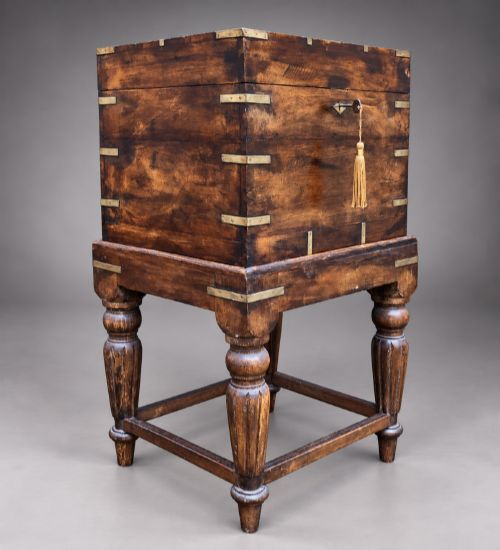
A colonial chest on stand combines a storage trunk or cabinet with a dedicated base, creating a substantial piece of furniture designed for elevated placement. When you search for a colonial chest on stand, you encounter forms that span several centuries, originating from diverse global regions under European influence.
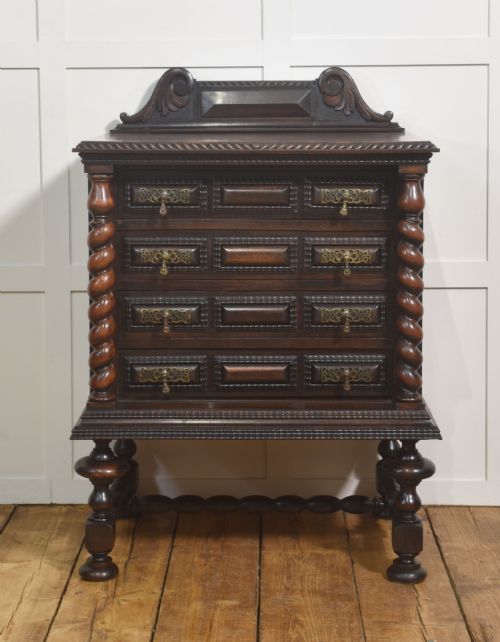
The pieces on this page heavily feature nineteenth-century examples alongside eighteenth-century forms, often exhibiting regional adaptations in their construction. You are most likely to meet Anglo-Indian trunks or Portuguese cabinets raised upon matching stands.
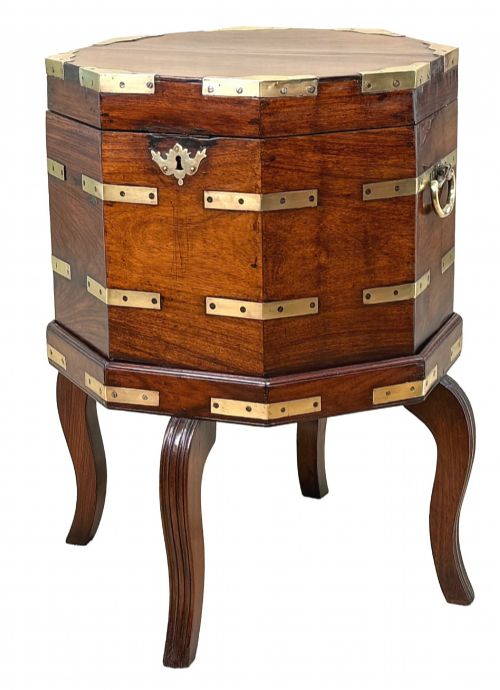
Makers utilised various traditional furniture formats, incorporating chests of drawers, cellarettes, and fall-front cabinets into these elevated designs. The integration of the chest with its stand creates a commanding silhouette distinct from standard floor-standing chests.
Materials and construction methods
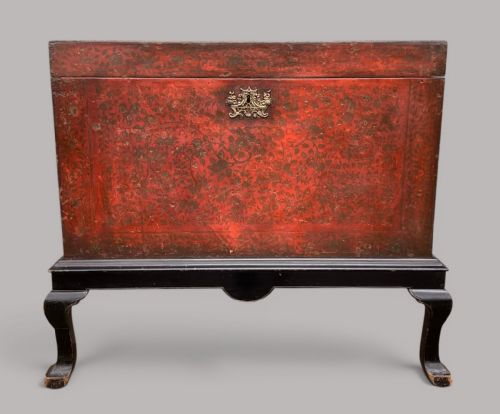
Carpenters constructed these pieces using dense tropical hardwoods such as teak, mahogany, padouk, and rosewood, which resist humidity and wear. These timbers frequently receive decorative surface treatments including red lacquer, tortoiseshell veneer, or intricate bone inlay.
Metalwork played a functional and decorative role, with brass mounts, strapwork, and carrying handles fitted securely to the wooden bodies. Stands often featured carved wooden legs or turned supports that matched the architectural style of the upper cabinet.
Listings incorporate seventeenth-century Spanish walnut pieces alongside nineteenth-century Anglo-Indian lacquer trunks.
Assessing craftsmanship and condition
Superior examples display precise joinery in both the main trunk and the supporting stand, ensuring structural stability despite the height. The quality of surface decoration, whether carved mahogany or applied lacquer, dictates the visual impact of the piece.
Original hardware such as brass handles and locks distinguishes finer pieces from those with later replacements. The harmony between the chest and its stand remains paramount, as matched pairs or unified constructions achieve greater integrity.
The Colonial Chest on Stand Glossary
- Cellarette
- A lockable container used for storing bottles of wine and spirits. These are frequently mounted on stands for ease of access.
- Padouk
- A durable tropical hardwood with a distinctive reddish-brown colour. Cabinet makers favoured it for export furniture destined for European markets.
- Vargueno
- A type of Spanish cabinet featuring a drop-front panel that reveals numerous small drawers and compartments. They traditionally rest upon decorative stands or trestles.
- Campaign chest
- A modular piece of furniture designed to be dismantled easily for military travel. These units often feature recessed brass handles and corner brackets.
- Chinoiserie
- European decorative style reflecting Chinese artistic influences. This technique appears on lacquered trunks through painted motifs and gilt decoration.
Colonial Chest on Stand: Frequently Asked Questions
Where were these pieces made?
These pieces originated in various global regions under European colonial influence, including India, the Dutch East Indies, and the Iberian Peninsula. Workshops in these locations combined local timber traditions with European furniture forms.
The resulting objects reflect cross-cultural exchange, blending indigenous craftsmanship with the domestic requirements of colonial administrators and traders.
How are the chests attached to their stands?
Many chests sit securely within a rebated frame on top of the stand, relying on gravity and their considerable weight for stability. Others fasten directly through internal brackets or peg joints.
This separation allowed for easier transport during colonial deployment, enabling owners to move the heavy storage box independently from its support base.
What is the difference between a cellarette and a trunk?
A cellarette functions specifically as a lockable container for bottled beverages, often featuring internal dividers for individual bottles. A trunk provides general storage space for garments and valuables.
Both forms appear mounted on elevated stands in colonial furniture, though cellarettes generally exhibit more specialised internal partitioning.
How do I care for antique lacquered wood?
Maintain lacquered surfaces by keeping them away from direct sunlight and fluctuating humidity, which can cause the finish to crack. Dust gently with a dry, soft cloth.
Avoid using modern chemical polishes or water, as moisture damages traditional lacquer and exposed timber grounds over time.
Can these stands support heavy loads?
The stands are structurally engineered to bear the substantial weight of dense tropical hardwood chests filled with contents. Traditional joinery ensures the load distributes evenly down through the legs.
However, avoid placing excessive weight on drop-front panels or writing surfaces attached to the upper cabinets to prevent structural strain.