




Colonial Teak Occasional Table
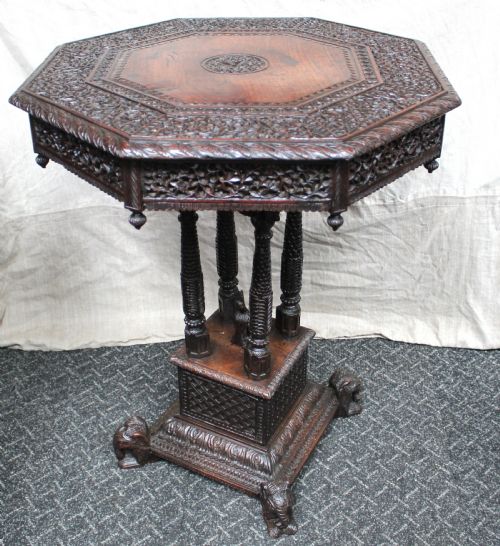
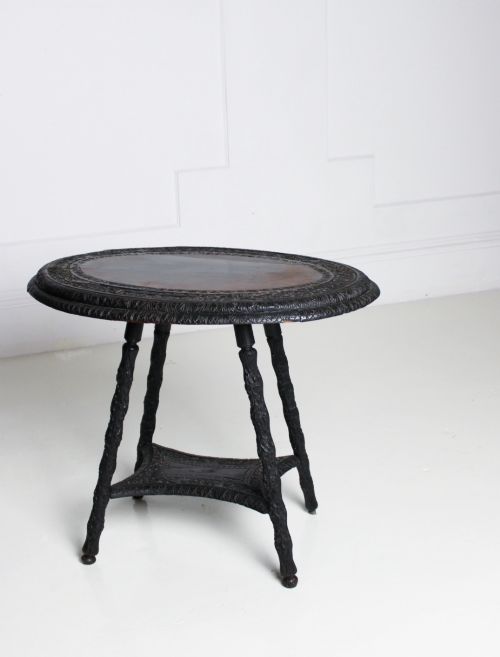
These colonial teak occasional table examples bring rich carving and dense timber from British India and Burma directly into a room.
Colonial Teak Occasional Table
A colonial teak occasional table sits at the intersection of British domestic habits and traditional South Asian craftsmanship during the nineteenth and early twentieth centuries. Buyers seeking a colonial teak occasional table will encounter side tables, plant stands, and occasional surfaces designed for colonial households.
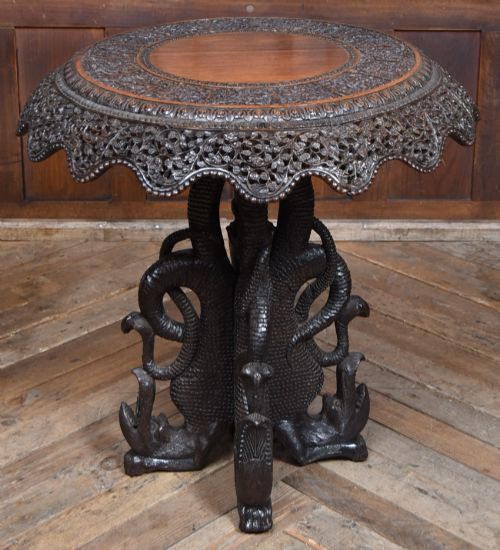
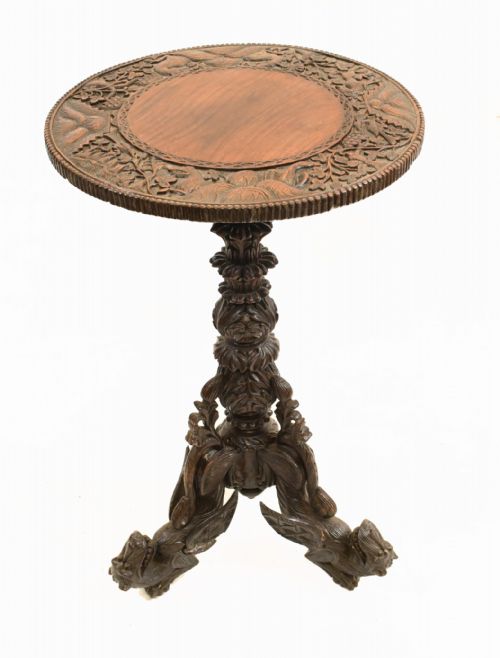
The pieces on this page span from the mid-nineteenth century through to the early decades of the twentieth century, originating primarily from Indian and Burmese workshops. Forms range from simple circular tripod tables to elaborate figural designs supported by carved elephants, camels, or peacocks.
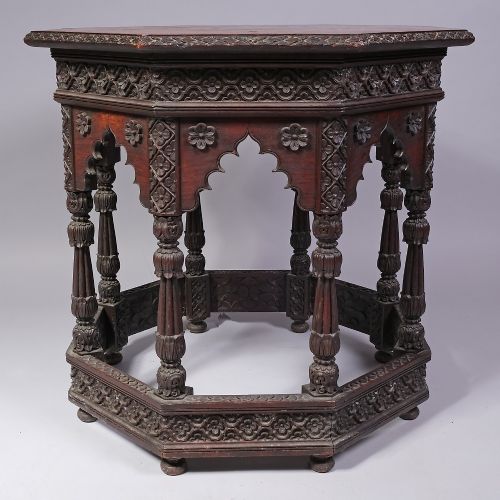
Regional styles grouped under Anglo-Indian and Anglo-Burmese descriptions dominate the selection. Buyers frequently meet folding table variants and multi-tiered occasional furniture intended for versatile use within drawing rooms and parlours.
How they were made
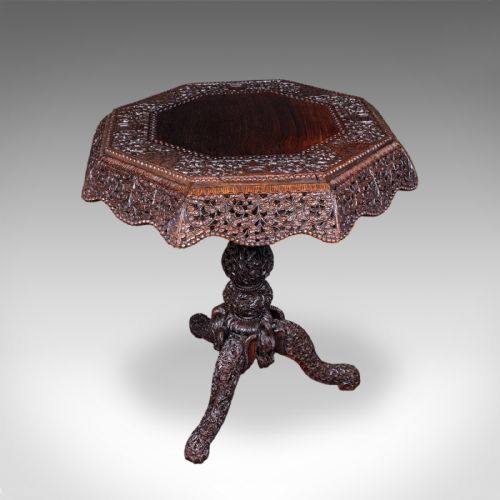
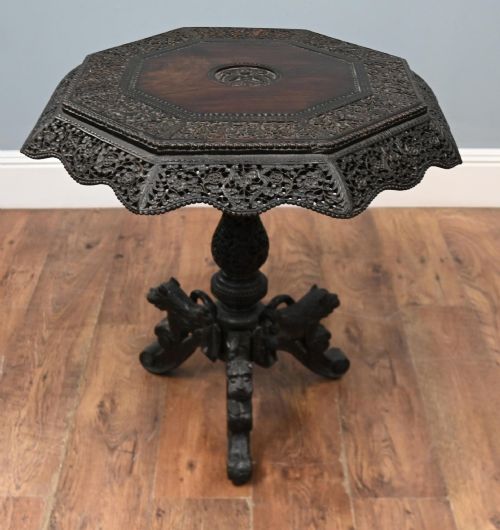
Makers utilised dense timbers such as teak, padouk, and rosewood, which provided a stable foundation for deep relief carving. Artisans carved intricate floral motifs and animal figures directly into the solid wood surfaces.
Inlaid decoration forms another primary technique, integrating contrasting materials like bone, brass wire, and bone inlay into geometric or scrollwork patterns. Wax finishes were traditionally applied to seal the timber while highlighting the grain and the precision of the inlay.
Colonial Teak Occasional Table Retail Price Guide 2026
Typical asking prices for colonial teak occasional table among the pieces listed under this phrase on Sellingantiques today, from the lower quarter to the upper quarter. They describe what is for sale here now, not the wider market.
Listings span the nineteenth century through the 1930s, featuring teak, rosewood, bone inlay, and brass across side tables and plant stands.
What varies in quality
The depth and clarity of the hand-carved detail set finer pieces apart from standard production. Superior examples display sharp undercutting in foliage and well-proportioned animal supports rather than shallow, hasty incisions.
The integration of decorative inlay reveals the maker's skill, with top-tier pieces showing precise flush-fitting brass or bone without gaps. The structural integrity of folding mechanisms and the choice of dense, unblemished teak timber further distinguish the better examples.
The Colonial Teak Occasional Table Glossary
- Anglo-Indian
- Describing decorative arts produced in India during the British colonial period, combining European furniture forms with local carving techniques. These items often feature dense floral relief work.
- Hoshiarpur
- A town in Punjab renowned for intricate woodwork and intricate brass and bone inlay on shesham or teak structures. Tables from this region frequently display geometric star motifs.
- Padouk
- A heavy tropical hardwood with a reddish hue utilised in regional furniture making. It provides a durable surface for detailed turning and carving.
- Tip top
- A table construction featuring a hinged top that pivots to a vertical position for storage. This mechanism appeared frequently on nineteenth-century occasional furniture.
- Two tier
- A table design incorporating a main upper surface and an additional lower shelf supported by legs or stretchers. This configuration provided extra display space for lamps and ornaments.
Colonial Teak Occasional Table: Frequently Asked Questions
How do I date a teak table?
Dating relies on observing construction methods, timber choice, and the evolution of decorative styles recorded across the nineteenth and early twentieth centuries. Earlier pieces often display heavier solid construction and deeper hand-carved relief.
Mid to later examples may incorporate folding mechanisms or specialised regional inlay techniques associated with specific production centres like Hoshiarpur or Bombay.
Where were these tables made?
These pieces originated across various workshops in the Indian subcontinent and Burma during the colonial era. Regional centres developed distinct specialities, ranging from the figural animal supports of the Bombay presidency to the intricate inlay work of northern India.
British administrative and military presence in these regions directly shaped the demand for portable furniture adapted to export and domestic colonial use.
How do I care for teak furniture?
Teak and dense tropical hardwoods require minimal maintenance beyond regular dusting with a soft, dry cloth. Avoiding direct sunlight and sudden humidity changes protects the timber and preserves traditional wax finishes.
Care should be taken around inlaid sections of brass or bone to prevent moisture accumulation in the surrounding wood grain.