




Colonial Side Chairs
Colonial side chairs are seating pieces spanning distant regions and trading posts, offering enduring craftsmanship and history for the home.
Colonial Side Chairs
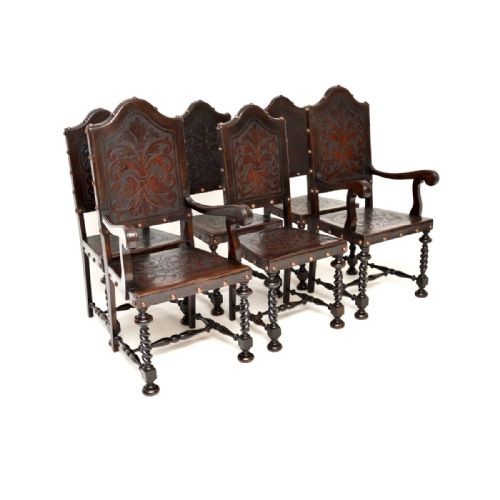
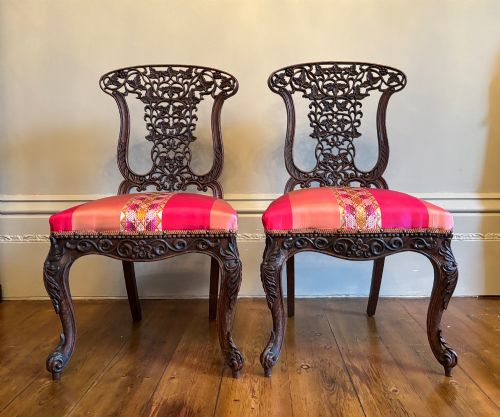
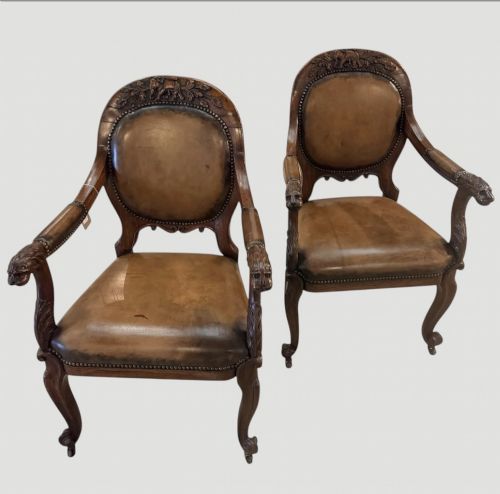
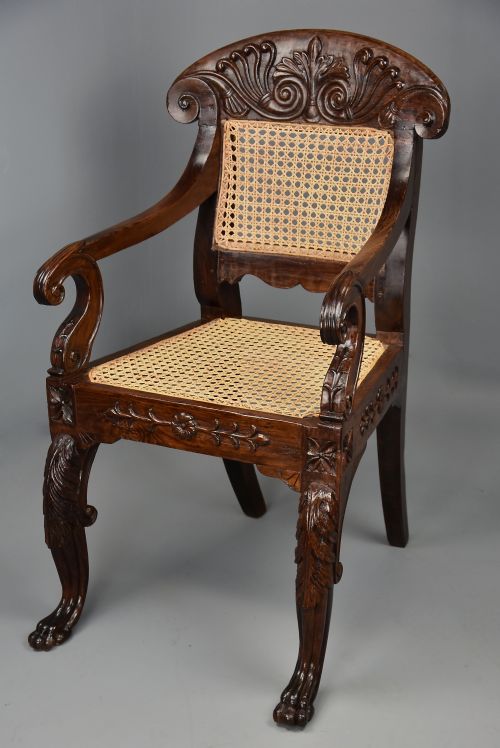
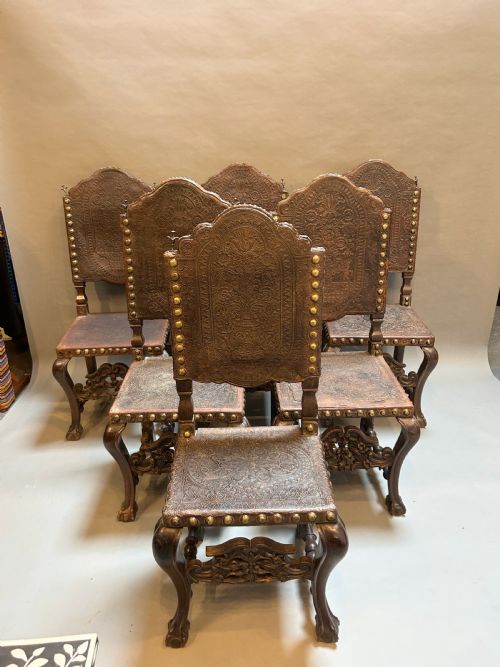
Colonial side chairs encompass a wide geographical scope, ranging from Anglo-Indian and Ceylonese workshops to Portuguese, Spanish, and American origins. Buyers searching for colonial side chairs encounter regional interpretations shaped by local timbers and European design influences during the seventeenth, eighteenth, and nineteenth centuries.
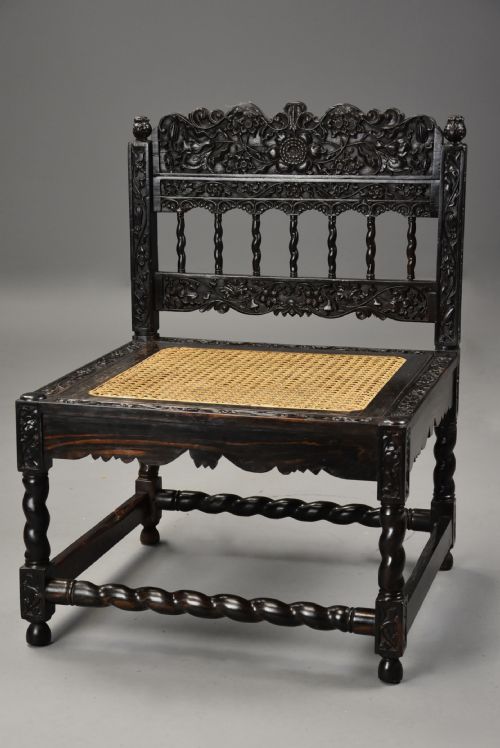
The pieces on this page appear in various forms, including dining sets, hall chairs, library seating, and folding variants. Materials span cane, leather, upholstery, brass, and dense tropical hardwoods.
Stylistic expressions vary significantly across the inventory, touching upon Portuguese Baroque, Spanish Revival, Anglo-Indian Regency, and Cape Dutch traditions. These chairs served utility and status within colonial administrative hubs and trading outposts.
Evaluating the craftsmanship
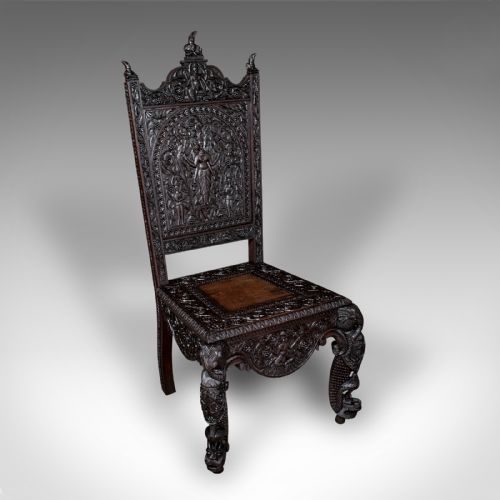
The standard of a piece rests upon the crispness of the hand-carving and the selection of the timber. Dense woods like solid ebony or padouk support deep, precise relief work that softer or replacement timbers cannot sustain with equal sharpness.
Structural cohesion and the integrity of secondary materials, such as original cane work or embossed leather panels, dictate the standing of the piece. Matching sets demonstrate greater uniformity in joinery and timber grain across multiple chairs.
Listings feature items spanning the seventeenth, eighteenth, nineteenth, and early twentieth centuries, utilising teak, ebony, rosewood, and padouk.
The Colonial Side Chairs Glossary
- Padouk
- A heavy, durable tropical timber frequently utilised in Anglo-Indian furniture production. It possesses a reddish-brown hue that deepens with age.
- Cane
- Woven material derived from rattan palm, often used for seating inserts in warm climates to provide ventilation. It requires skilled tensioning during manufacture.
- Coromandel Coast
- A region on the southeastern coast of India historically known for producing distinctive carved hardwood furniture, including solid ebony seating.
- Savonarola chair
- A type of folding chair formed of multiple intersecting wooden slats, originating in the Italian Renaissance and adopted in various colonial traditions.
- Hall chair
- A stiff-backed wooden seat traditionally placed in an entrance hall, often featuring a carved or painted crest and a solid wooden seat rather than upholstery.
Colonial Side Chairs: Frequently Asked Questions
How do I care for antique hardwood chairs?
Maintain stable indoor humidity levels to prevent the dense timbers from splitting or warping over time. Apply a microcrystalline wax periodically to nourish the surface without building up excessive residue.
Avoid placing these chairs in direct sunlight or near heat sources, which can dry out natural materials like cane and leather. Dust gently with a soft, dry cloth to protect carved details.
What is the difference between an armchair and a side chair?
Side chairs are built without armrests, designed originally to be tucked away or positioned neatly along dining tables and walls. They offer a compact footprint while maintaining decorative presence.
Armchairs incorporate structural arm supports, providing a more substantial seat often designated for heads of tables or reading spaces. Both types share regional stylistic traits within colonial furniture.
How do I identify an Anglo-Indian piece?
Anglo-Indian furniture typically combines British furniture forms with intricate indigenous carving techniques executed by local artisans. Look for dense tropical hardwoods like padouk, rosewood, or teak.
Design motifs often merge Regency or Victorian structural lines with elaborate floral, foliage, or figural relief work native to the Indian subcontinent.
Can these chairs be used for everyday dining?
Many of these pieces were constructed for functional dining or hall use from sturdy hardwoods capable of supporting daily wear. Ensure the joinery and seating supports remain stable before regular employment.
Consider adding protective pads beneath wooden feet or consulting a specialist if the seating relies on delicate cane or historic leather.