

Vintage Studded Leather Chairs
Vintage studded leather chairs bring immediate character to a room, offering deep comfort and tactile authority across styles from Victorian library seats to Art Deco club chairs.
Vintage Studded Leather Chairs
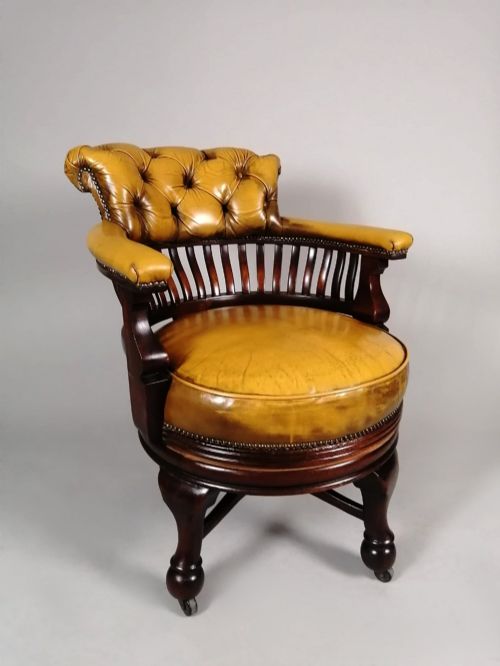
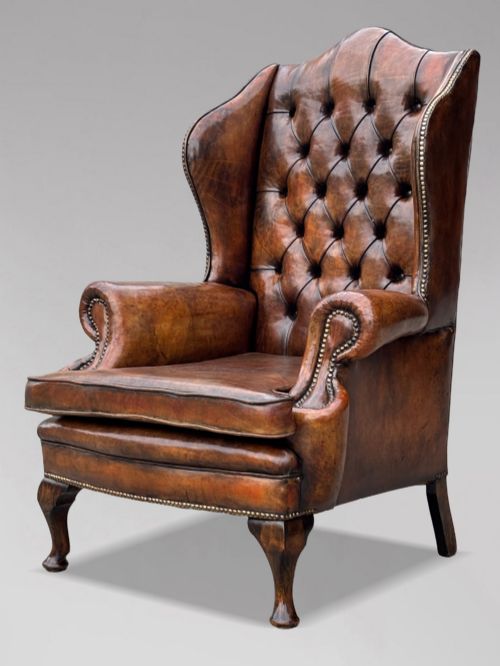
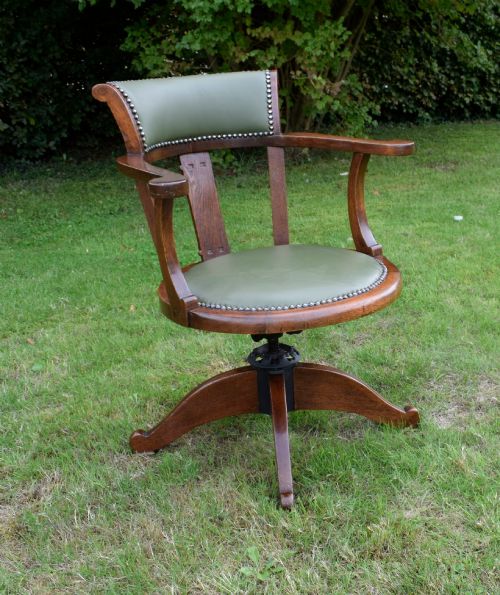
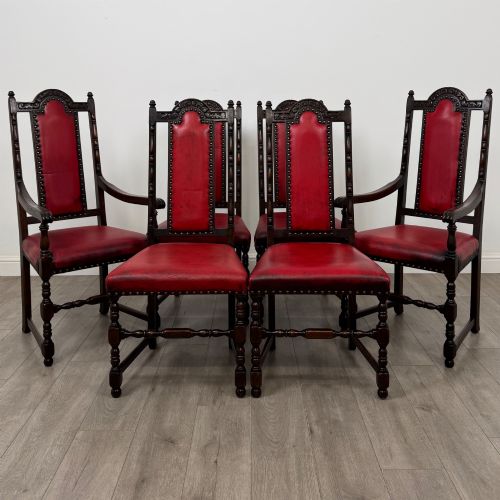
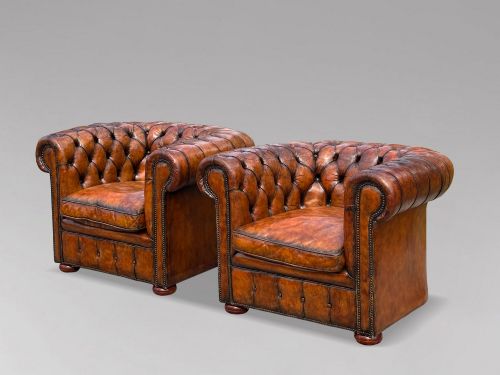
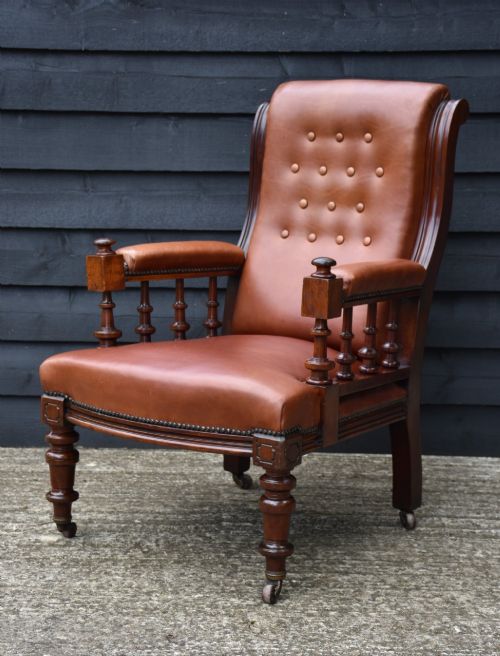
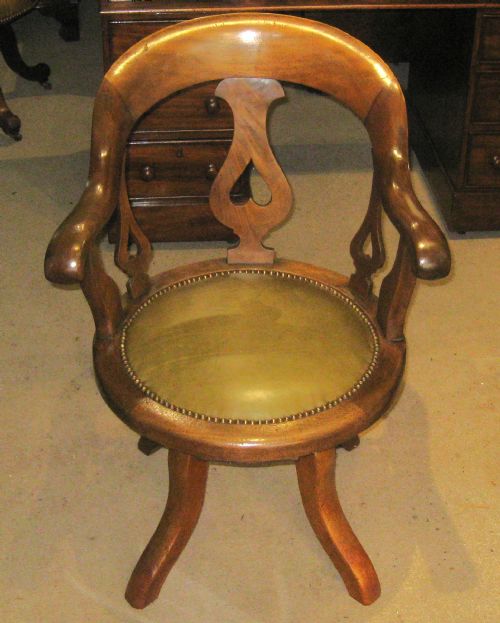
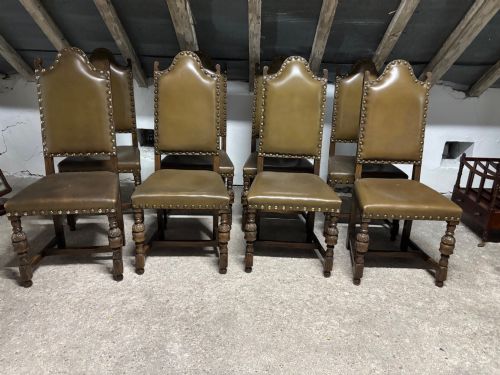
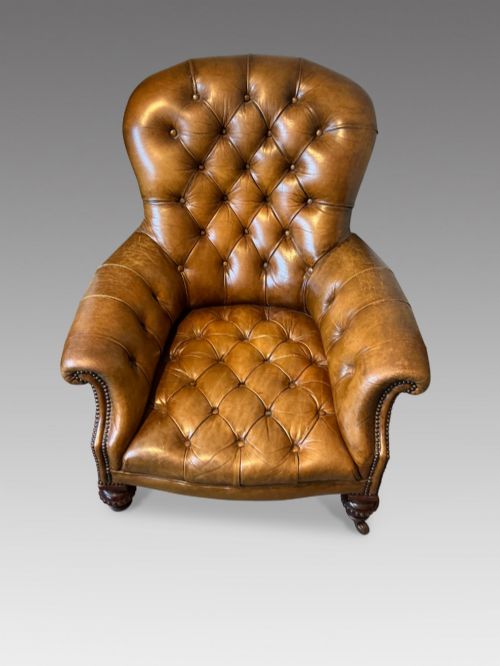
Vintage studded leather chairs encompass a broad family of seating designed for offices, libraries, and parlours, where upholstery meets structural timber. When searching for vintage studded leather chairs, buyers encounter everything from heavy button-backed Chesterfield club armchairs to swivel desk chairs and dining sets.
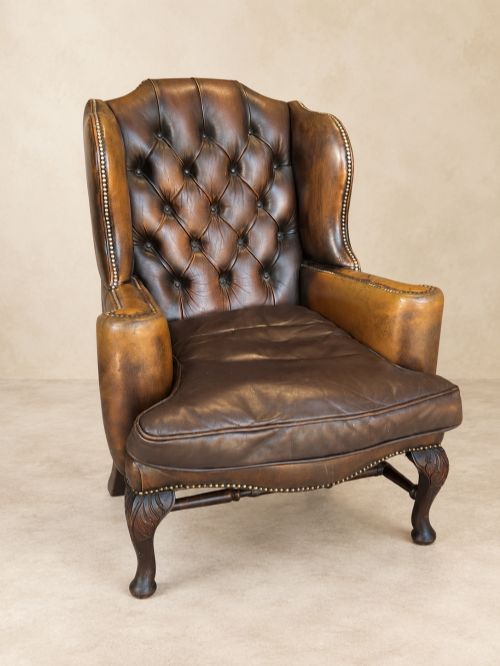
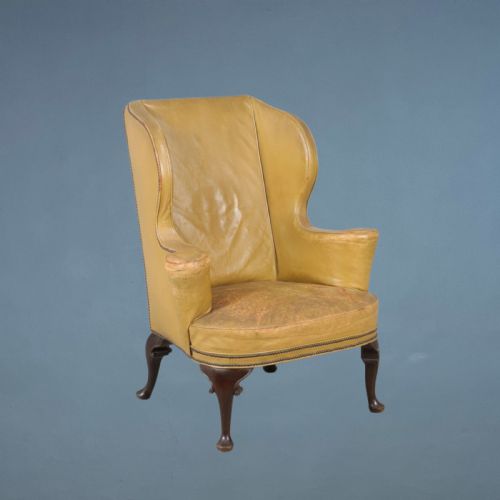
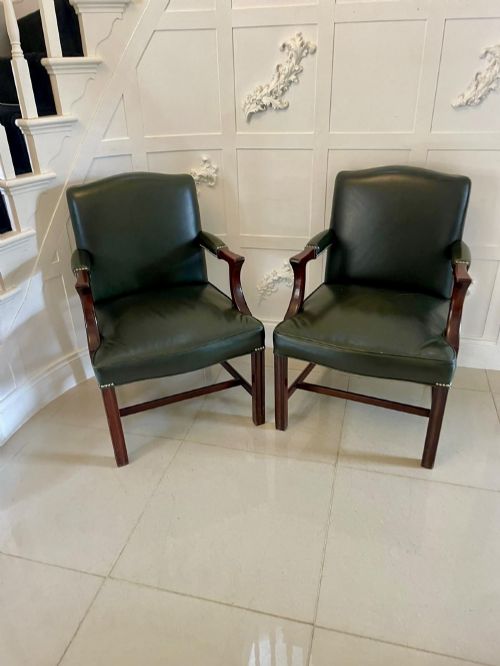
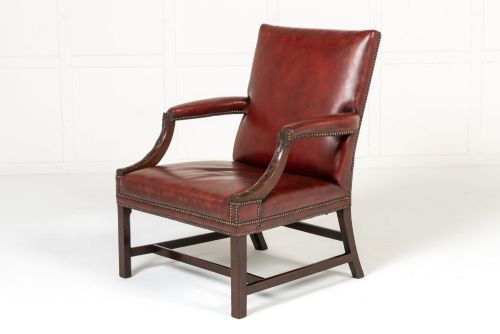
The selection on this page draws heavily from the nineteenth and early twentieth centuries, spanning Victorian, Edwardian, and Art Deco periods. Forms range from low fireside chairs and reading chairs to large wing armchairs and Gainsborough styles.
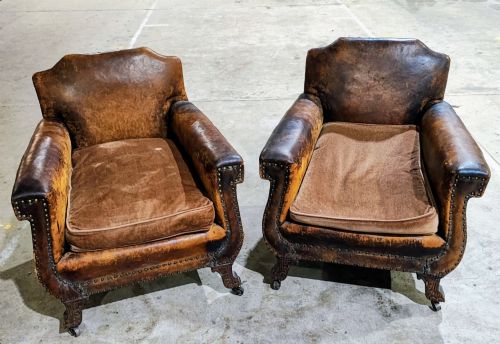
Origins vary as widely as the silhouettes, including English mahogany library pieces, French club chairs, and occasional North African or Portuguese examples. Buyers will frequently find pairs or sets alongside individual library armchairs.
How they were made
Makers built the foundational frames of vintage studded leather chairs from sturdy timbers such as oak, mahogany, walnut, and rosewood. Joinery relied on traditional methods to support heavy use, often paired with carved wooden details or plain turned legs.
Upholsterers stretched cattle hide over internal padding, securing the edges and creating tufted patterns with individual metal brass studs. These brass nails served a dual purpose of fastening the leather firmly to the wooden frame while adding a decorative border.
Listings feature timber frames in oak, mahogany, walnut, and rosewood, paired with brass hardware and leather upholstery across Victorian and Edwardian periods.
What varies in quality
Quality in vintage studded leather chairs rests heavily on the natural ageing and condition of the hide, where hand-dyed finishes and deep patination separate superior examples from plain replacements. The integrity of the underlying timber frame and the firmness of the traditional sprung upholstery also dictate the longevity of each piece.
The precision of the brass studding and the refinement of the woodwork, such as blind carving on mahogany or walnut frames, mark the difference between standard utilitarian seating and high-end library or parlour furniture.
The Vintage Studded Leather Chairs Glossary
- Wingback
- A chair style featuring protective flaps attached to the armrests and rising to the back, originally designed to deflect drafts in old houses.
- Chesterfield
- A heavily upholstered seating form typically characterised by deep button tufting and rolled arms of equal height to the back.
- Gainsborough chair
- A wide, open-armed armchair with a padded seat and back, standing on short legs, popular during the eighteenth century and later revived.
- Carver chair
- An armchair, often designed as part of a matching dining set to sit at the head of the table.
- Patina
- The deep, lustrous surface sheen developed on leather and wood through decades of handling, exposure, and natural wear.
Vintage Studded Leather Chairs: Frequently Asked Questions
How do I date a leather armchair?
Dating relies on examining the timber frame construction, the type of leather finish, and the style of the brass studding. Earlier nineteenth-century examples often display hand-turned mahogany or oak legs and traditional horsehair stuffing.
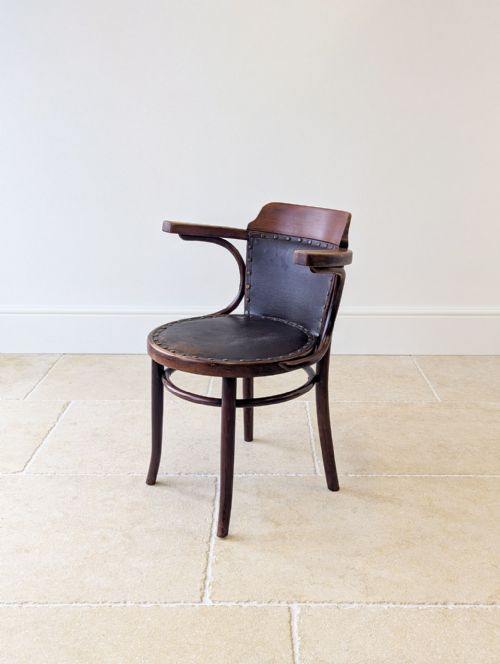
Later Edwardian and Art Deco pieces introduce swivel mechanisms, bentwood elements, or machine-applied studs alongside distinct geometric silhouettes.
Are club chairs comfortable for daily use?
Club chairs are engineered for deep relaxation, offering generous proportions and supportive sprung seats. Their low profiles and padded arms make them natural choices for living rooms and studies.
Over time, the internal suspension settles to accommodate the body, though buyers should verify the support beneath the cushions.
How should I care for vintage leather?
Maintain antique leather by keeping it away from direct heat sources and strong sunlight, which cause the hide to dry and crack. Regular dusting and occasional application of appropriate leather balms preserve the natural oils and surface sheen.
Avoid heavy chemical cleaners that strip the original dye and patination.
What is the difference between a desk chair and a library chair?
Desk chairs prioritize mobility and function, frequently featuring revolving swivel mechanisms, castors, and compact frames suited for writing tables. Library chairs emphasise comfort and status, offering wider proportions, upholstered arms, and static wooden frames designed for reading.