


Colonial Indian Coffer
A colonial indian coffer brings substantial hardwood presence and brass mountings into a room, offering practical storage with distinct historical character.
Colonial Indian Coffer
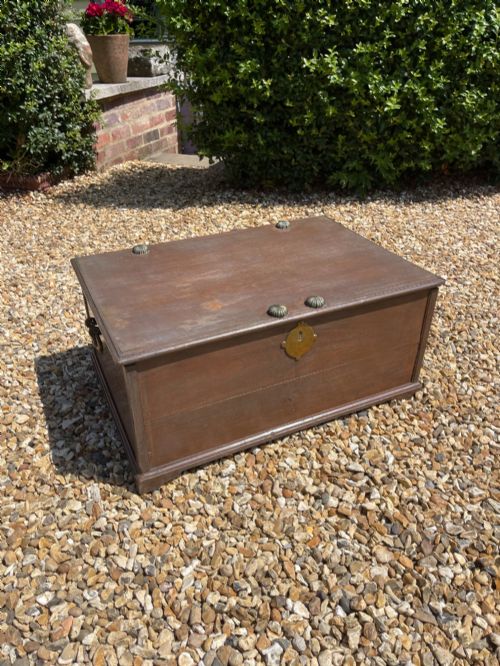
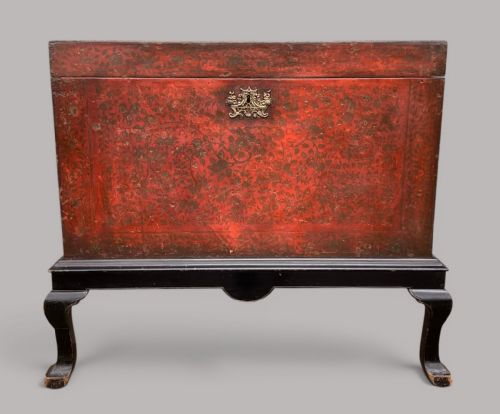
A colonial indian coffer is a robust storage piece designed for travel and domestic use, encompassing forms such as campaign trunks, blanket boxes, merchant chests, and cellarettes on stands. These items emerge primarily from the nineteenth century, reflecting the periods of Victorian and Georgian colonial influence.
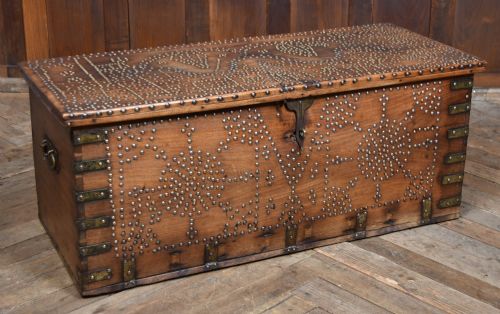
The most common versions on this page are substantial hardwood trunks built for utility and transport. Many feature heavy brass or iron binding, studded decorations, and specific regional timbers that mark their production.
Buyers seek these objects for their combination of deep storage capacity and striking decorative hardware. They anchor a room with dark timber tones and metal strapping.
How they were made
Construction relies on dense tropical hardwoods such as teak, padouk, camphor wood, satinwood, and sandalwood, chosen for durability and resistance to insects. Joinery is reinforced to withstand long sea voyages and overland transit.
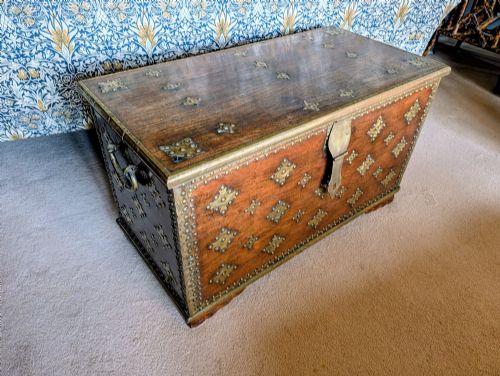
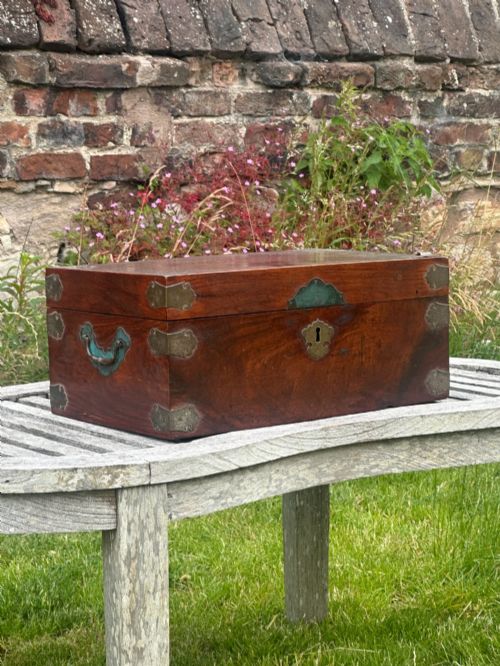
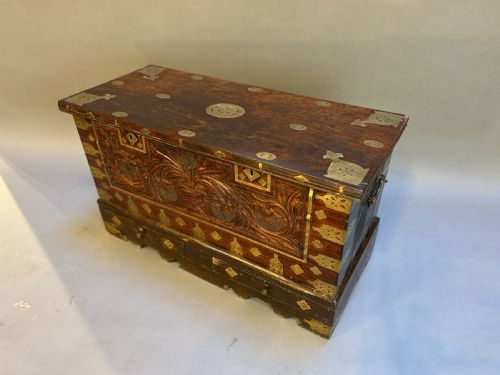
Metal components play a structural and decorative role, with brass straps, corner brackets, and iron bindings securing the wooden panels. Lacquer finishes and carved details appear on specific regional variants like those from Ceylon or through Chinoiserie influences.
Camphor wood chests bring their own natural fragrance to the room, keeping textiles fresh without any modern additives.
What varies in quality
Quality rests in the choice of timber and the precision of the metalwork. Dense padouk and figured satinwood command greater attention than standard utility hardwoods.
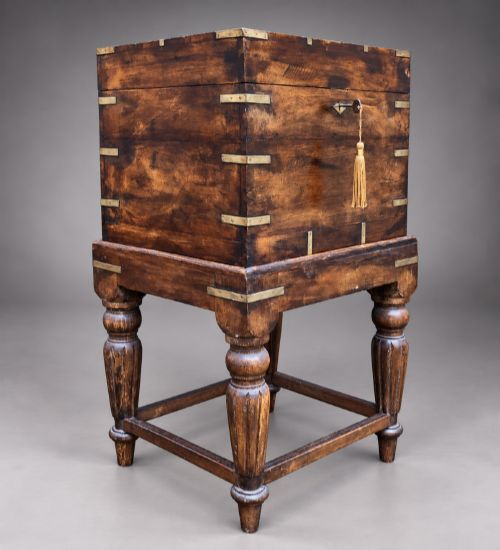
The complexity of the brass binding and the presence of a dedicated stand elevate a piece from a simple travel trunk to a finished domestic furnishing.
The Colonial Indian Coffer Glossary
- Campaign trunk
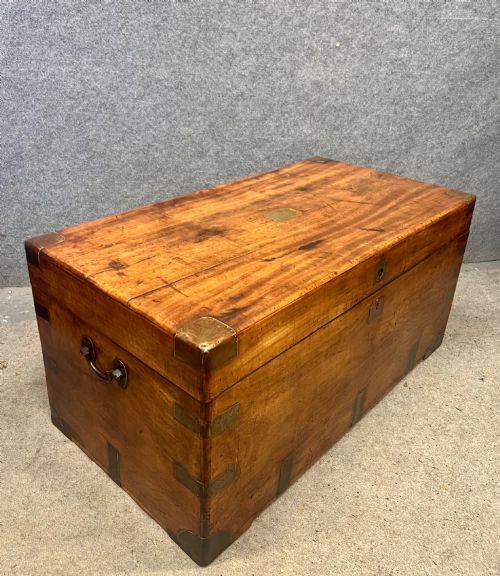
- A chest designed for military or civilian travel, typically featuring recessed brass handles, corner brackets, and sturdy construction.
- Zanzibar chest
- A distinct type of heavy hardwood chest characterised by elaborate brass studding, strapwork, and central drawer configurations.
- Cellarette
- A fitted wine chest, frequently elevated on a stand, designed to hold bottles securely during transport and dining.
- Padouk
- A heavy, durable reddish-brown tropical hardwood favoured in colonial furniture making for its stability and rich grain.
- Ceylonese
- Pertaining to furniture produced in Ceylon, often distinguished by the use of exotic woods like camphor and ebony.
Colonial Indian Coffer: Frequently Asked Questions
What is a colonial indian coffer used for?
These pieces serve primarily as functional storage trunks for blankets, linens, and personal possessions within a home.
Their heavy construction and deep interiors allow them to double as occasional tables or statement furniture pieces in living spaces.
How do I identify a campaign trunk?
Campaign trunks feature protective brass corners, strapwork, and flush-mounted handles designed to avoid snagging during transport.
Many examples also incorporate two-part construction or stands to keep luggage elevated off damp floors.
What woods were used for these chests?
The listings show a prevalence of dense tropical timbers including teak, padouk, camphor wood, satinwood, sandalwood, and rosewood.
Each timber brings a distinct weight, colour, and aroma, particularly with camphor wood and sandalwood.
Are these coffers authentically antique?
The pieces recorded here date predominantly from the nineteenth century, spanning the Victorian and Georgian colonial eras.
Construction methods reflect the period trade routes and the utilitarian demands of merchants and military officers abroad.