
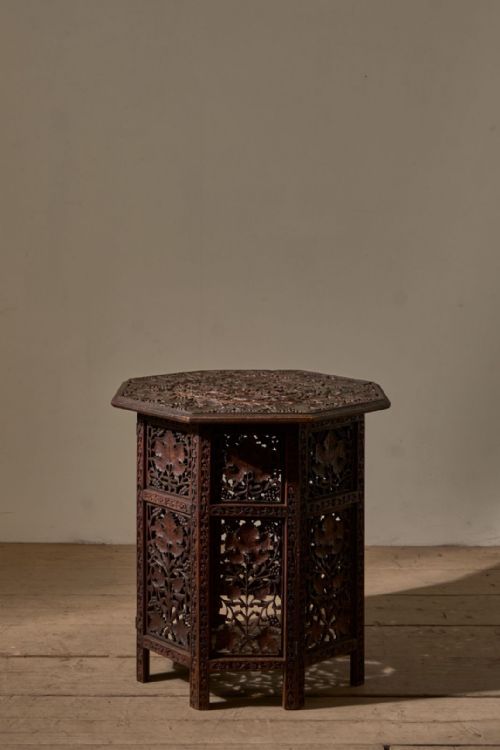


Colonial Carved Coffee Table
A colonial carved coffee table brings rich regional craftsmanship and dense ornamentation into a sitting room.
Colonial Carved Coffee Table
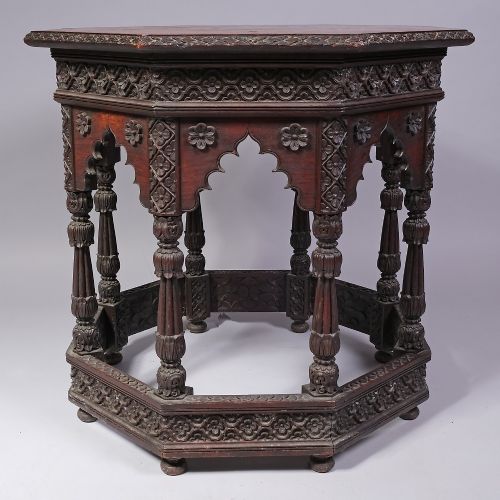
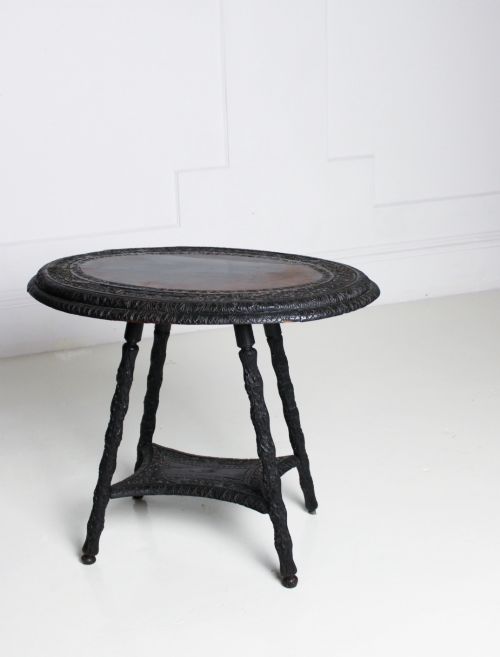
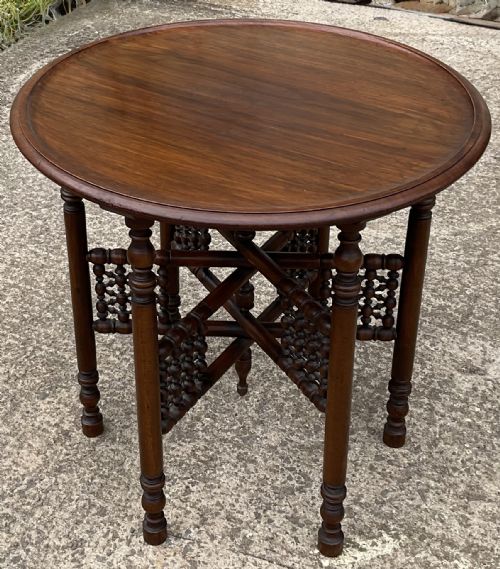
A colonial carved coffee table draws on distinct stylistic traditions, appearing frequently as low tables, occasional pieces, or adapted side tables from the nineteenth and early twentieth centuries. These pieces reflect Anglo-Indian, Burmese, and Portuguese colonial influences, showcasing regional woodworking skills executed for domestic use.
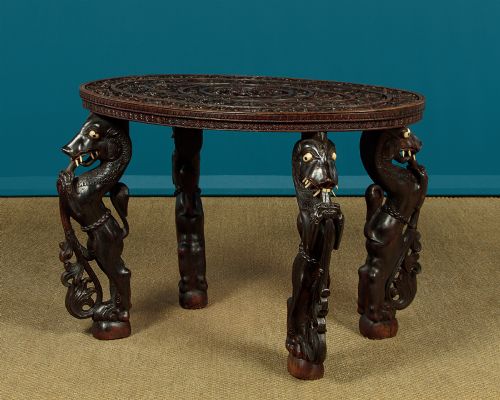
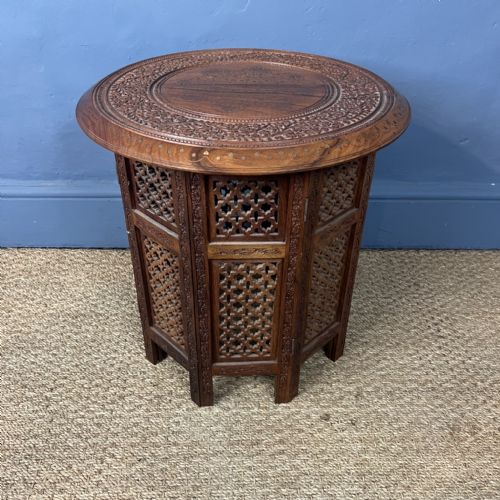
Forms vary from circular and octagonal tops to low resting surfaces supported by figural carvings such as elephants. Buyers encounter low tables and occasional tables designed with compact proportions suitable for modern seating layouts.
Materials and construction methods
Construction relies heavily on dense timbers including teak, rosewood, padauk, and general hardwood. These dark woods provide a stable foundation for deep, intricate relief carving across the aprons and surfaces.
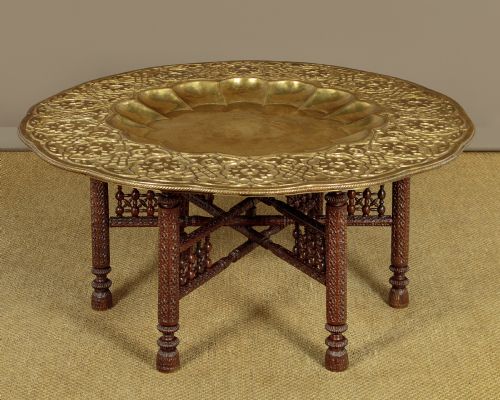
Surface decoration frequently incorporates contrasting elements such as brass inlay, copper tops, and delicate bone or bone inlay. Artisans combined carved vegetal or geometric motifs with metalwork to create textured, patterned tops.
The listings show pieces spanning the nineteenth century up to the nineteen-thirties, utilising teak, rosewood, brass, and bone inlay.
Evaluating craftsmanship and detail
Quality depends upon the depth and precision of the chisel work across the timber. Superior examples exhibit crisp, deeply undercut foliage and figures without splintering in the dense grain.
The integration of secondary materials dictates the standard of the piece. Finely fitted brass or bone inlay flush with the surrounding wood indicates superior execution compared to superficial surface application.
Hoshiarpur workshops
The Colonial Carved Coffee Table Glossary
- Anglo-Indian
- A descriptive term for decorative arts produced in India during the British period, combining British furniture forms with local carving traditions. These pieces often feature dense floral relief.
- Hoshiarpur
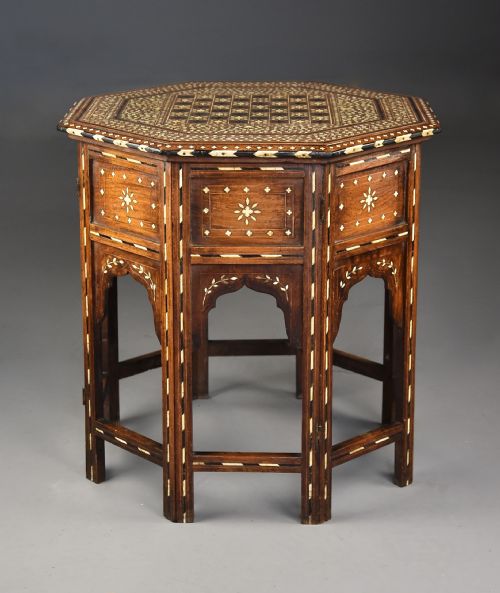
- A North Indian city renowned for intricate woodwork involving delicate inlay. Tables from this region display complex geometric patterns using brass and bone.
- Padauk
- A heavy tropical hardwood valued for its durability and rich colour. It frequently serves as the primary timber in substantial nineteenth-century tables.
- Occasional table
- A small, movable table used for subsidiary purposes within a room. In this context, they provide low surfaces for daily use.
Colonial Carved Coffee Table: Frequently Asked Questions
What defines a colonial carved coffee table?
These tables combine traditional regional woodwork from India, Burma, or Portuguese colonies with forms suited to domestic entertaining. They typically feature dense hand-carved motifs and dense tropical hardwoods.
Many examples originate from the nineteenth century or early twentieth century, reflecting cross-cultural design exchanges during those periods.
How were these tables used originally?
Lower tables and occasional pieces served various domestic functions in colonial households, from serving tea to displaying ornaments. Their mobile formats allowed them to be repositioned easily within living spaces.
Today, their low heights make them natural choices for modern coffee tables in front of low seating.
How do I care for inlaid wood?
Maintain the timber and metal or bone inlay by avoiding direct sunlight and excessive moisture fluctuation. Simple dusting with a soft cloth preserves the carved details.
Applying occasional appropriate wax helps nourish dense hardwoods like teak and rosewood without harming delicate inlays.
How do I identify Hoshiarpur work?
Hoshiarpur tables are recognised by their intricate geometric or floral patterns formed by pieces of brass and bone pressed into a dark wooden ground. The entire surface is usually covered in dense ornamentation.
Octagonal and folding configurations are particularly characteristic of this North Indian tradition.