
Collectors Miniature Drawers
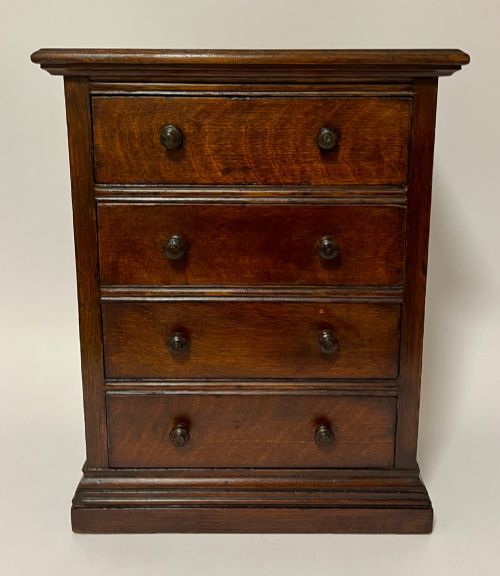
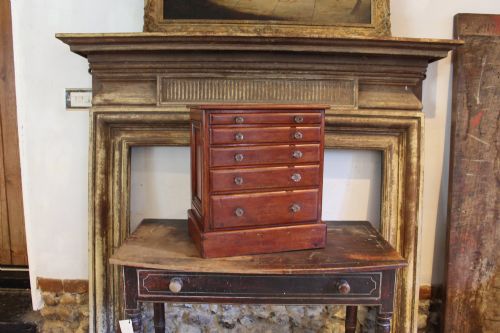
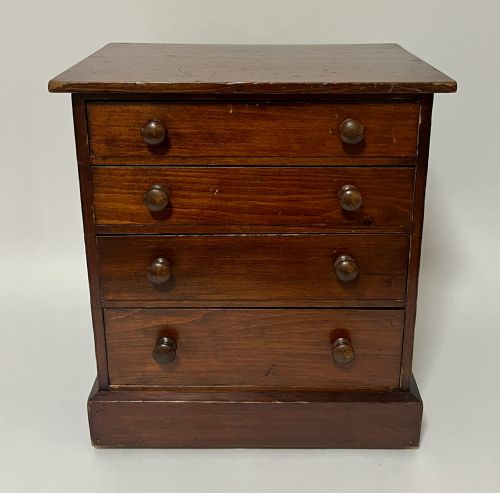
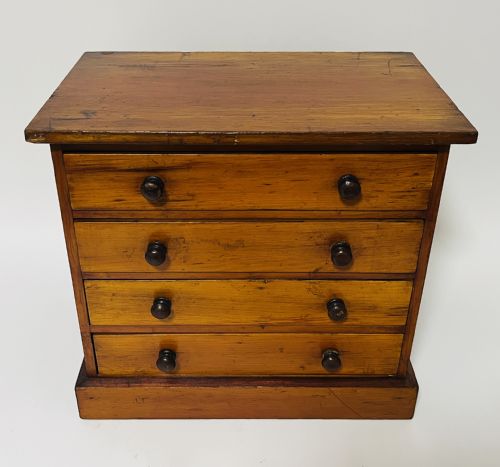
These collectors miniature drawers span centuries of cabinet-making, offering small-scale storage crafted from timbers like mahogany and oak.
Collectors Miniature Drawers
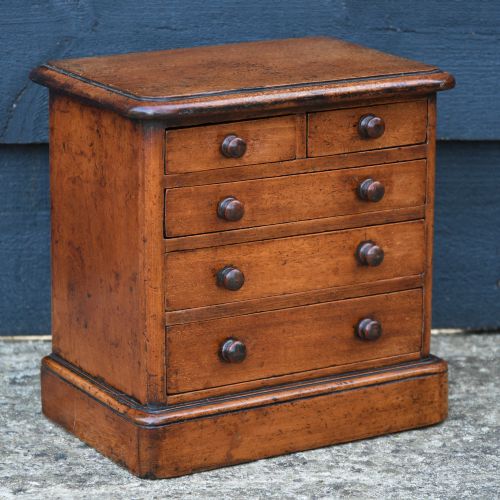
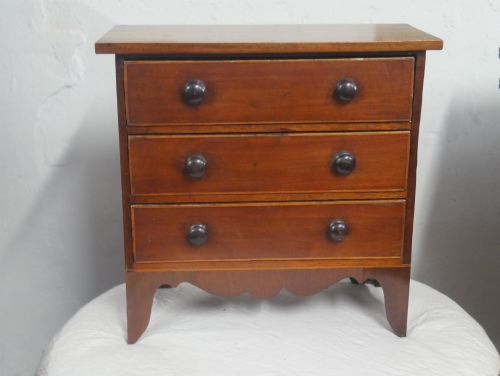
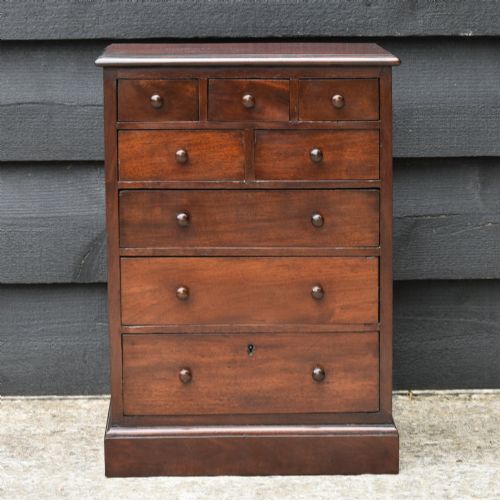
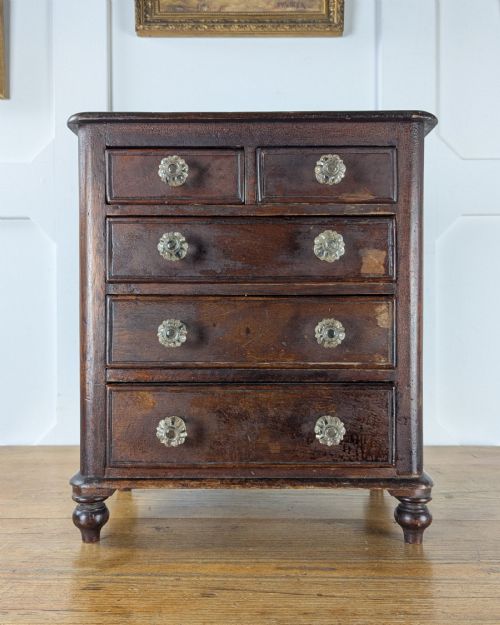
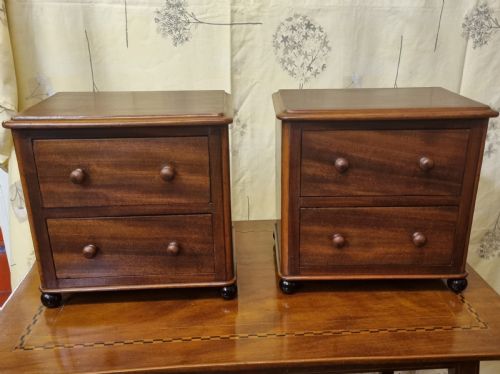
Collectors miniature drawers appear in several distinct forms, most commonly as small chests, table cabinets, and specimen cases. These pieces date from the eighteenth century through the early twentieth century, encompassing Georgian, Regency, and Victorian periods.
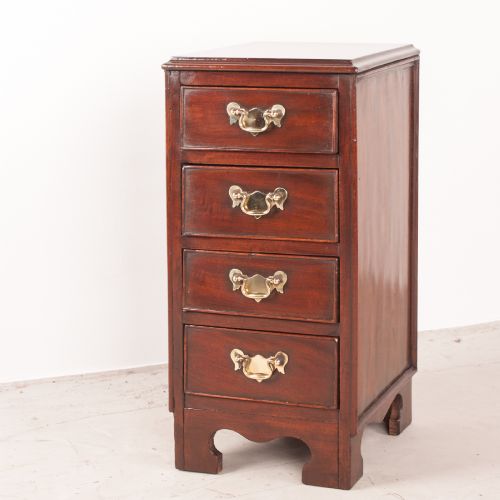
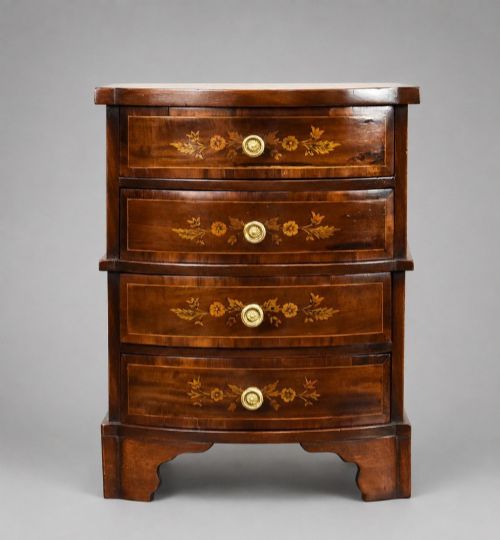
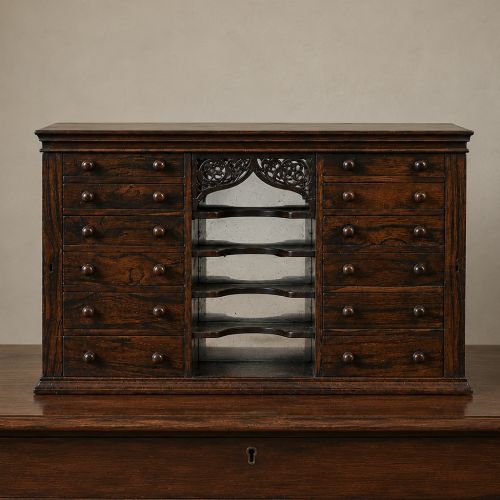
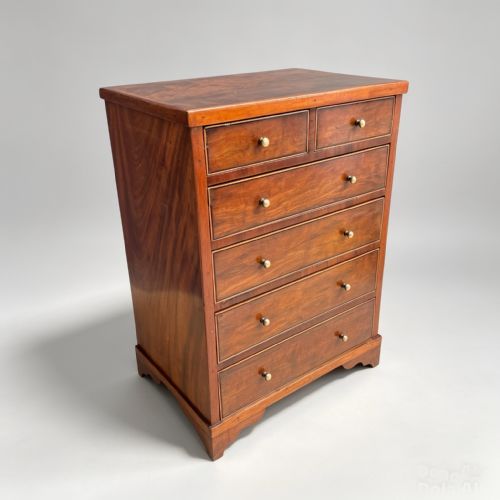
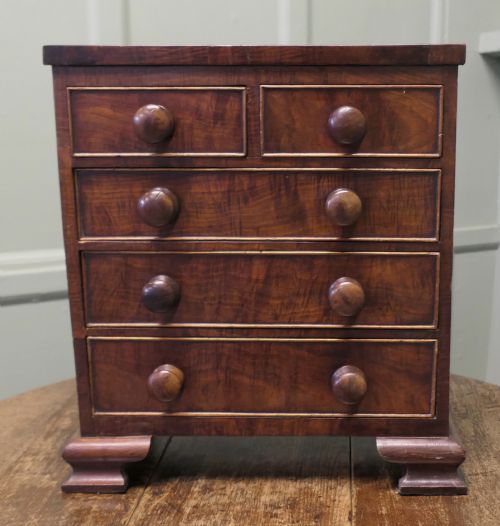
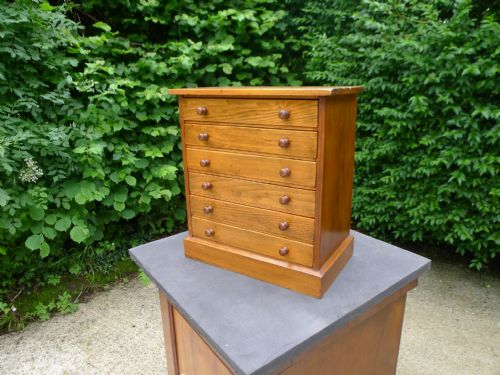
The version most frequently met on this page is the mahogany apprentice piece or miniature chest of drawers, often standing on turned feet or featuring a bow front. Alongside these sit specialised storage forms, including spice drawers, apothecary cabinets, and multi-drawer microscope slide cases.
Materials and Construction
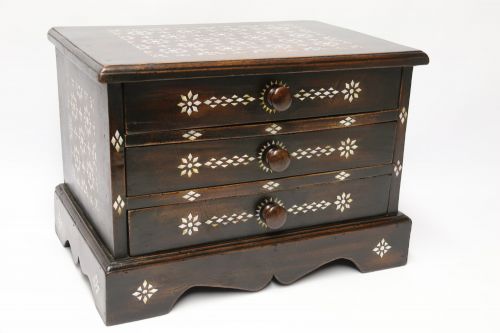
Cabinet-makers utilised a range of hardwoods for these small-scale pieces, predominantly mahogany, oak, walnut, and rosewood, frequently enhanced with inlay, marquetry, or burr veneers. Secondary timbers like pine appear in internal carcases and backing boards.
Joinery methods mirror full-scale furniture production, employing dovetailed drawer construction and turned wooden handles or brass pulls. Surface finishes rely on traditional polish and wax, bringing out the natural grain of fruitwood, yew, and elm.
A tiny locked compartment hidden within the carcase waits to surprise anyone lucky enough to find the secret release.
Assessing Quality
The standard of a piece rests heavily on the selection of timber and the precision of the cabinet-maker's joinery. Examples featuring figured veneers like burr walnut or amboyna, alongside complex internal arrangements such as secret drawers, demonstrate higher workshop skill.
Proportion and execution distinguish finer items from simpler utilitarian storage. Crisp dovetailing, intact brass hardware, and well-fitted drawers indicate superior original construction, whereas heavy replacement parts alter the integrity of the piece.
The Collectors Miniature Drawers Glossary
- Apprentice piece
- A small item of furniture made by a trainee craftsman to demonstrate mastery of skills before admission to a guild. These often take the form of miniature chests of drawers.
- Wellington chest
- A tall, narrow chest of drawers featuring a hinged locking stile on one side that secures all the drawers when locked. They are frequently found in miniature and table-top sizes.
- Specimen cabinet
- A specialised storage cabinet designed to hold natural history samples, coins, or slides. These contain numerous shallow drawers tailored for small objects.
- Bow front
- A convex, curved front profile popular in Georgian and Victorian case furniture. It adds visual movement to miniature chests.
- Marquetry
- The art of applying pieces of veneer to a structure to form decorative patterns and pictures. It appears on the top surfaces and drawer fronts of finer examples.
Collectors Miniature Drawers: Frequently Asked Questions
What were miniature drawers originally used for?
These small chests served multiple purposes in period homes, ranging from storage for jewellery, trinkets, and spices to professional use by naturalists and doctors.
Larger variations with numerous shallow bays functioned as specimen or microscope slide cabinets, while others served as portable storage for personal valuables.
How do I tell an apprentice piece from a standard miniature?
Apprentice pieces represent a craftsman's test work to prove skill to a guild, though many miniature chests were also built as salesman samples or domestic novelties.
Distinguishing between them relies entirely on the precision of the joinery and the complexity of internal details like secret compartments, as both categories share similar scales and period timbers.
Where should I place a table cabinet at home?
Their compact dimensions make these chests suitable for tabletops, sideboards, and desk surfaces where they add period character without dominating a room.
Placing them away from direct heat sources and strong sunlight protects polished hardwood surfaces and delicate veneers from drying or fading.
What woods were commonly used for these pieces?
Cabinet-makers relied heavily on durable hardwoods such as mahogany, oak, and walnut, often selecting figured timbers like burr oak or amboyna for decorative effect.
Softer woods like pine and fruitwood appear in regional items, spice drawers, and internal drawer linings.