


Anglo Indian Military Chest
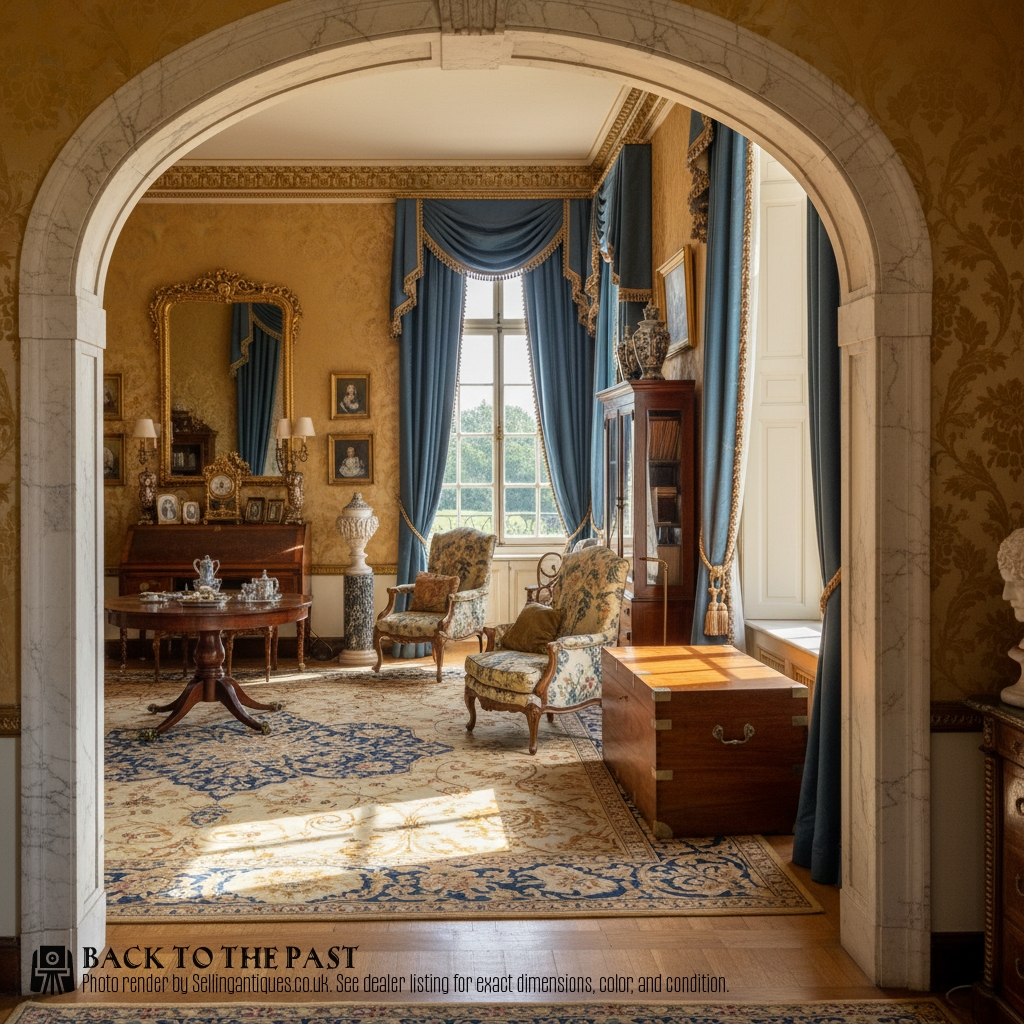
These robust anglo indian military chest examples combine exotic hardwoods and brass mounts to offer practical, travel-ready storage for the modern home.
Anglo Indian Military Chest
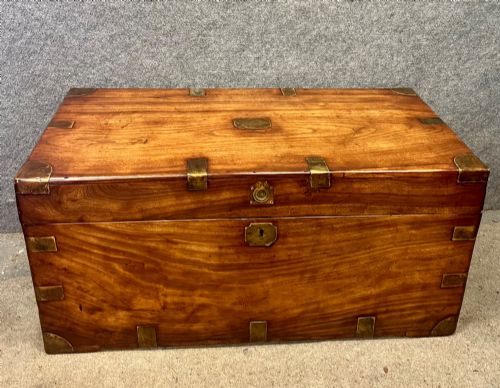
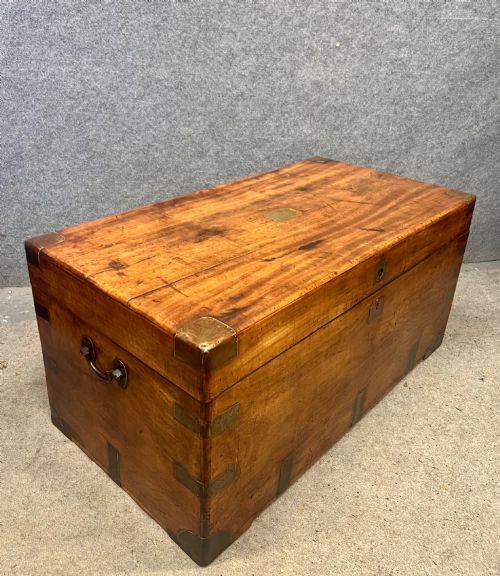
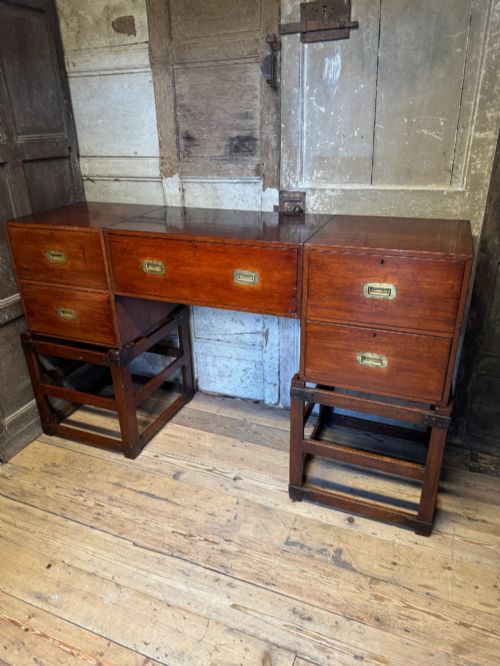
An anglo indian military chest is a utilitarian storage form designed for transport during colonial service, typically separating into modular sections for ease of movement. Buyers encounter examples primarily in the form of chest of drawers, campaign trunks, and secretaire bureaus dating from the nineteenth century.
The materials span dense tropical timbers such as teak, camphor wood, padouk, and mahogany, frequently reinforced with metal hardware. These pieces reflect the functional demands of officers on the move, combining sturdy construction with practical internal compartments.
How they were made
Cabinetmakers utilised durable tropical timbers like teak, padouk, and camphor wood to withstand shifting climates during transit. These woods offer natural resilience while providing a heavy, stable carcase for daily use.
Brass corners, straps, and recessed carrying handles protect the edges and corners from the impacts of travel. Drawers often feature flush hardware to maintain a flat exterior profile when packed.
Listings feature camphor wood, teak, and padouk woods across nineteenth-century Victorian campaign forms.
What varies in quality
The calibre of a piece rests in the precision of its joinery and the integration of its brass mounts. Superior examples display tight corner dovetails, flush-fitting hardware, and well-fitted internal writing compartments or secretaire drawers.
The choice of timber also defines the grade of the object, with dense padouk and figured teak commanding attention for their grain and colour. Original brass strapping and intact carrying hardware elevate the integrity of the design.
The Anglo Indian Military Chest Glossary
- Secretaire bureau
- A cabinet incorporating a fitted writing drawer with a fold-down front and small internal compartments. This form allowed officers to manage correspondence while on the move.
- Camphor wood
- A fragrant tropical timber utilised for campaign trunks because its scent naturally repels insects. It provides a lighter alternative to dense hardwoods while retaining strength.
- Padouk
- A heavy, durable reddish-brown timber favoured in colonial cabinetmaking for its rich grain and resistance to warping. It offers a dense structure suited to heavy-duty furniture.
- Brass bound
- A construction method where edges, corners, and joints are reinforced with brass plates and straps to absorb the shocks of travel.
Anglo Indian Military Chest: Frequently Asked Questions
Why do these chests come in two sections?
Modular construction allowed heavy storage units to be separated into manageable loads for transport by pack animal or wagon. Each section locks securely onto the one beneath it using internal pins or brackets.
This division made packing and unpacking straightforward for travellers navigating rough terrain during colonial campaigns.
How do I care for camphor wood furniture?
Camphor wood benefits from breathable indoor environments with stable humidity to prevent the natural timber from drying out too quickly. Gentle dusting with a dry cloth preserves the finish without harming the wood.
Avoid placing these pieces near direct heat sources or in prolonged direct sunlight.
What is a secretaire chest?
A secretaire chest includes a specialised top drawer that pulls out and folds down to reveal a writing surface and small pigeonholes. This combines the storage capacity of a chest with the utility of a desk.
Officers used these compartments for letters, maps, and documents while stationed away from permanent headquarters.
How are these pieces dated?
Dating relies on construction methods, timber choice, and the style of the brass hardware used on the carcase. Pieces from the mid to late nineteenth century often display specific modular bracket designs and flush drawer pulls.
Makers utilised particular dovetailing techniques that evolved over the course of the Victorian era.