

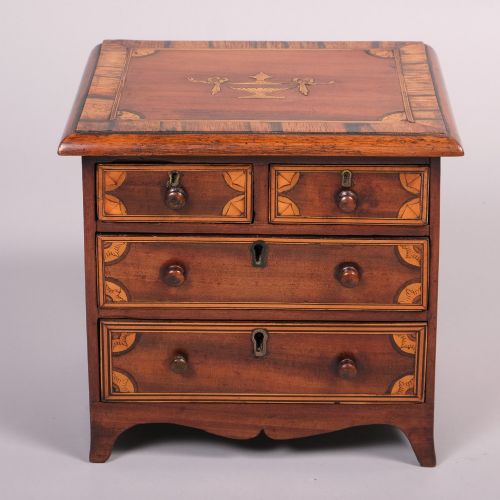
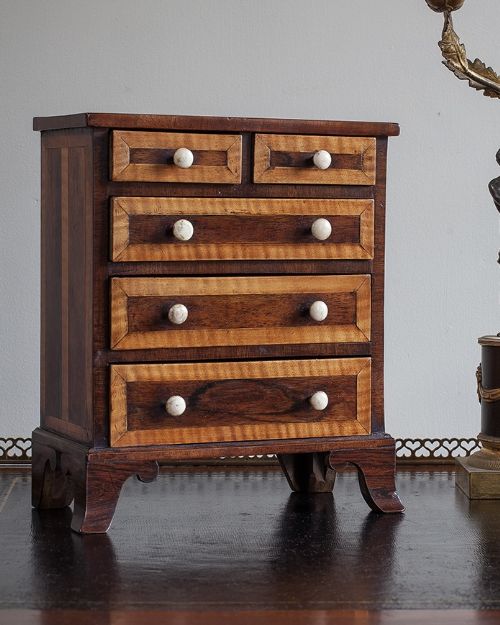
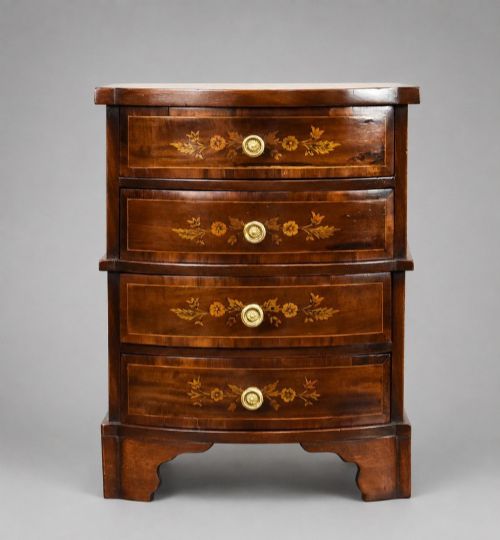
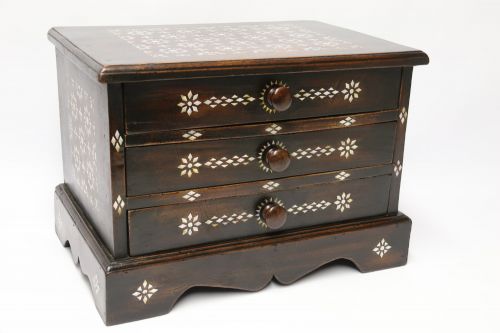


Inlaid Wooden Desktop Chest
These inlaid wooden desktop chest examples provide compact storage for small papers and keepsakes, offering tactile pleasure and period charm to any study.
Inlaid Wooden Desktop Chest
An inlaid wooden desktop chest is a compact storage piece designed for a writing surface or table, encompassing miniature chests of drawers, table cabinets, and desk boxes. When you search for this phrase, you meet items originating from the eighteenth century, the nineteenth century, the Edwardian period, and around nineteen twenty, spanning Georgian and Victorian eras.
The forms vary from miniature chests of drawers and collectors cabinets to correspondence chests, jewellery caskets, and stationery boxes. You are most likely to encounter nineteenth century walnut or mahogany pieces, alongside eighteenth century oak desk boxes and Anglo-Indian hardwood examples.
How they were made
Cabinet makers constructed these pieces using dense timbers such as oak, walnut, rosewood, and exotic hardwoods. Surfaces were frequently enriched with marquetry or geometric patterns utilising contrasting woods like holly and satinwood.
Decorative detailing often incorporated bone, mother of pearl, and brass fitments such as escutcheons and handles. Carving and inlay techniques required high levels of joinery skill to decorate miniature facades and delicate drawer fronts.
Inlaid Wooden Desktop Chest Retail Price Guide 2026
Typical asking prices for inlaid wooden desktop chest among the pieces listed under this phrase on Sellingantiques today, from the lower quarter to the upper quarter. They describe what is for sale here now, not the wider market.
Some miniature drawers hide secret compartments behind false backs, designed for secret notes and tiny fortunes.
What varies in quality
The distinction between standard examples and superior pieces rests on the precision of the cabinet work and the complexity of the surface ornament. Finer items display meticulous marquetry, tightly fitted miniature drawers, and well-chosen exotic timbers.
Consider the integration of decorative materials like mother of pearl and bone, where careful hand-cut placement elevates the visual impact. The crispness of carved oak or the depth of rosewood grain indicates the original maker's investment of time and skill.
The Inlaid Wooden Desktop Chest Glossary
- Marquetry
- The art of forming decorative patterns by fitting together small pieces of wood veneer. This technique creates pictorial or geometric designs across the top and front surfaces.
- Escutcheon
- A flat plate surrounding a keyhole to protect the surrounding wood from wear. Brass is the material most frequently utilised for these fittings on older boxes.
- Bog oak
- Subfossil oak that has lain in peat bogs for centuries, acquiring a deep dark colour. It provides striking contrast when used for inlay alongside lighter timbers like holly.
- Collector cabinet
- A specialised small chest fitted with multiple small drawers or compartments for housing natural history specimens or small valuables. These miniature pieces mirror the internal layout of full-size furniture.
Inlaid Wooden Desktop Chest: Frequently Asked Questions
What is an inlaid wooden desktop chest used for?
These pieces serve to organise correspondence, jewellery, small stationery items, or miniature collections on a table top.
Historically, they sat in studies or private chambers to keep personal documents secure and tidy.
How do I date an inlaid wooden desktop chest?
Dating relies on identifying timber choices, construction methods, and stylistic cues such as Georgian proportions or Victorian detailing.
Examining secondary woods inside the drawers and the style of brass hardware provides further clues to the period of origin.
Where were Anglo-Indian chests made?
Anglo-Indian pieces were manufactured in India during the period of British rule, often combining local dense hardwoods with traditional European furniture forms.
These items frequently showcase distinctive regional carving and contrasting inlay work.
How do I care for antique wood and inlay?
Keep these items away from direct sunlight and steady heat sources to prevent the timber from drying and the delicate inlay from lifting.
Apply a light microcrystalline wax occasionally to protect the polished surface without building up excessive residue.