

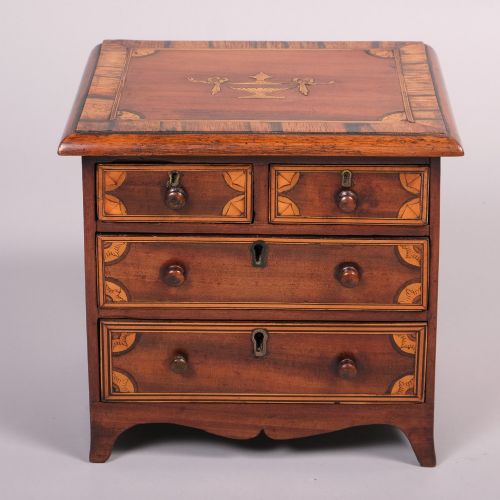
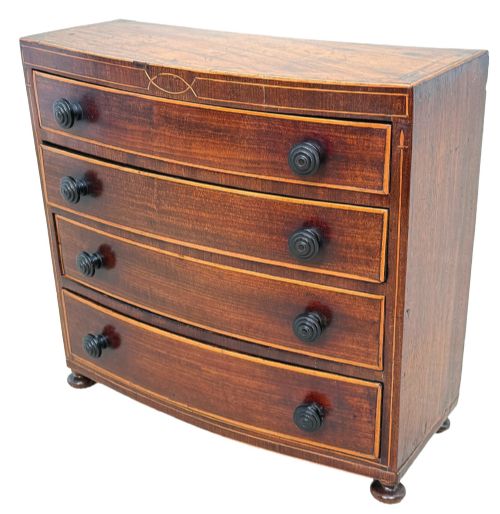
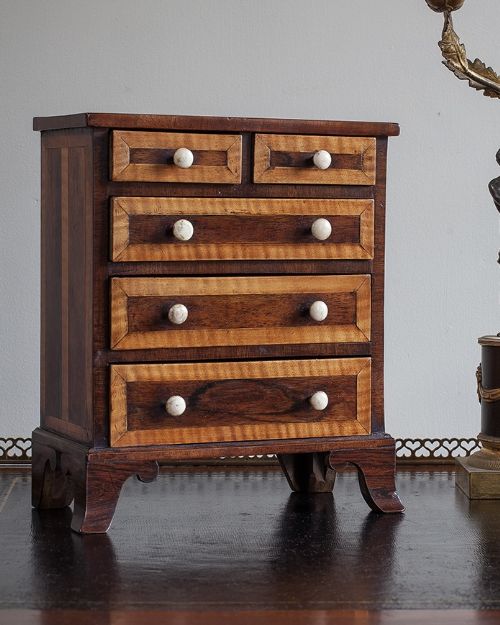
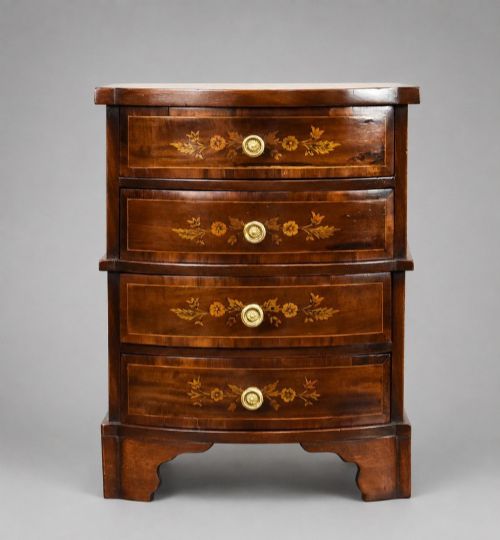


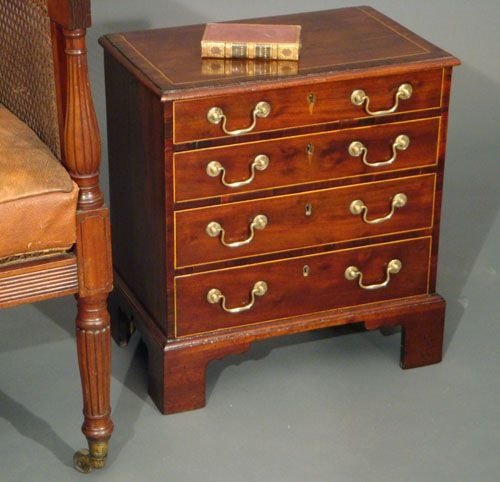


Inlaid Mahogany Apprentice Chest
These inlaid mahogany apprentice chest examples are small scale pieces of furniture that offer skilled craftsmanship in miniature form for collectors today.
Inlaid Mahogany Apprentice Chest
An inlaid mahogany apprentice chest is a small scale storage piece created during past centuries by makers demonstrating their mastery. The items on this page span the 18th century, 19th century, Georgian, Victorian, and Edwardian periods.
Most examples take the form of miniature chests of drawers or bowfront chests of drawers. Additional variations include tea caddies shaped like miniature chests and fitted tool trunks.
Originating in England, these small cabinets use mahogany as the primary timber. They reflect the full scale furniture designs of their respective eras in a condensed format.
How they were made
The makers constructed these pieces primarily using solid mahogany timber, incorporating contrasting woods like boxwood and satinwood for inlay work. Marquetry techniques appear on specific Edwardian examples.
Additional detail work includes bone and mother of pearl elements embedded within the wood surfaces. Brass fittings provide hardware for drawer pulls and key escutcheons.
Inlaid Mahogany Apprentice Chest Retail Price Guide 2026
Typical asking prices for inlaid mahogany apprentice chest among the pieces listed under this phrase on Sellingantiques today, from the lower quarter to the upper quarter. They describe what is for sale here now, not the wider market.
Some miniature chests doubled as tea caddies, proving that even a young craftsman appreciated a proper brew during the working day.
What varies in quality
The precision of the woodwork and the crispness of the inlay define the upper tier of these pieces. Clean lines on bowfront designs and tightly fitted miniature drawers indicate superior workshop origin.
Material selection creates further distinction across the range, particularly where intricate satinwood banding or delicate brass hardware is employed. Plain timber surfaces without contrasting detail represent a simpler standard of production.
The Inlaid Mahogany Apprentice Chest Glossary
- Apprentice chest
- A small scale piece of furniture traditionally made by a woodworker learning the trade. These items demonstrated skill to guild masters.
- Bowfront
- A curved cabinet front that swells outward in the centre. This shape requires advanced woodworking joinery.
- Inlay
- A decorative technique where contrasting materials are inserted into recessed cavities in the wood surface. Satinwood and boxwood are common inserts.
- Tea caddy
- A small container designed to store loose tea leaves. Some examples adopt the miniature chest of drawers form.
- Marquetry
- Elaborate veneer patterns applied to furniture surfaces using various tinted woods. This style appears on later Edwardian pieces.
Inlaid Mahogany Apprentice Chest: Frequently Asked Questions
What is an apprentice chest?
An apprentice chest is a small scale cabinet made by woodworkers to demonstrate technical skill. These miniature pieces mirror full size furniture designs.
Craftsmen used them to prove proficiency in joinery and decoration before qualifying as master joiners.
How were these miniature chests used?
Historical uses varied from salesman samples showing furniture styles to actual desk accessories. Some functioned as jewellery boxes or specialty storage.
Tea caddies shaped like chests stored valuable loose leaf tea in domestic households.
What woods are used?
Mahogany serves as the primary timber across the majority of these pieces. Cabinet makers added boxwood, satinwood, and rosewood for contrast.
Inlay and stringing details highlight the natural grain of the primary wood.
How do I date a piece?
Dating relies on stylistic clues such as bowfront shaping, drawer construction methods, and inlay materials. Georgian and 18th century pieces show different proportions compared to Victorian examples.
Secondary woods and hardware types also assist in determining the period of origin.