






Collector Wine Glasses
Collector wine glasses are sophisticated Georgian drinking vessels crafted to grace the table, offering a tangible connection to eighteenth-century entertaining.
Collector Wine Glasses
Collector wine glasses are drinking vessels predominantly originating from the eighteenth century and the Georgian period. The examples encountered here encompass various specialised forms including cordial wine glasses, ratafia glasses, and larger goblets.
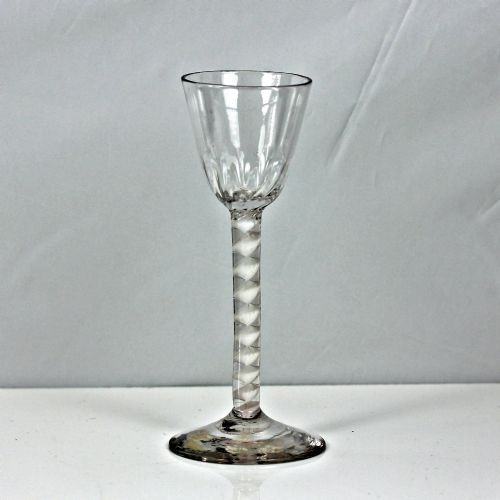
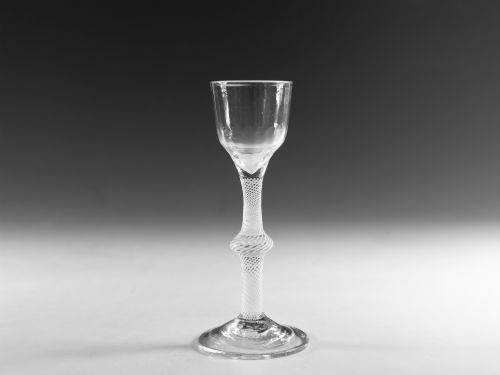
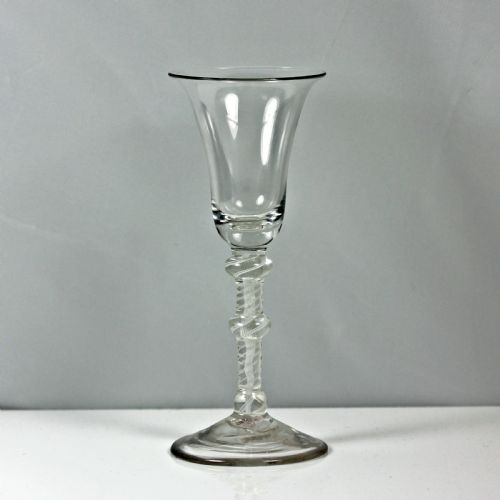
The most common iterations on this page feature distinctive stems containing air twists or opaque twists supporting bowls such as rounded funnels, bells, and ogees. English provenance dominates the selection, reflecting domestic production traditions of the era.
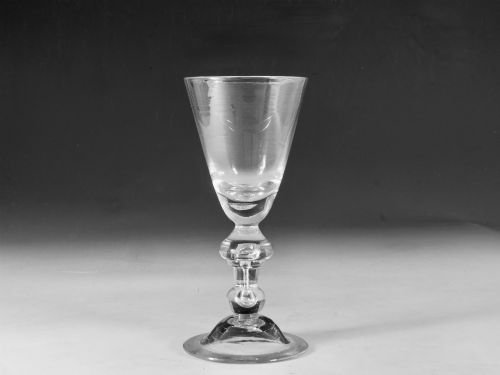
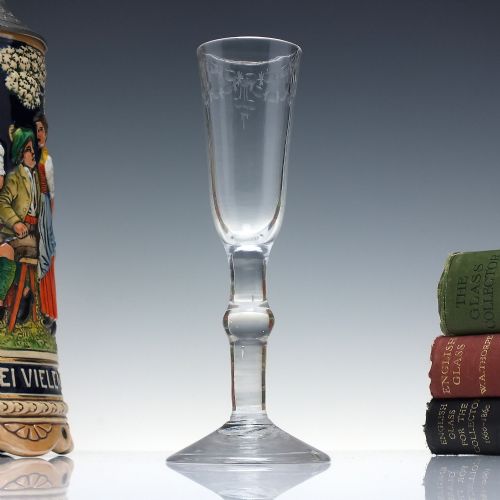
Earlier pieces span from the second quarter of the eighteenth century up to the 1760s and 1765. Buyers frequently encounter baluster, balustroid, and composite stem formations alongside the standard wine glass shapes.
Materials and construction
These glasses rely heavily upon lead glass, lead crystal, and flint glass to achieve clarity and weight. Artisans manipulated the molten metal to incorporate internal optical effects within the stems.
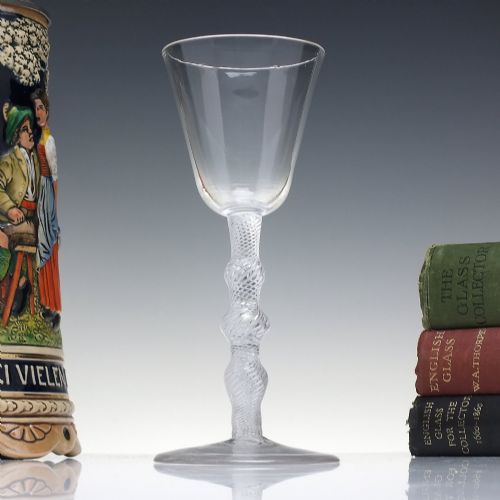
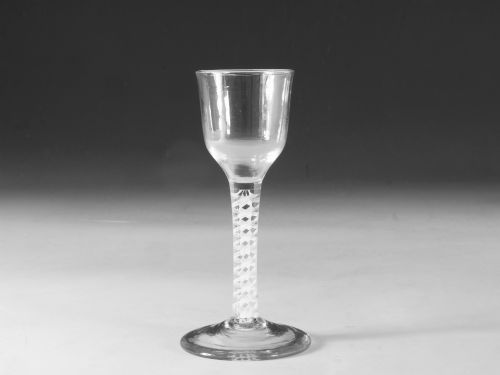
Opaque twist stems incorporate white enamel threads drawn through the glass, sometimes arranged in single or double series configurations. Air twist stems utilise elongated bubbles stretched during manufacture to create corkscrew patterns inside the stem.
Collector Wine Glasses Retail Price Guide 2026
Typical asking prices for collector wine glasses among the pieces listed under this phrase on Sellingantiques today, from the lower quarter to the upper quarter. They describe what is for sale here now, not the wider market.
Listings span the eighteenth century, featuring lead crystal, flint glass, and white enamel materials across Georgian styles.
Distinctions in execution
Quality separates standard production from superior examples through the complexity of the stem formation and the precision of the bowl moulding. Elaborate multi-spiral twists and triple knops require advanced glasshouse skill compared to simple straight stems.
The degree of finish also dictates distinction, seen in flute-moulded ogee bowls or engraved decoration upon baluster glasses. Heavier lead crystal compositions and well-balanced proportions elevate the standing of an individual piece.
The Collector Wine Glasses Glossary
- Air twist
- A stem formation created by stretching internal bubbles into a spiral thread of air. This technique defines many mid-eighteenth-century drinking vessels.
- Opaque twist
- A stem decoration formed by incorporating white enamel rods into the molten glass before twisting. These appear as single or double series configurations.
- Baluster glass
- A heavy drinking vessel featuring a thick, architectural stem derived from seventeenth-century silver and pottery forms. The style represents early Georgian production.
- Ogee bowl
- A drinking vessel bowl with a distinctive S-curve profile, curving out at the rim and in towards the base. This shape provides stability and concentrates aromas.
- Ratafia glass
- A tall, slender vessel designed for serving sweet aromatised cordials. These glasses typically feature narrow bowls suited to small quantities.
Collector Wine Glasses: Frequently Asked Questions
What defines a collector wine glass?
These pieces are historic drinking vessels originating primarily from the Georgian era and the eighteenth century. They are distinguished by period manufacturing techniques, lead glass compositions, and specialised stem formations.
Collectors prize them for their historical survival and the varied craftsmanship visible in their bowls and twists.
How do air twists differ from opaque twists?
Air twists contain spiralling threads of trapped air enclosed within the stem, created by pulling elongated bubbles during the blowing process. Opaque twists utilise white enamel glass rods drawn into similar corkscrew patterns.
Both methods were developed to add visual interest to eighteenth-century drinking vessels without relying on surface cutting.
Were these glasses used for daily dining?
In their original eighteenth-century context, they served during formal dining and social gatherings for consuming wine, cordials, and spiced beverages. Their delicate lead glass and intricate stems meant they belonged on the tables of affluent households.
Today, modern owners typically display them as cabinet pieces rather than utilising them for regular dining.
How can you tell the approximate date?
Dating relies on stylistic evolution, tracking the transition from heavy baluster forms in the early part of the eighteenth century towards lighter air and opaque twist stems by the 1750s and 1760s. Bowl shapes and foot profiles also shift across these decades.
Comparing the specific combination of metal composition, stem type, and bowl moulding provides a reliable guide to the manufacturing era.