
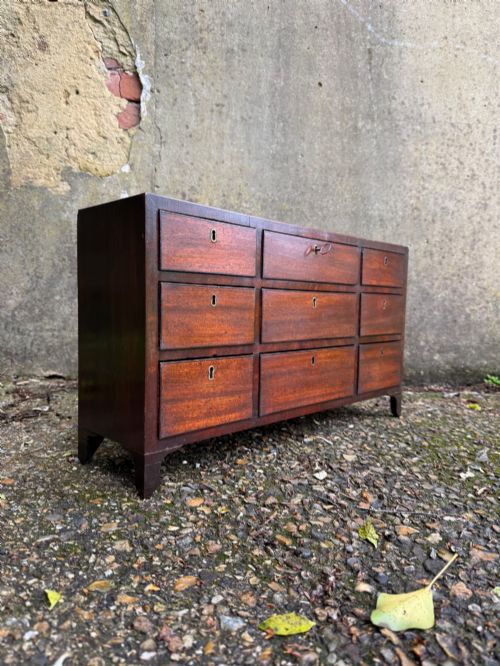


Collector Trinket Chest
A collector trinket chest gathers small treasures in miniature drawers, offering neat storage for rings, seals and keepsakes.
Collector Trinket Chest
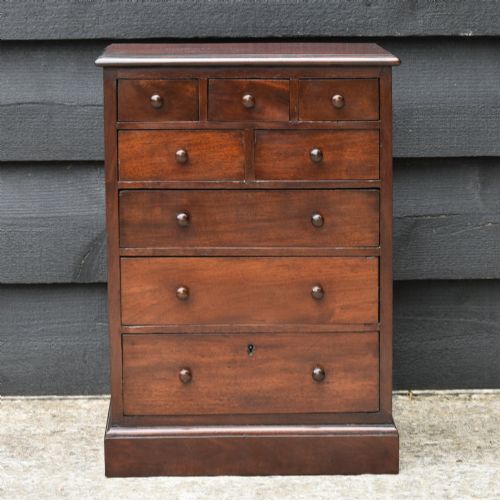
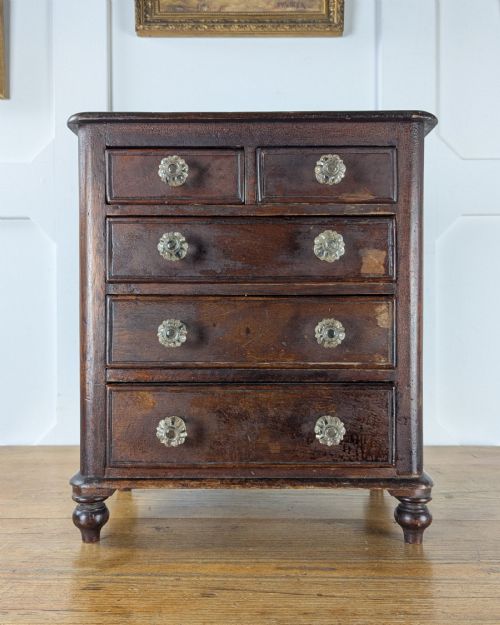
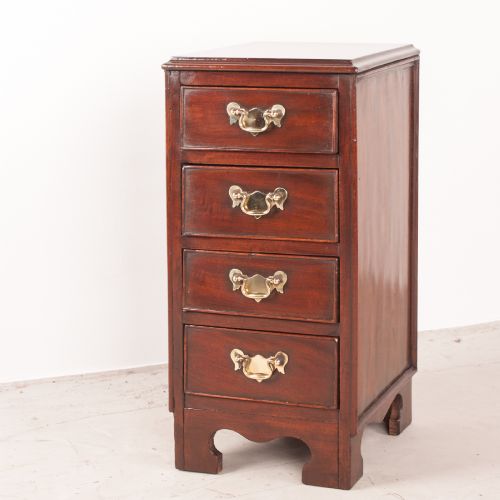
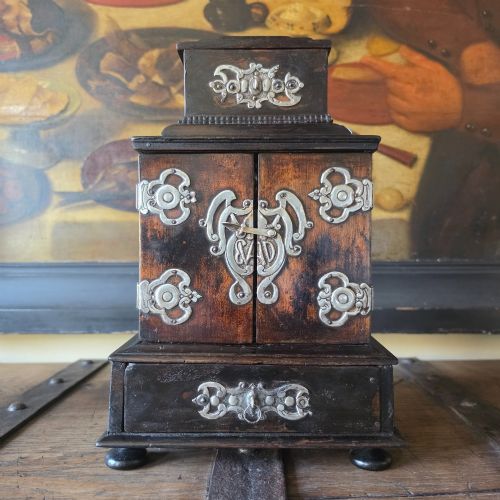
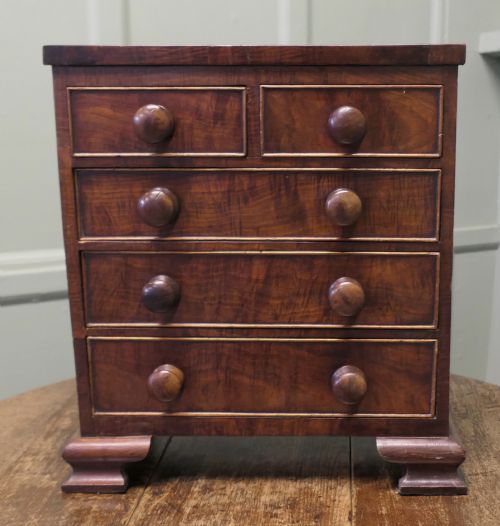
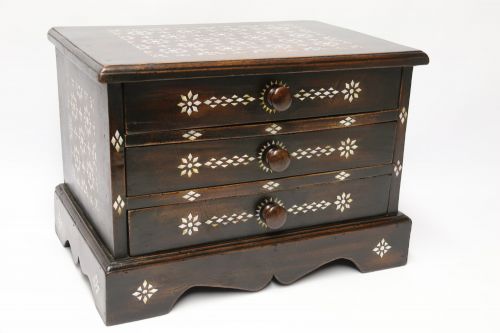
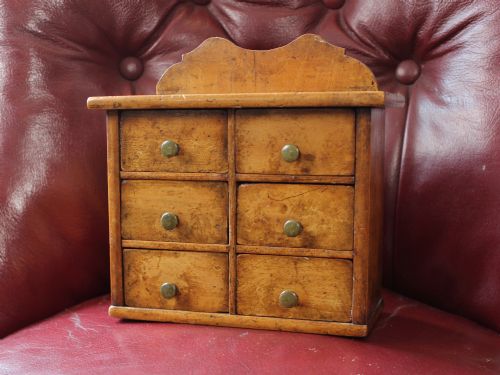
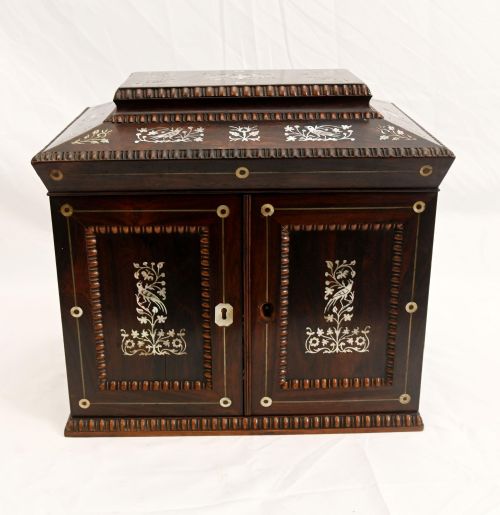
Most items on this page appear as miniature bow-front chests, apprentice pieces or spice cabinets designed to sit upon a table or desk. Alongside standard drawer arrangements, visitors encounter jewellery chests and decorative boxes inlaid with mother-of-pearl.
The scale mimics domestic case furniture of the period, offering multiple small compartments within a compact footprint. Makers utilised native timbers alongside exotic woods such as amboyna and thuya to create these miniature receptacles.
Materials and construction
Cabinetmakers constructed these small chests using solid hardwoods like mahogany, oak and walnut, frequently selecting veneers such as laburnum oyster and thuya wood. Surfaces often display bone, brass and mother-of-pearl inlay, paired with turned wooden feet and small brass handles.
Joinery techniques mirror full-sized furniture production of the Georgian and Victorian eras, utilising dovetailed drawer construction and framed carcasses. Lacquerwork and fine surface polishing complete the decorative finish on pieces originating from diverse regional workshops.
The listings span the eighteenth and nineteenth centuries, featuring walnut, mahogany and oak alongside mother-of-pearl and bone inlay.
Quality and execution
Distinctions in quality rest upon the choice of timber and the precision of the miniature joinery. Finer specimens display carefully selected mahogany grain, crisp bow fronts, and intact internal linings rather than crude assembly.
Decorative embellishments set superior examples apart, such as meticulous mother-of-pearl inlay, intricate brass fittings and well-preserved patination. The integration of functional drawers with balanced proportions marks the difference between standard items and exceptional cabinetwork.
The Collector Trinket Chest Glossary
- Apprentice piece
- A small item of furniture demonstrated by a craftsman to prove proficiency. These miniature chests often display the same joinery standards as domestic case pieces.
- Bow-front
- A convex curved front contour popular in furniture design. This shape appears frequently on nineteenth-century miniature chests of drawers.
- Thuya wood
- A fragrant softwood derived from the Tetraclinis articulata tree, prized for its mottled grain. French makers utilised this material for decorative boxes.
Collector Trinket Chest: Frequently Asked Questions
What were miniature chests used for?
These small chests served to store jewellery, trinkets, coins or loose papers upon a desk or dressing table. Some functioned as travelling receptacles for personal valuables.
Craftsmen also produced them as trade samples or apprentice pieces to demonstrate competency in furniture construction to a guild.
How do I date a collector chest?
Dating relies upon timber selection, hardware style and construction methods visible in the drawers and carcass. Georgian pieces typically show straight or bow-front mahogany designs with hand-cut dovetails.
Victorian variants introduce alternative timbers, mother-of-pearl inlay and turned feet. Specific years mentioned in descriptions reflect the estimated period of manufacture.
Where should I place a trinket chest?
These compact chests suit placement on top of sideboards, desks, dressing tables or dedicated shelving units. Their small footprint allows them to sit securely on narrow surfaces.
Keep them away from direct sunlight and radiators to protect delicate wood veneers, bone elements and mother-of-pearl inlay from drying out.
Are apprentice pieces genuine?
Many small chests are traditionally attributed as apprentice pieces, though historians note some served simply as miniature furniture for children or desk accessories. The term describes the scale and domestic function.
Authenticity is judged by the period materials, hand tools evidence in the joinery, and the overall integrity of the construction rather than the legend alone.