

Early Nineteenth Century
When you explore early nineteenth century pieces, you find a period spanning Regency, Georgian, and early Victorian craftsmanship across furniture, scientific instruments, and decorative arts.
Early Nineteenth Century
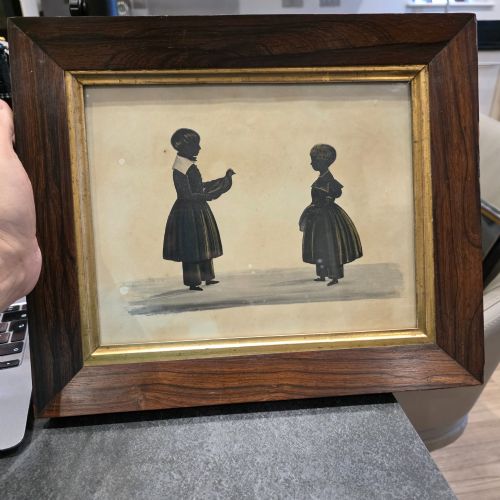
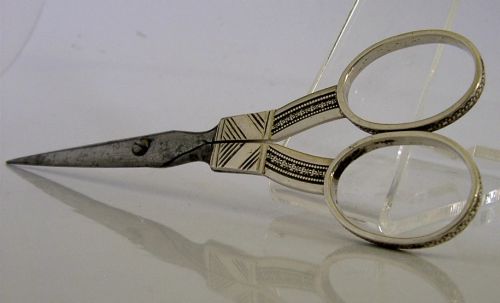
Early nineteenth century objects encompass domestic furnishings, precision scientific instruments, and decorative works created during a time of immense stylistic transition. You will frequently encounter substantial furniture pieces alongside smaller domestic items such as mirrors, clocks, and sewing accessories.
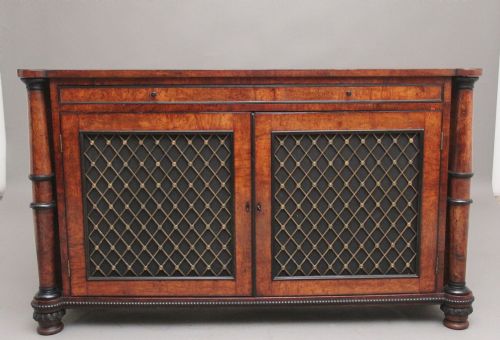
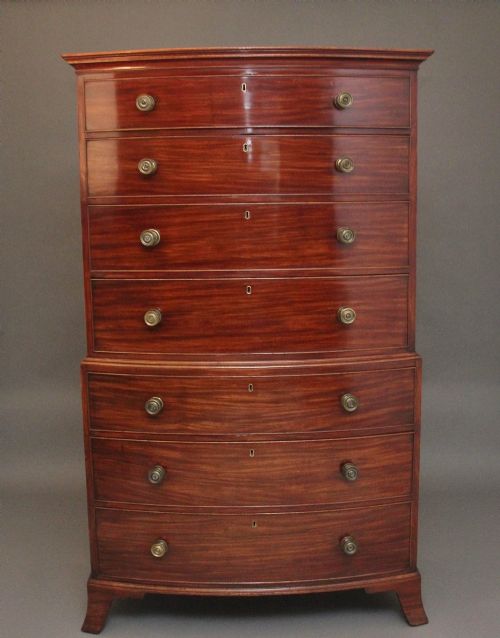
The material palette of this era draws heavily on rich imported timbers like mahogany and rosewood, paired with native woods like oak, ash, and elm. Decorative objects often incorporate brass, bronze, marble, and giltwood to achieve a formal aesthetic.
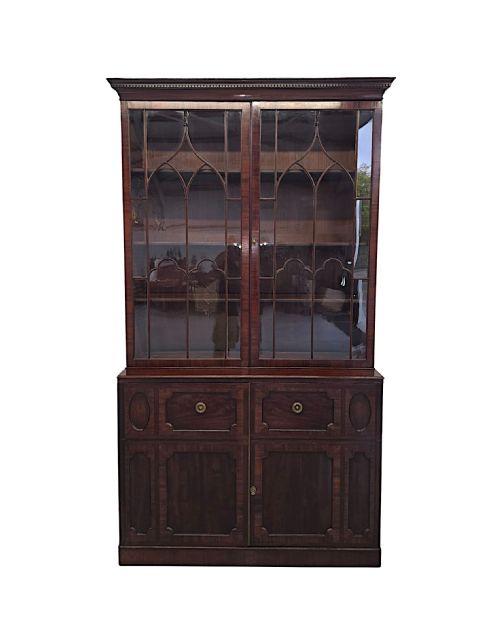
Forms range from large library bookcases and extending dining tables to specialised items like pocket compasses, barometers, and needlework boxes. These items reflect the domestic comforts, scientific pursuits, and interior tastes of the Georgian and Regency periods.
How they were made
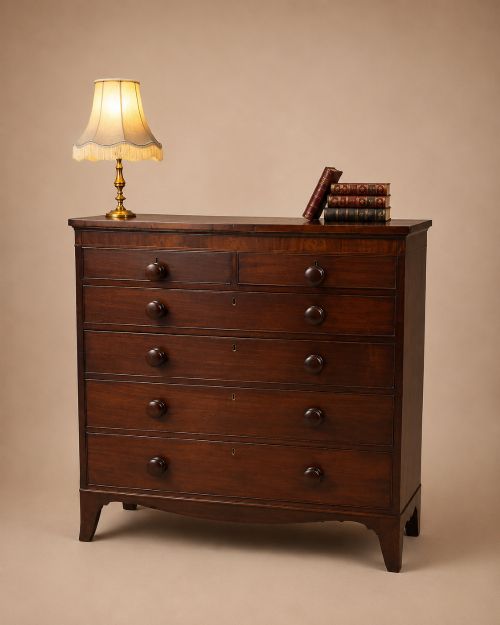
Makers of this era relied on solid timber construction combined with increasingly sophisticated veneering techniques, utilising dense woods such as mahogany, rosewood, and pollard oak over secondary structural carcases. Cabinetmakers employed precise dovetail joints for drawer construction and delicate inlay work using brass, bone, or contrasting lighter woods.
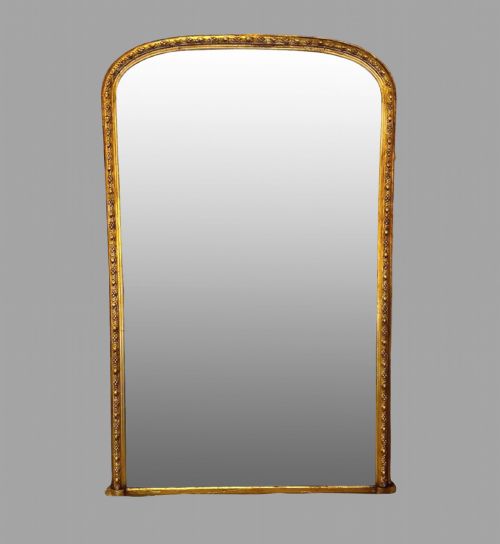
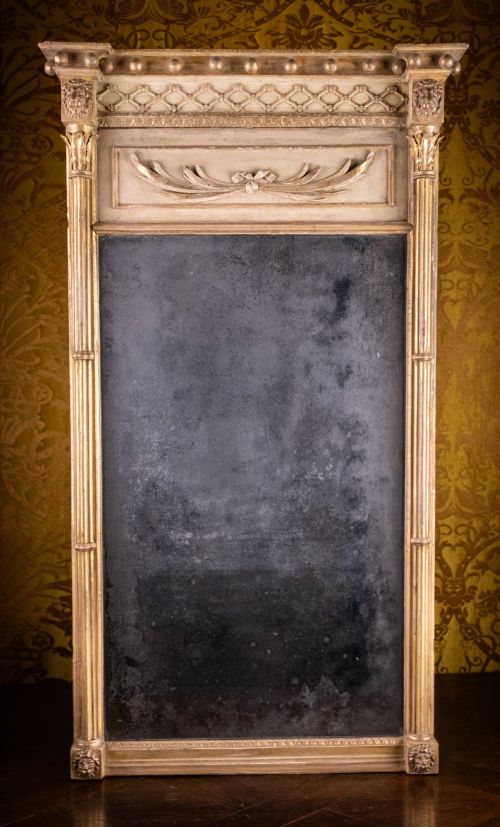
Metal components, from bronze furniture mounts to brass clock dials and optical instruments, were cast and hand-finished with meticulous detail. Gilding on mirrors and frames involved applying gold leaf over prepared gesso grounds on wooden substrates.
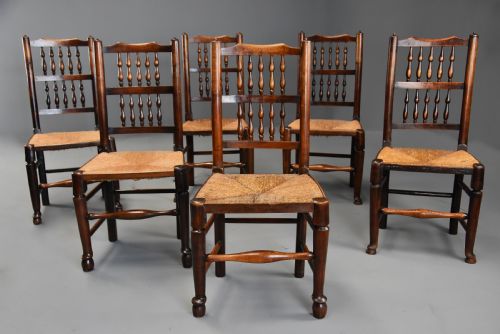
Turned elements, including table pedestals, chair legs, and spindle backs, were shaped on lathes from native hardwoods like ash, elm, and fruitwood. Surface finishes were achieved through hand-rubbed polishing oils and lacquers that brought out the natural grain patterns.
Gentlemen of the era could consult pocket compasses, blood-letting sets, and electrostatic friction machines all in the same domestic study.
What varies in quality
Quality in these items is determined by the selection of materials and the restraint or ambition of the design. Superior pieces feature choice timber selections with well-matched grain patterns, while lesser examples rely on simpler secondary woods and basic construction.
Hand-finishing separates standard production from exceptional work, particularly evident in the sharpness of cast bronze mounts, the precision of cabinet joinery, and the delicacy of carved details such as lion masks or incised treen decoration.
Proportion and structural integrity define the higher tiers of the range, where forms remain balanced and original components are preserved without heavy intervention or later alterations.
Howard and Sons·Gillows of Lancaster and London·W and S Jones·Adie and Son Edinburgh·Thomas Harris and Son London·John Newman London·Thomas Rubergall London·Robert Brettel Bate London·Cauchoix Paris·J and J Gardner of Glasgow·Johann Cassel of Vienna·Minton
The Early Nineteenth Century Glossary
- Treen
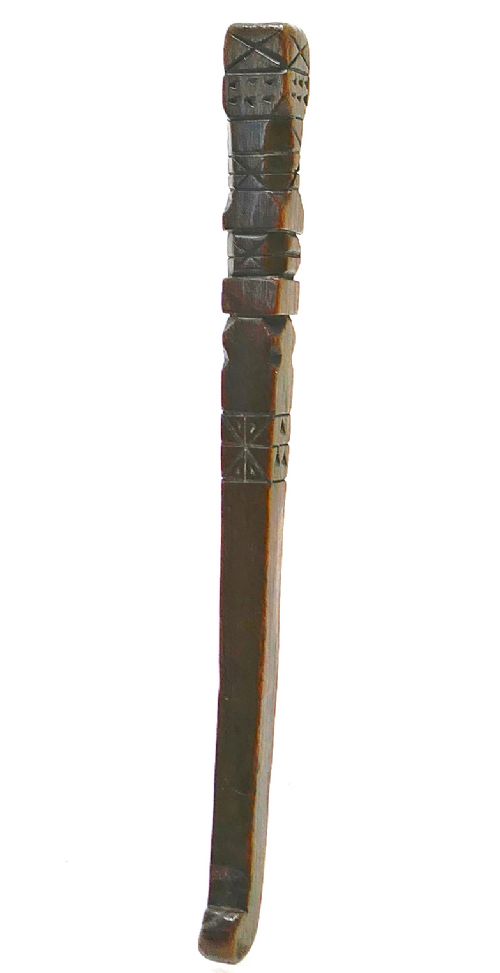
- Small handmade wooden objects for domestic use. This category includes items like knitting sheaths, snuff boxes, and small containers shaped from fruitwood and other dense timbers.
- Fusee dial clock
- A spring-driven clock movement regulated by a fusee cone to ensure even tension as the mainspring unwinds. These clocks typically feature circular wooden or painted metal dials designed for wall mounting in public or domestic spaces.
- Claude glass
- A small, slightly convex tinted mirror used by artists and travellers in the period to frame and reflect landscape views with the tonal qualities of a classical painting.
- Drum table
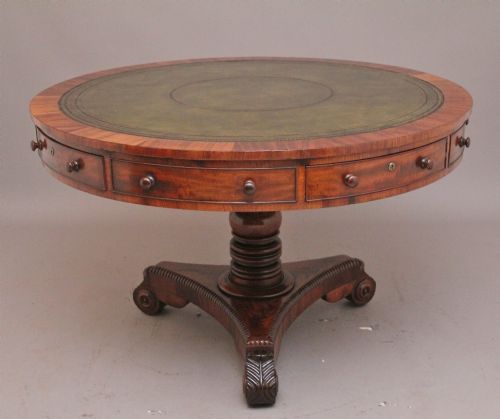
- A freestanding circular library table supported by a central pillar on a splayed tripod base, featuring a deep top fitted with alternating drawers and faux-drawer fronts.
- Pollard oak
- Timber taken from oak trees that have been pollarded, producing a gnarled grain pattern with dense clustering used for high-status cabinet fronts and decorative panels.
Early Nineteenth Century: Frequently Asked Questions
How do I identify a Regency piece?
Regency pieces often display classical architectural motifs influenced by ancient Greece and Rome, including brass inlay, sabre legs, and rosewood veneers.
They date from the early decades of the century and sit between the late Georgian style and the heavier forms of the Victorian era.
Were these scientific instruments used at home?
Many optical and measuring devices, such as library telescopes, barometers, and pocket compasses, were kept in domestic studies for navigation, weather observation, and education.
Craftsmen housed these precision brass and glass instruments in fitted mahogany or rosewood cases for secure storage.
How should I care for antique mahogany furniture?
Protect mahogany and rosewood surfaces from direct sunlight and sudden humidity changes to prevent timber splitting and fading of the polished finish.
Apply a traditional wax polish sparingly and buff with a soft cloth to maintain the natural sheen of the wood.