




Cold Painted Spelter
Cold painted spelter brings the vivid figures and clocks of the late nineteenth and early twentieth centuries into focus.
Cold Painted Spelter
When you search for cold painted spelter, you encounter decorative objects ranging from nineteenth-century Victorian figures and Edwardian hunting dogs to striking Art Deco dancers and mantel clocks. These pieces combine sculptural metal forms with applied polychrome pigments to create distinct visual character.
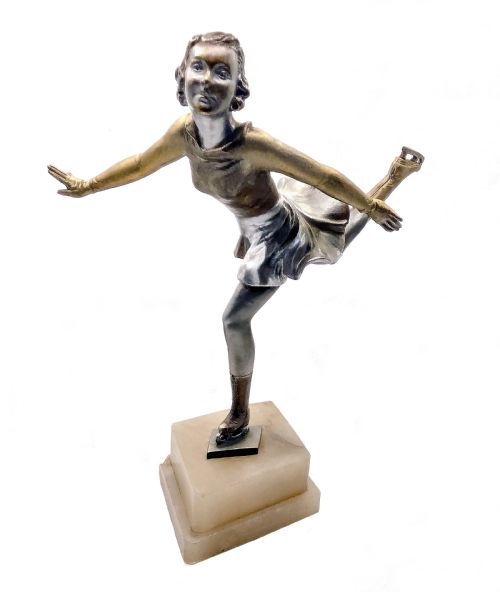
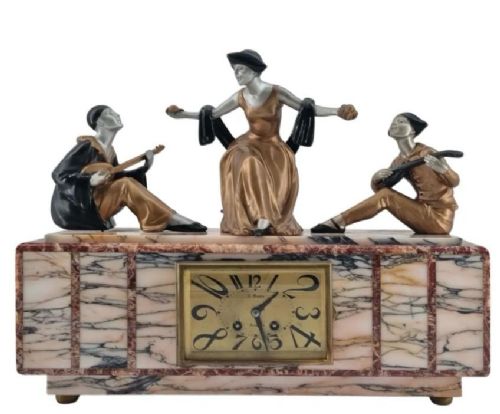
The version you are most likely to meet on this page is the Art Deco female figurine or figural lamp from the 1930s, often mounted on an onyx or marble base. These items capture the dynamic styles of their period through depictions of dancers, pierrots, and athletes.
What varies in quality
The degree of preservation in the cold painted surface distinguishes superior examples from heavily worn pieces. Original, intact polychrome surfaces retain their intended vibrancy and detail, whereas losses to the paint alter the visual balance of the object.
Sculptural definition and the quality of the base materials also determine the caliber of a piece. Finer items feature crisp casting lines in the zinc alloy and well-finished marble or onyx mounts, whilst simpler productions display less refined surface detailing.
Cold Painted Spelter Retail Price Guide 2026
Typical asking prices for cold painted spelter among the pieces listed under this phrase on Sellingantiques today, from the lower quarter to the upper quarter. They describe what is for sale here now, not the wider market.
Among the collected dogs and dancers, a nodding dog quietly bobbed its head through the decades.
Josef Lorenzl·Geo Maxim·Sega
The Cold Painted Spelter Glossary
- Spelter
- A zinc alloy utilised as a base metal for decorative sculptures and clocks. It offers a lighter, softer alternative to bronze.
- Cold paint
- Pigment applied to a finished metal object without firing. This technique produces colourful surfaces that remain vulnerable to flaking.
- Onyx
- A banded variety of chalcedony frequently used for sculptural bases. It provides a dense, polished mounting for figures and clocks.
- Figural lamp
- A functional lighting piece incorporating a sculptural human or animal form. These items often feature cold painted spelter bodies.
- Orientalist
- An artistic style reflecting nineteenth-century European fascination with Middle Eastern and North African subjects. It appears frequently in figures and match strikers.
Cold Painted Spelter: Frequently Asked Questions
What is cold painted spelter?
Cold painted spelter refers to decorative zinc alloy objects finished with unheated polychrome paint. These items include figures, clocks, and lamps.
Craftsmen produced these decorative pieces extensively during the late nineteenth and early twentieth centuries to meet popular demand for accessible sculpture.
How do I clean cold painted spelter?
You should clean these pieces using only a soft, dry cloth to protect the fragile surface pigments. Moisture and chemical cleaners remove the delicate paint.
Gentle dusting preserves the original colouration and prevents further wear to the painted metal details.
Are these pieces from the Art Deco period?
Many examples on this page originate from the Art Deco era of the 1920s and 1930s. These designs typically depict dancers, athletic figures, and Pierrots.
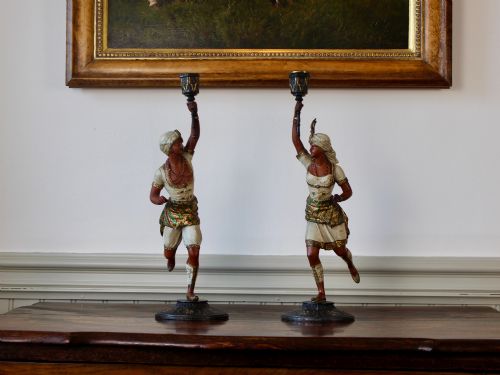
Earlier Victorian and Edwardian pieces also appear, often showing animal subjects or Orientalist figures rather than sleek modernist dancers.
Why are marble bases used?
Marble and onyx bases provide necessary weight and stability for slender spelter sculptures and lamps. These stone plinths anchor the softer metal figures securely.
Additionally, the polished stone complements the metallic finishes and adds architectural presence to clocks and figurines.