

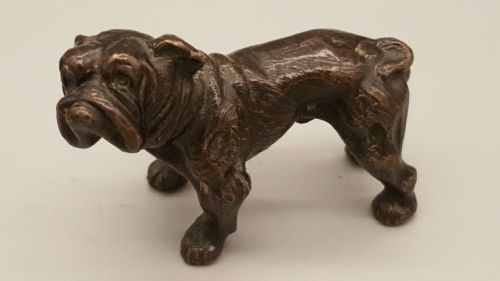


Cold Painted Dog Sculpture
A cold painted dog sculpture brings character and colour to a room through miniature metalwork and terracotta.
Cold Painted Dog Sculpture
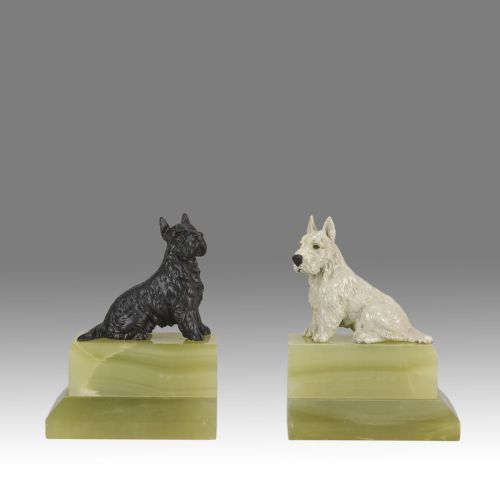
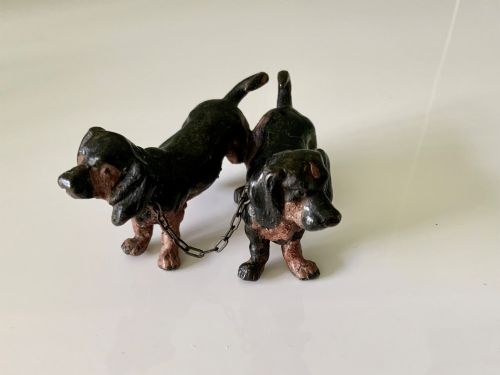
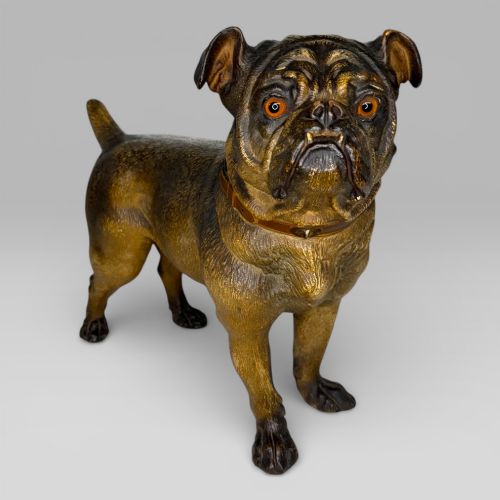
When you search for cold painted dog sculpture, you find small animal figures, bookends, inkwells, and car mascots created primarily in the nineteenth and early twentieth centuries. These decorative objects range from miniature bronze terriers to life-size terracotta pugs.
The pieces often originate from Austrian foundries working in the Vienna bronze tradition during the late Victorian and Edwardian eras. You also encounter French animalier figures and Art Deco figural groups mounted on marble or onyx bases.
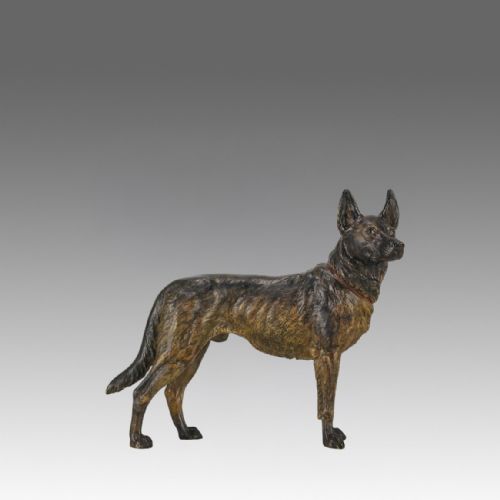
Common breeds represented include pugs, bulldogs, dachshunds, Alsatians, and boxers, often posed in humorous or lifelike domestic scenes. They function as desk accessories, mantel ornaments, and practical items like bookends and dishes.
How they were made
The metal sculptures start as cast bronze or spelter, poured from moulds that capture fine details of fur and expression. Spelter serves as a more affordable alternative to bronze in certain figures.
Cold painting involves applying oil-based paints to the metal without heat firing, a technique that gives these pieces their distinctive polychrome surface. Terracotta versions are moulded from clay and hand-painted after firing.
Cold Painted Dog Sculpture Retail Price Guide 2026
Typical asking prices for cold painted dog sculpture among the pieces listed under this phrase on Sellingantiques today, from the lower quarter to the upper quarter. They describe what is for sale here now, not the wider market.
Materials span bronze, painted metal, cold-painted bronze, onyx, terracotta, glass, and spelter.
What varies in quality
The skill of the painting determines the visual appeal, with finer works displaying subtle shading and durable pigment adherence. Maker attribution also elevates a piece, particularly works associated with known Austrian workshops.
Franz Bergman·Stephan Buchinger·Jules Moigniez·Bernard Bloch
The Cold Painted Dog Sculpture Glossary
- Cold-painted bronze
- Metal sculpture decorated with unfired oil paint applied over a metallic base layer. This technique creates vibrant polychrome finishes that require careful handling to prevent flaking.
- Vienna Bronze
- Small-scale cast metal figures produced in Austrian workshops, particularly during the late nineteenth and early twentieth centuries. These works are celebrated for whimsical subject matter and detailed cold-painted surfaces.
- Terracotta
- Fired clay used for larger sculptural models, often finished with painted surfaces. This medium allows for substantial life-size decorative figures.
- Spelter
- A zinc alloy used as a substitute for bronze in decorative metalwork. It provides a lighter and less expensive base for casting figures and novelty items.
- Animalier
- Nineteenth-century art focusing on the realistic portrayal of animals. Sculptors in this tradition studied animal anatomy closely for their bronze and terracotta creations.
Cold Painted Dog Sculpture: Frequently Asked Questions
What is cold painting?
Cold painting is a technique where oil-based paint is applied directly to a metal casting without heat fixing.
This method allows for rich, multi-coloured finishes on bronze and spelter sculptures, though the paint remains delicate over time.
Are these pieces solid bronze?
Many figures are cast in solid bronze, while others utilise spelter, which is a less expensive zinc alloy.
Some larger domestic models are made from terracotta rather than metal.
How were these items used originally?
These sculptures served multiple decorative and functional purposes in homes and offices during the Victorian and Edwardian periods.
Common practical uses included bookends, inkwells, desk dishes, and automobile mascots.