


Cold Painted Dancer Statue
These cold painted dancer statue pieces capture the sleek movement of Art Deco performance in bronze, enamel and stone.
Cold Painted Dancer Statue
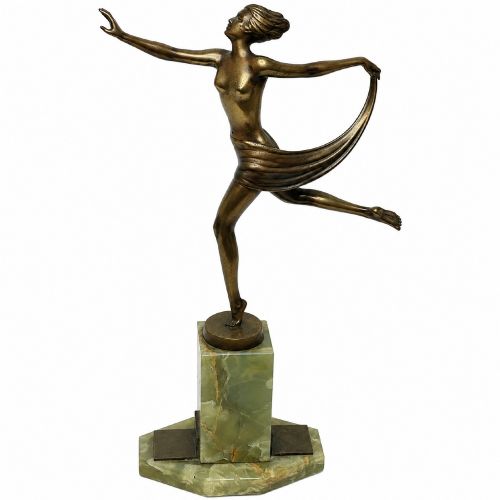
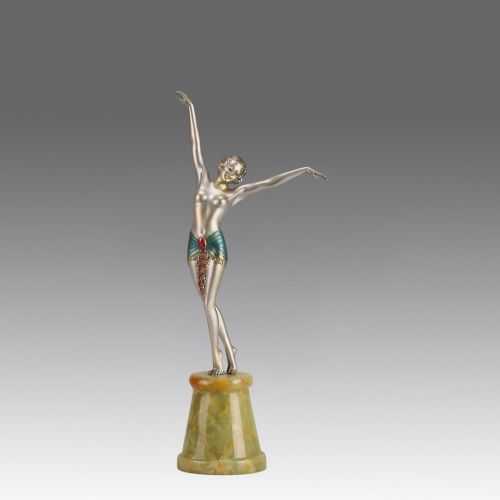
A cold painted dancer statue brings the theatrical energy of the early twentieth century into a room through small bronze sculptures. These pieces take the form of graceful ballerinas, scarf dancers and stage performers caught mid-movement.
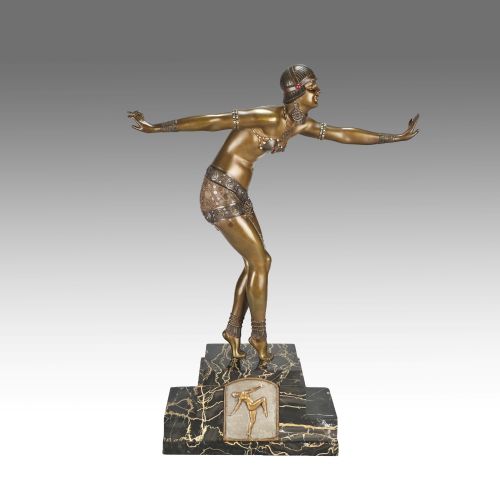
Most examples found here date from the 1920 and 1930 periods, aligning firmly with the Art Deco style. They stand upon heavy stone plinths made of onyx or marble, giving each figure a solid foundation.
Materials and construction
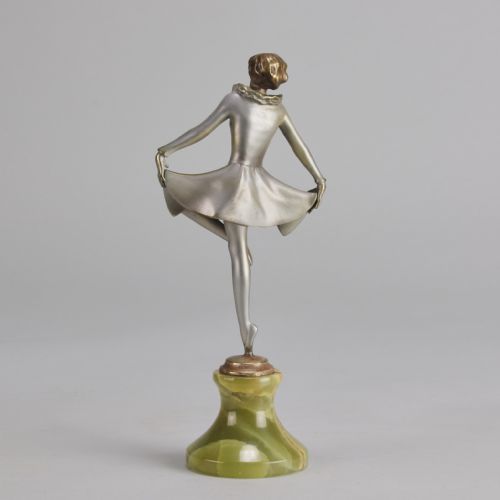
Every figure is mounted securely onto a shaped base of polished marble or onyx. This combination of cast metal, hand-applied pigment and natural stone defines the physical makeup of the genre.
Several dancers balance precariously on tiny toes, defying gravity atop solid blocks of onyx.
Judging quality and execution
The finesse of the cold paint application separates standard production from superior examples, as does the crispness of the bronze casting itself. Original painted surfaces show subtle gradations on robes and flesh rather than flat blocks of pigment.
The quality of the supporting stone base matters greatly, with well-cut and heavily polished marble or onyx enhancing the overall presence of the sculpture. Signed works by established founders and modellers command closer attention for their superior anatomical accuracy.
Pierre le Faguays·Josef Lorenzl·Demetre Chiparus·Paul Philippe
The Cold Painted Dancer Statue Glossary
- Cold-painted bronze
- Metal sculpture decorated with unfired paint applied directly to the surface. This technique allows for vibrant costumes on early twentieth century figures.
- Art Deco
- Design style dominant in the 1920 and 1930 periods characterised by stylised forms and dynamic lines. It heavily influences the posture and dress of these dancers.
- Chryselephantine
- Sculpture combining bronze and ivory elements. This method highlights the face and hands of the dancer against the dark metal drapery.
- Spelter
- Zinc alloy used as a cost-effective alternative to bronze in certain period figures. It takes paint readily while remaining lighter than true bronze.
- Onyx
- Banded stone frequently utilised for the heavy bases of these statues. Its natural variation adds texture beneath the mounted metal figure.
Cold Painted Dancer Statue: Frequently Asked Questions
What periods do these statues come from?
These sculptures originate predominantly from the 1920 and 1930 periods, reflecting the height of Art Deco design.
Pieces from this era often bear the distinct stylistic markers of interwar European studios and foundries.
Why are they mounted on marble?
The heavy stone plinths provide essential structural balance for slender figures caught in dynamic, leaning dance poses.
Marble and onyx bases also complement the industrial and modern aesthetic favoured by Art Deco sculptors.
How can I spot real bronze?
Genuine bronze feels heavy for its size and exhibits a resonant ring when lightly tapped, unlike softer alloys.
Real bronze pieces also show a natural warm patina beneath any remaining cold paint rather than bubbling beneath the surface.