
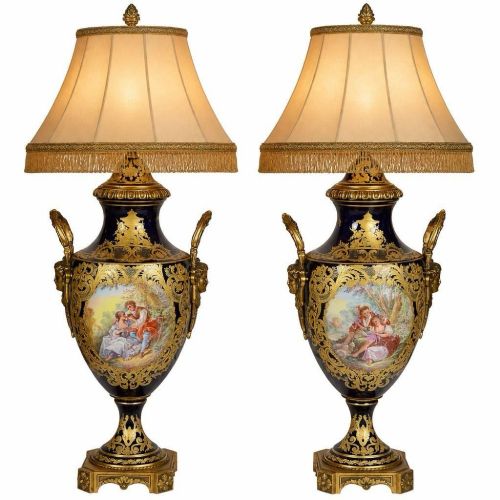


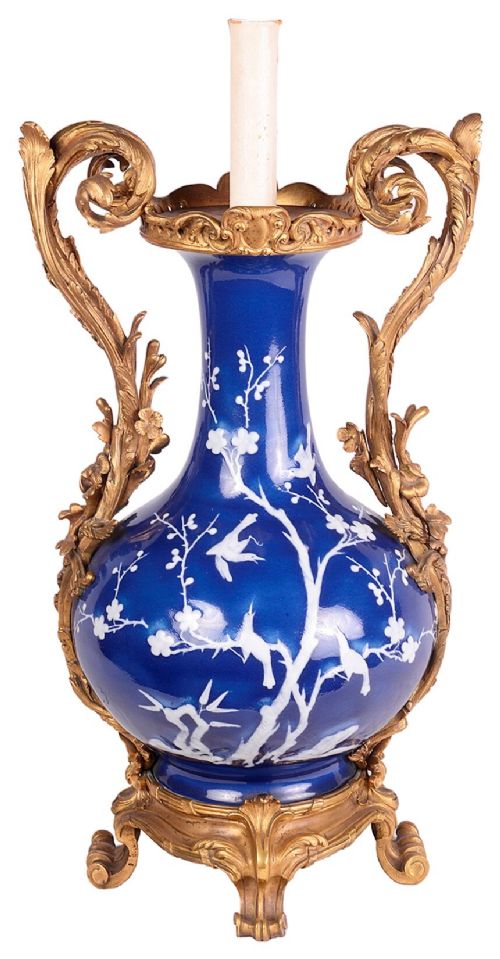
Cobalt Blue Vase Lamp
A cobalt blue vase lamp brings rich colour and converted utility into a room, offering nineteenth-century porcelain and cloisonne mounted for modern lighting.
Cobalt Blue Vase Lamp
When you search for a cobalt blue vase lamp, you are looking at nineteenth-century vessels that have been converted into table lamps. These pieces originate from diverse traditions, including French Sevres style porcelain, Chinese blue and white porcelain, cloisonne enamel, and Japanese Imari.
On this page, you are most likely to meet nineteenth-century Chinese blue and white vases transformed into lamps, alongside pairs of French porcelain or Japanese Imari examples. The forms span single vases and balanced pairs, often retaining their original decorative character despite the electrical conversion.
How they were made
Makers utilised high-fired porcelain and cloisonne enamel as the primary bodies for these vessels, applying deep cobalt pigments before glazing or firing. Metal mounts in brass, gilt bronze, and ormolu were subsequently fitted to secure the electrical components and elevate the base.
Fabric and silk shades complete the construction, paired with wooden elements where stability requires it. The creation of these lamps combined Far Eastern or European ceramic traditions with nineteenth-century mountings designed for interior illumination.
Several nineteenth-century vases now hold lightbulbs instead of wine or blossoms.
What varies in quality
The standard of a cobalt blue vase lamp rests upon the crispness of the ceramic painting and the richness of the cobalt tone itself. Finer examples display meticulous hand-painted detail, whether in Chinese prunus blossom motifs or French Rococo revival styling.
The metalwork further distinguishes the tier of a piece, with heavy cast ormolu and gilt bronze mounts demonstrating superior craftsmanship compared to simpler brass fittings. Proportion between the ceramic body and the overall lighting hardware governs the visual balance of the finished object.
The Cobalt Blue Vase Lamp Glossary
- Cloisonne enamel
- A metalwork technique where compartments are created using soldered flat wires and filled with coloured enamel paste before firing. This method produces intricate surface patterns often seen on nineteenth-century vases.
- Imari
- A style of Japanese porcelain decorated in underglaze blue and overglaze red, gold, and other colours. These export wares frequently found new life as nineteenth-century table lamps.
- Ormolu
- Gilded bronze used extensively for decorative mounts on nineteenth-century European decorative arts. It provides a bright golden contrast to deep cobalt ceramic bodies.
- Famille Verte
- A palette of Chinese ceramic enamels dominated by green, used to decorate porcelain bodies. Pieces in this style bring vibrant polychrome contrast alongside cobalt elements.
Cobalt Blue Vase Lamp: Frequently Asked Questions
Are these lamps converted antique vases?
Yes, the pieces listed are nineteenth-century ceramic and cloisonne vessels that have been fitted for electrical use. The original vases retain their historical character while serving a practical modern function.
The conversion process typically involves securing mounts and wiring through the base or top without altering the primary decorative body of the antique.
Do these lamps come in pairs?
Many of the listings feature matched pairs of lamps, particularly within the French Sevres and Japanese Imari selections. Single vases converted to lamps also appear frequently across the Chinese blue and white offerings.
Pairs provide symmetrical options for sideboards or mantelpieces, whereas individual lamps suit smaller desk or table spaces.
What periods do these lamps date from?
The inventory spans the nineteenth century, including specific dates around eighteen-eighty and eighteen-ninety. The styles reflect both European revivals and traditional Asian export aesthetics of that era.
French pieces often draw on Louis XVI or Rococo revival idioms, while Asian pieces showcase Qing Dynasty and Meiji period influences.
How do I choose the right shade?
Fabric and silk shades are commonly paired with these ceramic bases to diffuse light effectively. Selecting a shade depends on the scale of the vase and the room's existing decor.
Neutral silks complement intricate blue and white patterns, while richer fabrics can anchor heavier gilt bronze mounts.