
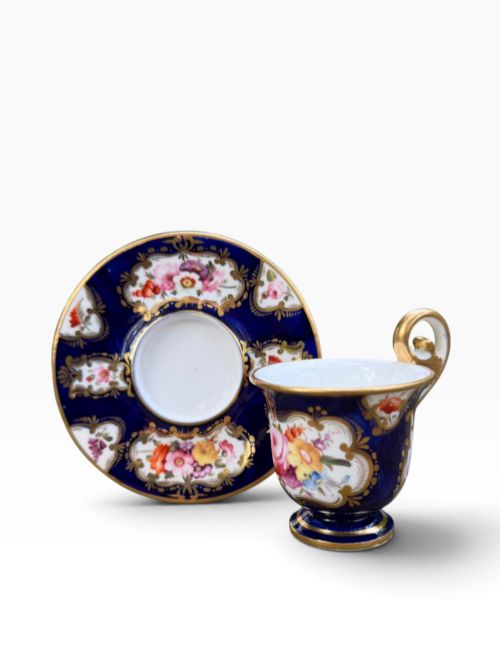


Cobalt Blue Teacups Saucers
Cobalt blue teacups saucers are glazed ceramic vessels for drinking tea, prized for their rich blue ground colour and historical forms.
Cobalt Blue Teacups Saucers
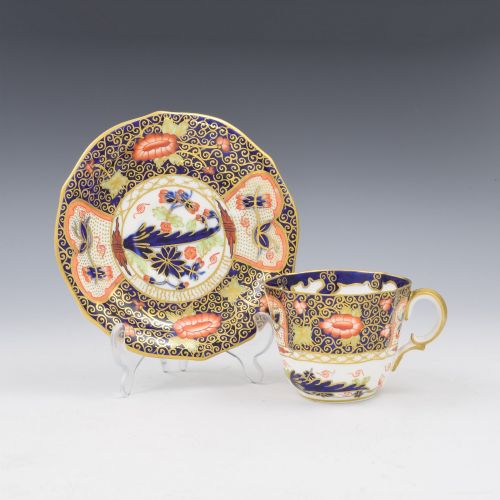
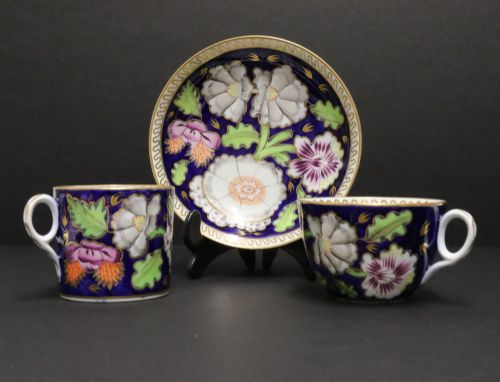
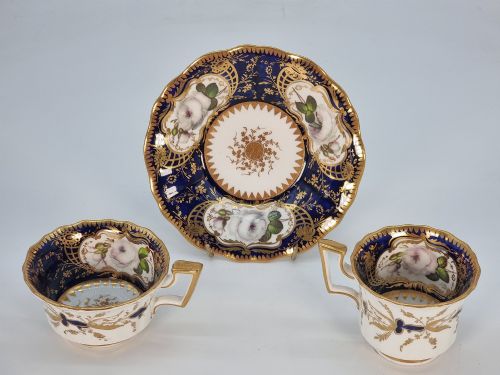
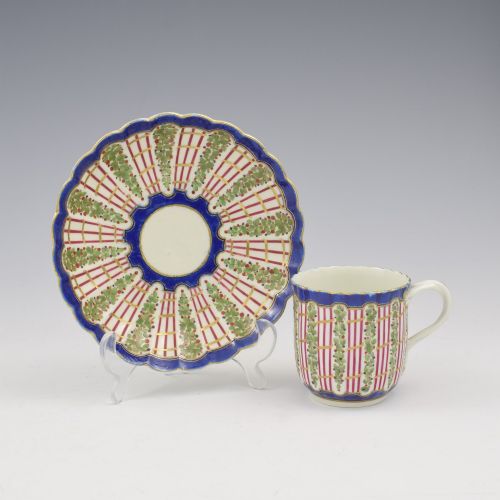
When you search for cobalt blue teacups saucers, you encounter porcelain and bone china drinking vessels spanning the eighteenth and nineteenth centuries. These pieces encompass forms from standard teacups and saucers to cabinet trios, tea bowls, and miniature solitaire sets.
The selections on this page originate from English factories such as Worcester, Coalport, Spode, and Derby, alongside continental works like Moser and Gardner, and Japanese producers. Georgian, Regency, and Victorian periods dominate the available forms.
How they were made
Potters shaped these vessels using hard-paste porcelain, soft-paste porcelain, bone china, and ironstone, applying cobalt oxide under the glaze to achieve the characteristic deep blue ground. Artisans then added hand-gilding, gold leaf, and enamel decoration across the surface.
Kiln firing fixed the cobalt and enamel pigments, after which gilders applied gold accents by hand. Many pieces received secondary firings to set the intricate overglaze enamels and gold gilt details.
Listings feature porcelain pieces spanning the eighteenth century through the Edwardian period, utilising bone china, soft-paste porcelain, and ironstone.
What varies in quality
Quality rests in the depth of the cobalt ground, the precision of the hand-painting, and the crispness of the porcelain body. Early soft-paste pieces and cabinet cups demonstrate finer potting and more complex hand-applied enamel work.
The application of gold leaf and gilding dictates the standing of a piece, with heavy hand-gilding and intricate patterns separating standard production wares from cabinet trios made for display.
Royal Crown Derby·Newhall porcelain·Coalport John Rose·Dr Wall Worcester·Flight Barr Barr·Moscow Factory Gardner·Moser·Masons Patent Ironstone·Yates·Spode·Lowestoft Porcelain
The Cobalt Blue Teacups Saucers Glossary
- Cabinet trio
- A matching teacup, coffee cup, and saucer set intended for display in a cabinet rather than daily tea service.
- Soft-paste porcelain
- An artificial porcelain body fired at lower temperatures, common in eighteenth-century English works.
- Gilding
- The application of gold leaf or gold paint to the ceramic surface to ornament handles, rims, and borders.
- Tea bowl
- A handleless drinking vessel used in early tea services before the adoption of handled teacups.
- Enamel
- Opaque vitreous material fused to the ceramic body to create colourful overglaze decorations.
Cobalt Blue Teacups Saucers: Frequently Asked Questions
What is a cabinet cup and saucer?
A cabinet cup and saucer is a decorative ceramic set made for display rather than practical use. These pieces often feature elaborate gilding and detailed hand-painted scenes.
Such items were produced by factories like Worcester and Coalport to showcase the highest skill of their painters and gilders.
How do I date an 18th century teacup?
Dating an eighteenth-century teacup involves examining the paste composition, glaze characteristics, and factory marks. Soft-paste porcelain and unhandled tea bowls generally point to this early era.
Comparing the cobalt blue ground colour and pattern style with documented pieces from works such as Worcester provides further chronological accuracy.
What is the difference between porcelain and bone china?
Porcelain is a vitrified ceramic material made from clay and mineral stones, fired at high temperatures to achieve a translucent body. Bone china incorporates animal bone ash into the mixture, resulting in a whiter and stronger fabric.
Both materials served as canvases for the deep cobalt blue grounds seen on Regency and Victorian tea wares.
Can I use antique tea sets today?
Antique tea sets from the Georgian and Victorian eras require careful handling due to their age and delicate material composition. Hand washing in warm water without harsh detergents preserves the fragile gold leaf and enamel work.
Many collectors prefer to display these cabinet trios and cups rather than subject them to modern use.