


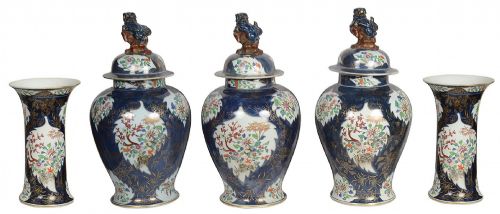


Cobalt Blue Mantel Vases
Cobalt blue mantel vases bring striking depth and classical presence to a room, ranging from English porcelain pairs to French ormolu-mounted garnitures.
Cobalt Blue Mantel Vases
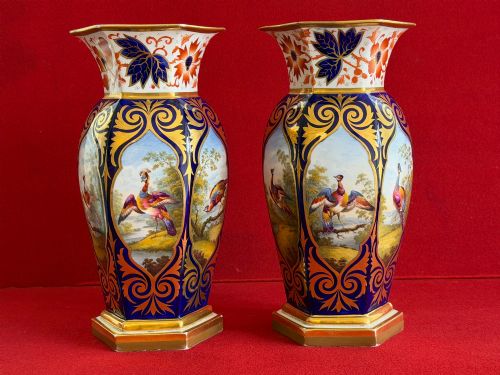
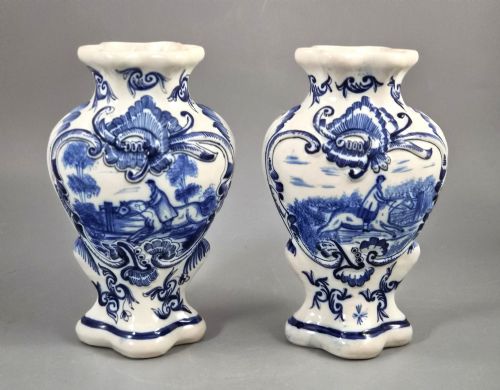
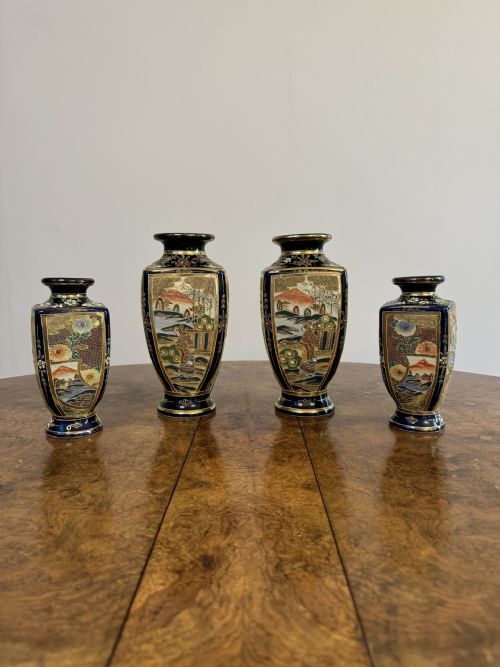
Cobalt blue mantel vases encompass decorative vessels and garniture sets designed to sit upon a fireplace mantelpiece. The selection draws heavily on nineteenth-century European porcelain and earthenware, alongside Japanese export wares from the Meiji period.
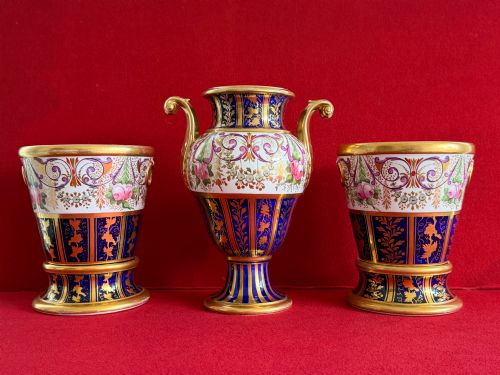
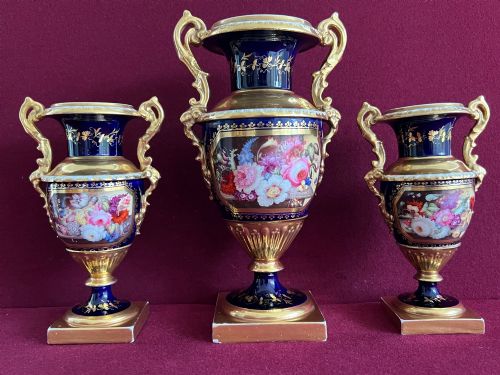
Forms include twin pairs and multi-piece garnitures, sometimes accompanied by matching clock sets or ormolu mounts. English factories such as Spode and Worcester sit alongside French Paris porcelain and Japanese Imari palettes.
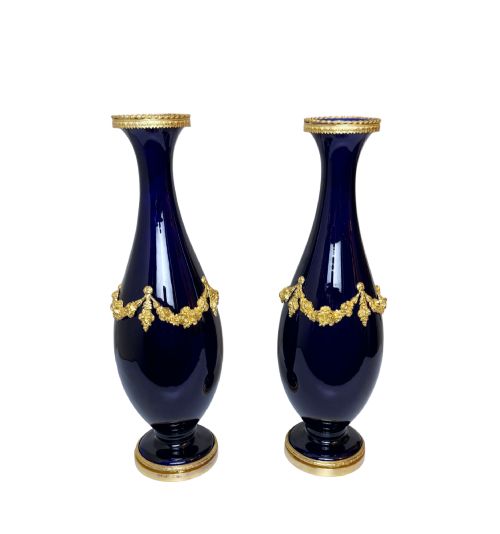
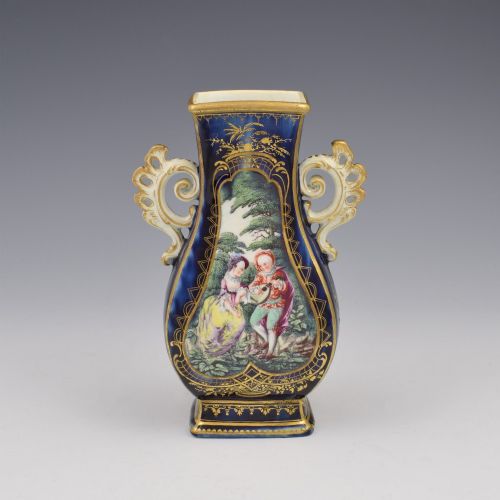
The prominent blue ground acts as a backdrop for hand-painted scenes, gilt bronze trim, and elaborate gilding. Buyers encounter both English Regency examples and grander continental interpretations inspired by Sevres.
Materials and construction
Makers utilised hard-paste and soft-paste porcelain, earthenware, and ironstone as the primary bodies for these vessels. Cobalt oxide provided the intense blue underglaze colour before firing at high temperatures.
Gilding and gold leaf were applied by hand, often cured over the glaze to catch the light from hearth flames. Ormolu and gilt bronze mounts were cast separately and fitted to frame the porcelain bodies.
Japanese pieces relied on traditional Satsuma and Imari ceramic techniques, while European workshops adopted French Neoclassical and Rococo Revival moulding methods.
Cobalt Blue Mantel Vases Retail Price Guide 2026
Typical asking prices for cobalt blue mantel vases among the pieces listed under this phrase on Sellingantiques today, from the lower quarter to the upper quarter. They describe what is for sale here now, not the wider market.
Some nineteenth-century mantel garnitures weigh enough to require a reinforced shelf just to hold the weight of the ormolu.
Judging the range
The distinction between standard production wares and exceptional output rests in the crispness of the hand-painted detail and the weight of the metal mounts. Master painters executed figures and landscapes with precision, whereas commercial pieces relied on repetitive stencilling.
Ormolu mounts show variance in their chryselphantine chasing and depth of mercury gilding. Heavy, well-cast bronze mounts fitted flush to the ceramic body indicate superior workshop standards.
Spode Porcelain·Flight Barr And Barr·Royal Doulton·Wolfsohn Dresden·Fourmaintraux Courquin
The Cobalt Blue Mantel Vases Glossary
- Garniture
- A set of three or more matching vases or decorative objects designed to be displayed together on a mantelpiece. These sets typically feature a central larger vessel flanked by smaller matching counterparts.
- Ormolu
- Gilt bronze mounts applied to furniture, clocks, and ceramic vessels. The technique involves treating brass or bronze with a gold-mercury amalgam.
- Imari
- A traditional style of Japanese export porcelain characterised by a palette of underglaze blue, iron red, and supplementary gold. These designs heavily influenced European workshops during the nineteenth century.
- Ironstone
- A type of durable earthenware patented by Charles Mason in the early nineteenth century. It offered a heavy, robust alternative to porcelain.
- Enamel
- Vitreous material fused to a ceramic or metal surface through firing to add colour and decoration. It provides a glossy, durable finish to hand-painted details.
Cobalt Blue Mantel Vases: Frequently Asked Questions
What is a garniture set?
A garniture set consists of multiple matching vases meant to be arranged symmetrically across a fireplace mantel. These sets often include three or five pieces designed by the same factory.
Historically, they created visual balance in formal rooms, drawing the eye toward the central fireplace. Collectors prize complete sets that have survived together without replacement pieces.
How were these vases displayed?
Owners placed them directly on marble or wooden mantelpieces, frequently flanked by matching candelabras or clock garnitures. The cobalt blue and gilding reflected the flickering light of coal or wood fires.
They served primarily as decorative centerpieces rather than functional vessels for fresh flowers. Grand nineteenth-century drawing rooms relied on them to anchor the room's decorative scheme.
How do I care for antique porcelain?
Dust the surfaces gently with a soft, dry brush to prevent accumulation in recessed ormolu mounts. Avoid using water or chemical cleaners on gilt areas, as moisture can lift delicate gold leaf.
Keep them positioned away from direct, strong sunlight to protect hand-painted enamel colours from fading over time. Secure placement away from high-traffic edges prevents accidental tipping.
How do I distinguish French and English pieces?
French pieces, particularly those in the Sevres style, often incorporate elaborate ormolu mounts and classical painted panels. English factories like Worcester and Spode leaned toward refined floral patterns and distinct ceramic bodies.
Factory marks underneath the glaze offer definitive clues to origin, though many nineteenth-century continental pieces imitated earlier French styles without marking them clearly.