
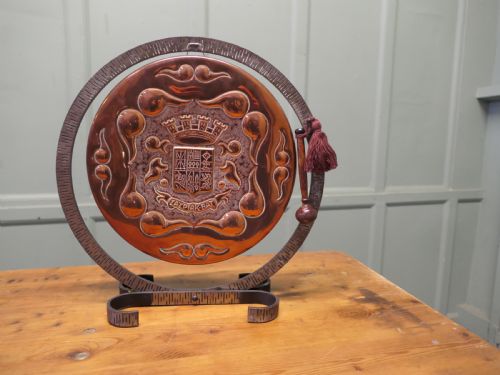
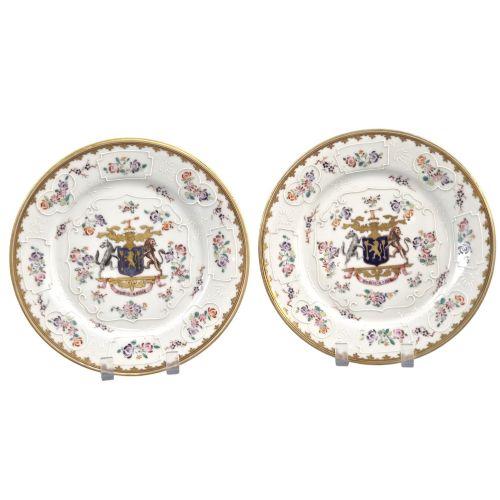
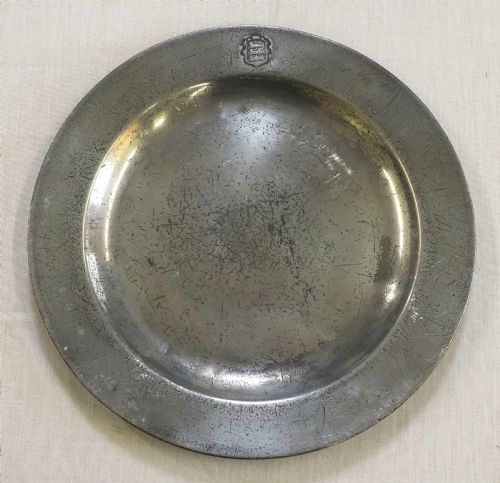


Coat of Arms Plate
A coat of arms plate carries heraldic display onto porcelain, earthenware and metal, giving a tangible link to lineage and past households.
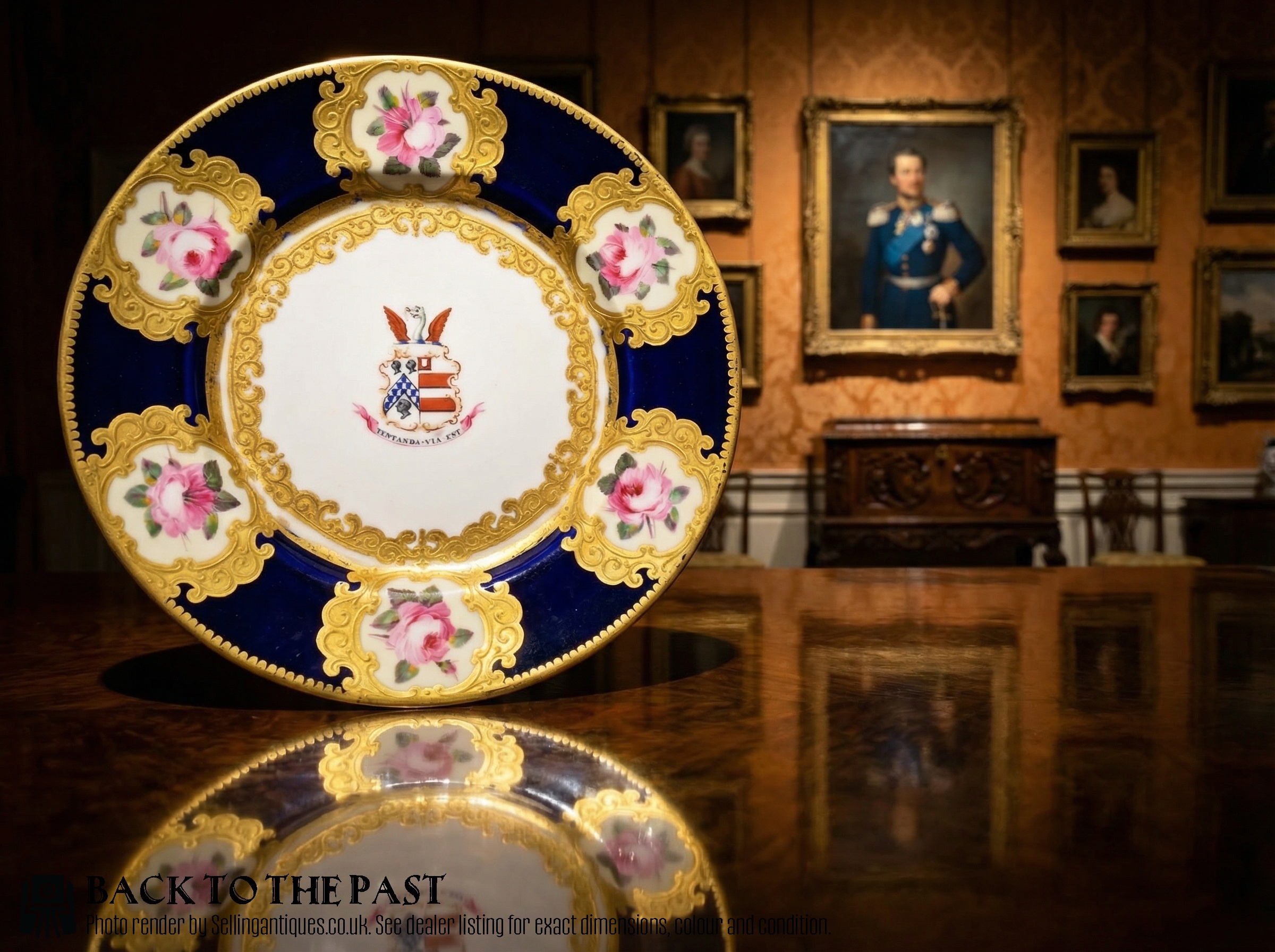
Coat of Arms Plate
When you search for a coat of arms plate, you encounter items designed to display heraldry, ranging from Chinese export porcelain to English earthenware and pewter.
The most frequent examples on this page are ceramic plates and chargers, alongside metal wares carrying engraved or applied armorial bearings.
Originating across the eighteenth and nineteenth centuries, these pieces frequently record specific family marriages, public offices or corporate bodies.
How they were made
Ceramic pieces utilise porcelain or glazed pottery painted with enamel colours and gold leaf to render heraldic tinctures accurately.
Metal items rely on copper, pewter, brass or Old Sheffield plate, shaped by hand hammering, casting or plating techniques.
Featured forms include soup plates, chargers, wine ewers, table gongs and cabinet plaques.
What varies in quality
The standard of painting on porcelain dictates much of the value, with hand-rendered heraldic details showing superior draughtsmanship over simplified transfers.
In metalwork, the crispness of the engraved armorial crest and the integrity of the base metal determine the standing of the piece.
Edmé Samson & Cie·Wood & Michell·Coalport·Chamberlain Worcester·Barr, Flight & Barr·Minton
The Coat of Arms Plate Glossary
- Armorial
- Relating to heraldic arms or bearing a coat of arms. This term often appears in descriptions of ceramics and silver made for specific families.
- Famille rose
- A palette of Chinese porcelain enamel colours dominated by pink, introduced in the eighteenth century. It forms the ground for many armorial export services.
- Old Sheffield plate
- A composite metal made by fusing a thin sheet of silver to a thicker copper core. It predates electroplating and appears on eighteenth and nineteenth-century serving wares.
- Charger
- A large ceremonial or decorative plate, often exceeding standard dining diameters. Pewter and ceramic examples frequently carry heraldic engraving.
Coat of Arms Plate: Frequently Asked Questions
How do I identify the family on a coat of arms plate?
Heraldic bearings use specific tinctures, charges and divisions to denote particular families. Matching the blazon to armorial dictionaries reveals the original owner.
Many pieces also include a family motto or crest that aids genealogical research.
Are these plates meant for daily dining?
Most surviving armorial pieces served display functions or belonged to important service sets rather than everyday use.
Their delicate enamel or historic metal surfaces mean modern owners typically exhibit them on walls or cabinets.
How can I tell Chinese export porcelain from European ceramics?
Chinese export porcelain from the eighteenth century often exhibits specific paste characteristics and distinct famille rose enamel palettes.
European factories like Coalport, Minton and Worcester developed different paste bodies and glazing techniques during the nineteenth century.
What is Old Sheffield plate?
Old Sheffield plate is an early form of plating created by thermally fusing silver and copper together before rolling them into sheets.
Items made this way sometimes show thin lines of copper where the underlying metal peeks through edges over time.