




Coastal Maritime Artwork
Coastal maritime artwork captures the enduring movement of tides and harbours across centuries of painting.
Coastal Maritime Artwork
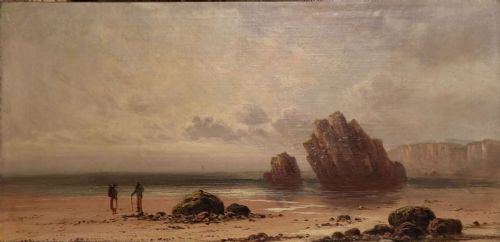
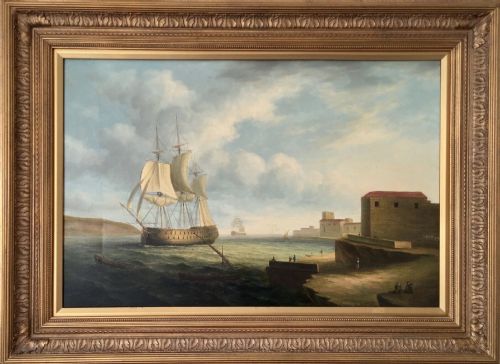
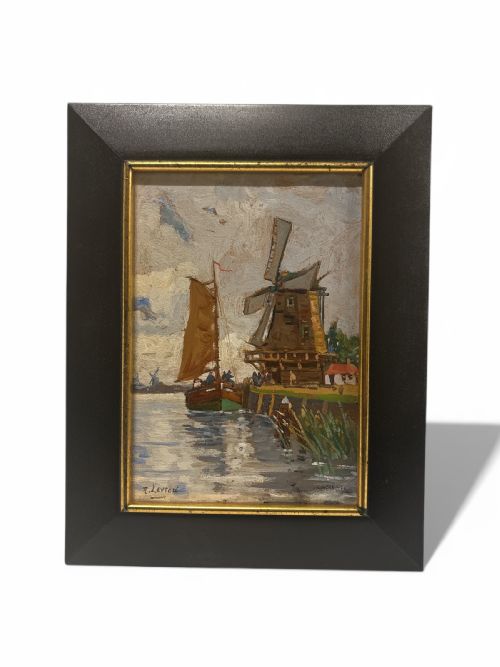
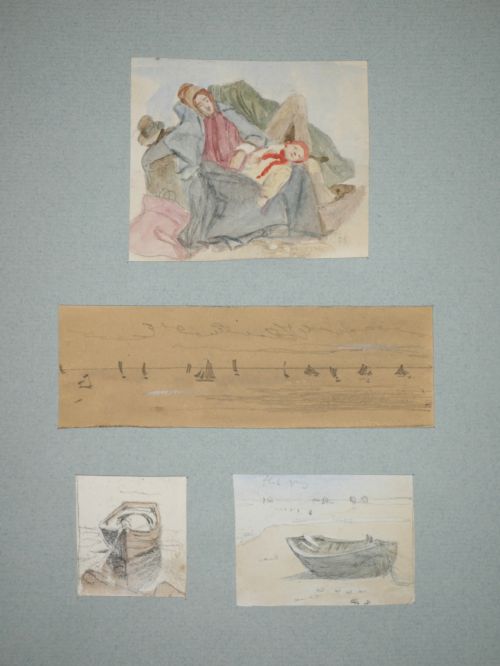
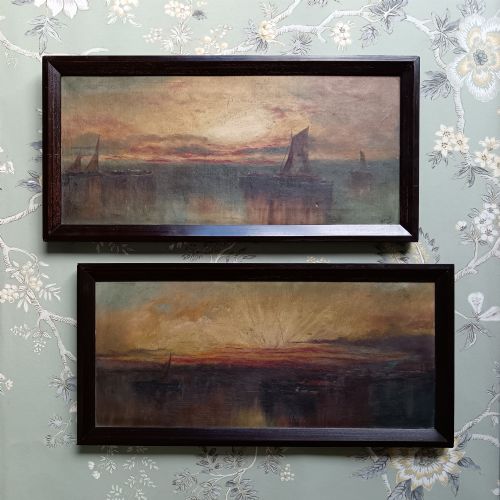
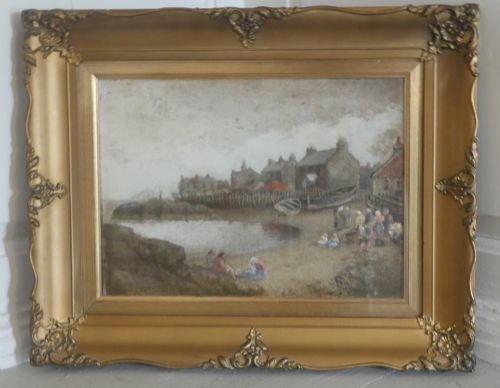
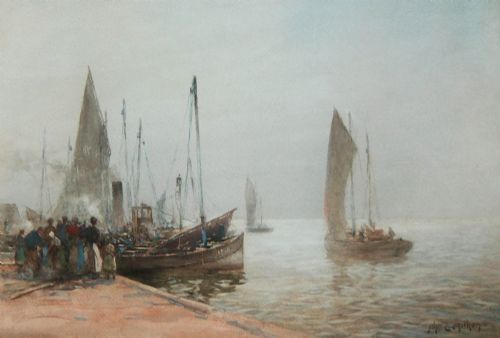
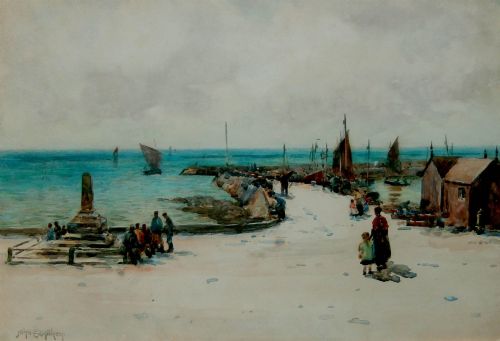
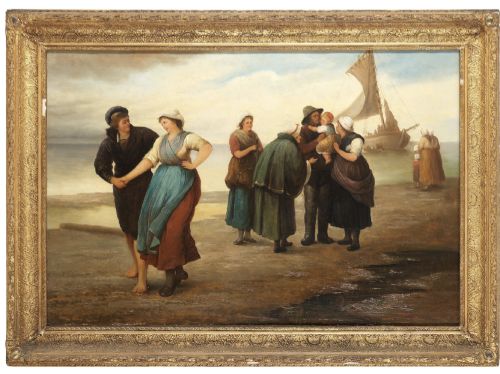
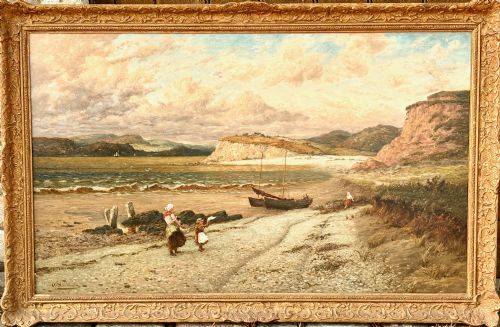
When you search for coastal maritime artwork, you encounter framed paintings and watercolours depicting harbours, fishing boats, and open seas. These works span from the nineteenth century into the mid-twentieth century, recording busy ports and quiet shores.
The selections on this page are most commonly Victorian and Edwardian watercolours or oil paintings on canvas and board. They range from small marine sketches to large scale harbour scenes.
Makers recorded in these works include named British and European painters who observed coastal life firsthand. Their subjects move from northern havens to Mediterranean ports.
Materials and Techniques
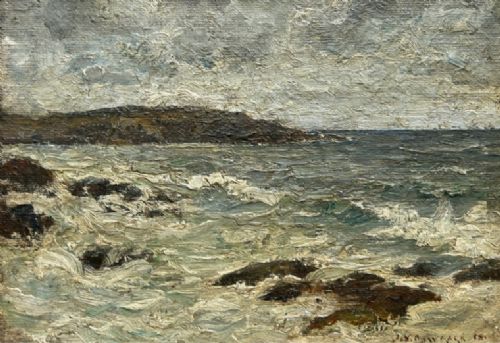
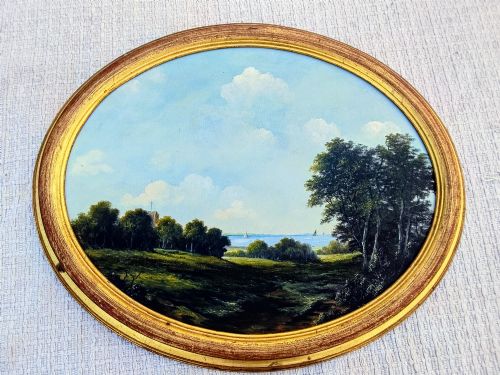
Artists relied primarily on oil paint and watercolour applied to canvas, wood panels, or heavy paper. Oil on canvas allowed for rich impasto textures in stormy seas, while watercolours captured the bright light of coastal air.
Supports frequently include gilt wood frames that complement the maritime subjects. Paper drawings and board paintings demonstrate the direct preparatory methods of the period.
Listings feature works on paper, canvas, and wood panels spanning the nineteenth century to the 1960s.
Distinctions in Quality
Quality rests in the handling of light, atmosphere, and the convincing movement of water. Superior examples demonstrate a confident control of tone that brings depth to open sea and harbour alike.
The strength of a composition lies in the artist's observation of maritime architecture and vessel rigging. Weaker pieces rely on formulaic repetition, whereas accomplished works convey the specific character of a port.
James Hardy·Kenneth Cozens·James Orrock·James E Aitken·John E Aitken·William Banks Fortescue·B Nash·Edward Mills·Bonaventura Peeters·Peter Brannan·Paul Bret·Hector Caffieri·Bernard Benedict Hemy·Thomas Creswick·Lucy Pratt·Thomas Maidment·TB Hardy·Donald McIntyre·Cecil Allan Mould·John Wilson Carmichael·Alfred G Morgan·Abraham Cooper·John Moore of Ipswich·William Matthison·William Henry Williamson
The Coastal Maritime Artwork Glossary
- Impasto
- Paint applied thickly to a canvas or board, creating a textured surface that catches the light. This technique is often used to render the churning motion of waves.
- Watercolour
- A paint consisting of pigment suspended in a water-soluble vehicle, typically applied to paper. It offers transparency and luminosity suitable for atmospheric sky and sea.
- Marine Art
- Artwork that focuses significantly on the sea, ships, and coastal views. It encompasses historical naval battles, portraiture of vessels, and everyday harbour scenes.
- Seascape
- A painting or drawing that depicts the sea. It serves as the marine equivalent of a landscape.
- Panel
- A rigid flat piece of wood used as a support for painting. Oil painters frequently utilised prepared wooden boards during the nineteenth and twentieth centuries.
Coastal Maritime Artwork: Frequently Asked Questions
What periods do these paintings cover?
The works span from the nineteenth century through the Edwardian era and into the mid-twentieth century. Most examples cluster around Victorian and early twentieth-century British production.
Creators documented here worked across multiple decades, reflecting changing artistic movements from traditional marine art to British impressionism and modern interpretations.
How were these maritime scenes displayed?
These paintings were traditionally framed in decorative gilt wood mouldings intended for domestic interiors. Frames often matched the heavy style popular in Victorian and Edwardian parlours.
Many works retain their period frames, which help protect the edges of the canvas or paper while providing a formal presentation for the room.
Where did the artists find their subjects?
Painters travelled to active fishing ports, river estuaries, and coastal villages around Britain and continental Europe. Locations range from Whitby and St Ives to Mediterranean harbours.
Artists observed local shipping, daily boat departures, and coastal weather patterns directly from the shore or from vessels.
How do I care for antique watercolours?
Works on paper require protection from direct sunlight to prevent the fading of watercolour pigments. Acid-free mounting and framing keep the paper stable over time.
Maintaining a stable indoor humidity prevents foxing and paper degradation, ensuring these marine sketches survive for future collectors.