


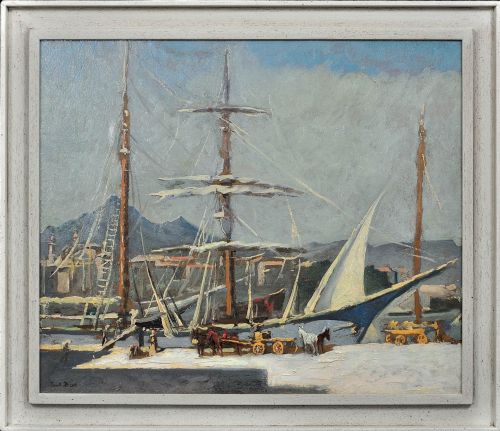

Coastal Landscape Canvas Painting
A coastal landscape canvas painting captures the enduring draw of the shore, bringing maritime light and sea air into a room.
Coastal Landscape Canvas Painting
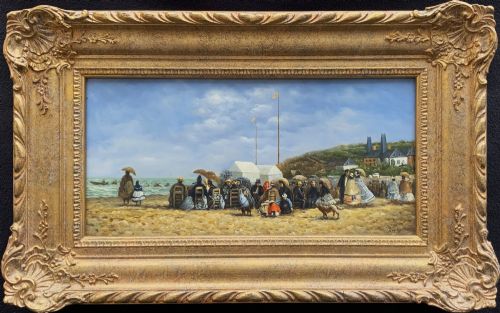
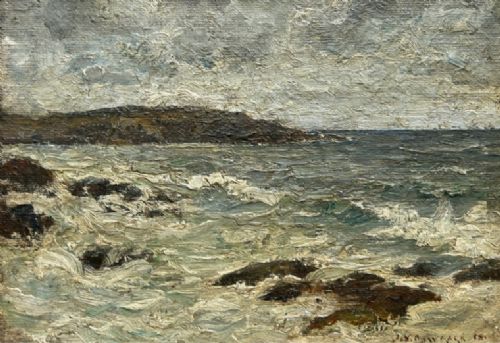
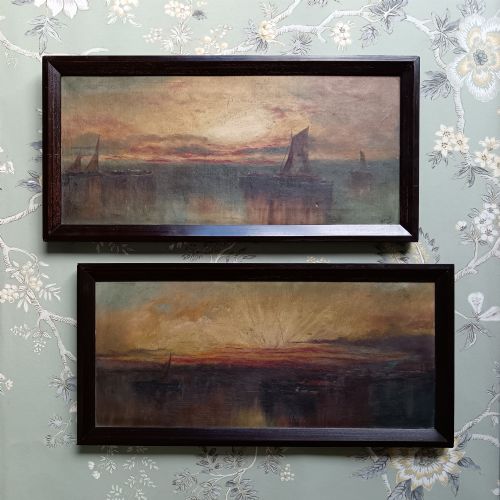
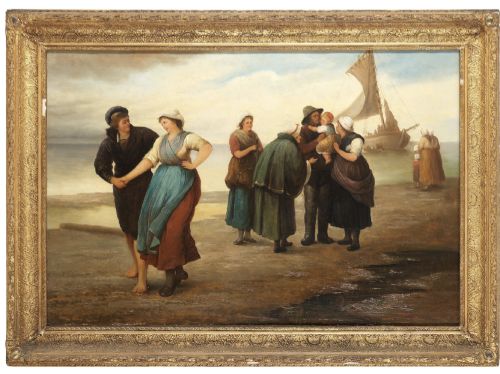
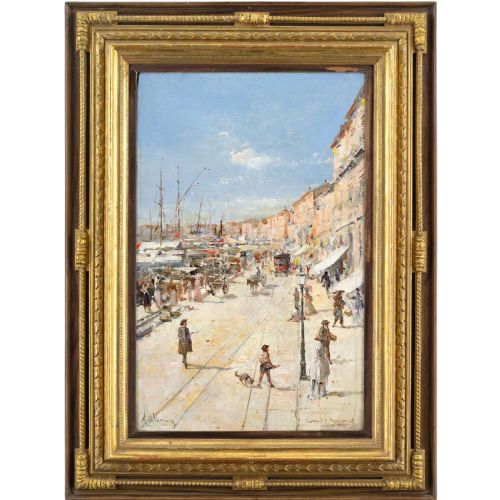
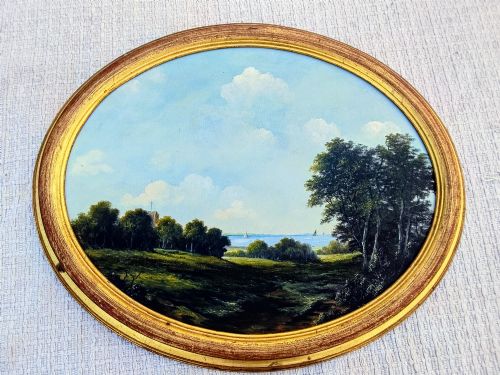
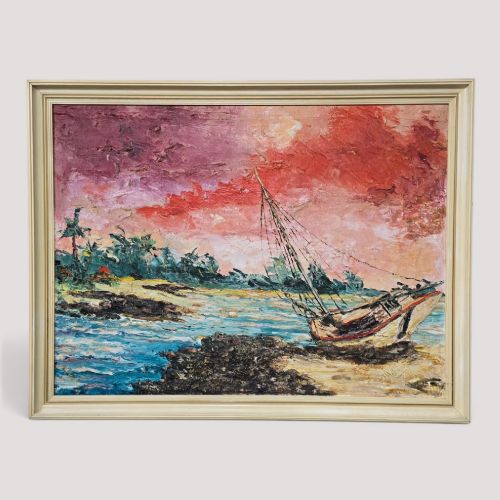
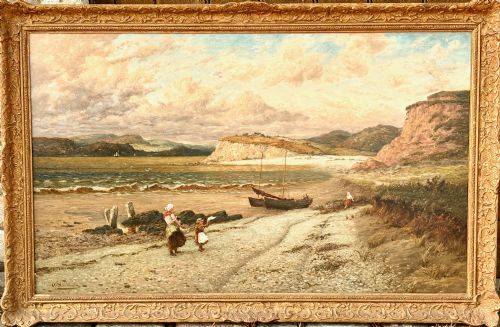
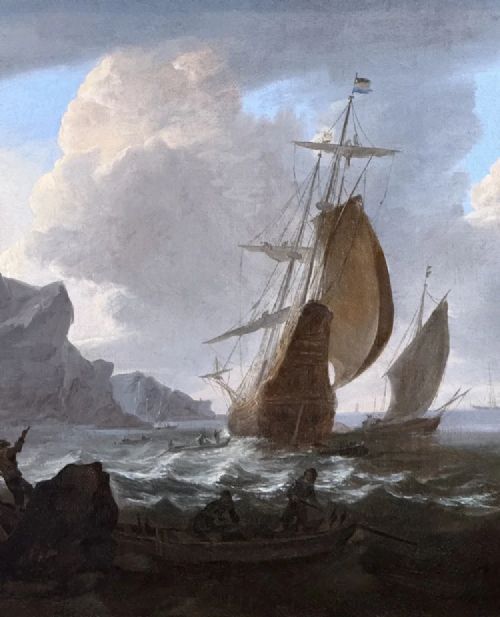
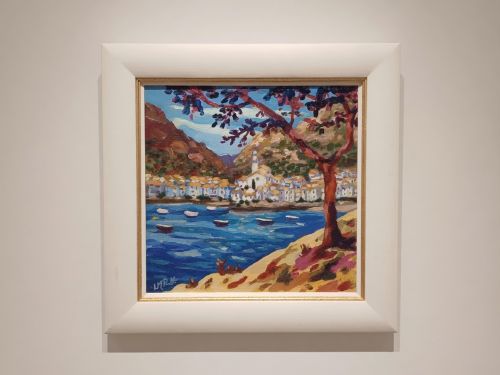
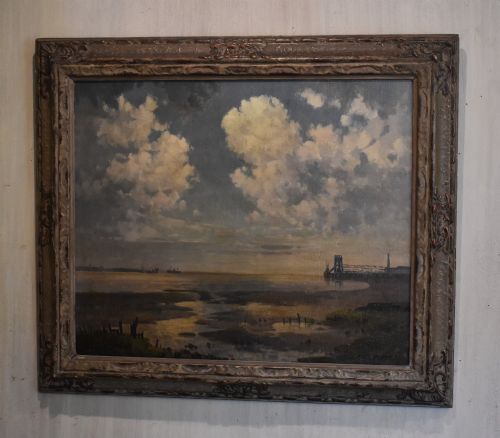
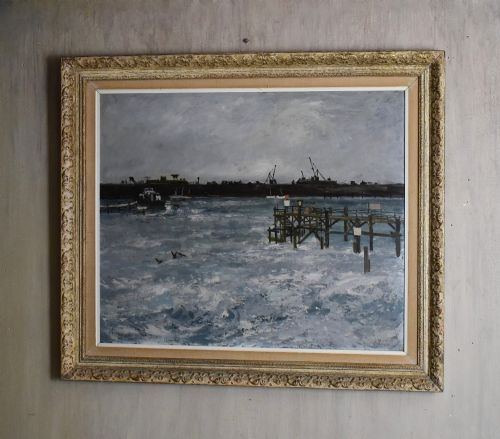
A coastal landscape canvas painting focuses on the sea, shores, harbours and cliffs, rendered in oil paint. These works range from nineteenth-century maritime records to mid-century modernist interpretations of coastal life.
Most examples found here date from the nineteenth century through to the mid-twentieth century. Subjects extend from bustling ports and fishing boats to quiet sandy bays and dramatic rocky cliffs.
Makers include named regional painters as well as French and British school artists working within impressionist and traditional styles. Works appear on stretched canvas, canvas boards and wood panels.
Materials and construction
These pieces utilise oil paint applied to woven canvas supports, sometimes laid down on wood boards or panels. Artists built texture through impasto brushwork or smoothed the pigment to capture calm coastal waters.
Frames play a structural and aesthetic role, frequently consisting of period wood or gilt wood mouldings. Original frames often complement the painting's era, from heavy Victorian gilding to simpler mid-century profiles.
Listings feature works spanning the nineteenth and twentieth centuries, executed in oil on canvas and wood.
Assessing quality and execution
Quality rests in the handling of light, atmosphere and perspective, where accomplished artists render coastal weather and sea movement with conviction. Weaker examples rely on formulaic compositions and stiff brushwork.
The integrity of the canvas support and the stability of the oil paint layer determine the physical condition. Finer pieces retain vibrant pigment and original stretchers without extensive overpainting.
Clifford Hanney·Peter Brannan·John Wilson Carmichael·Abraham Cooper·Joseph Farquharson
The Coastal Landscape Canvas Painting Glossary
- Impasto
- Paint applied thickly to a canvas, standing out in relief from the surface. This technique allows artists to build tactile texture in breaking waves and rocky cliffs.
- Maritime
- Pertaining to the sea, shipping and coastal navigation. Such scenes frequently document historic vessels, ports and maritime trade.
- School
- A group of artists associated with a particular region, period or stylistic approach. These affiliations help place unsigned works within a geographical or historical tradition.
- Stretcher
- The wooden frame upon which canvas is stretched tight before painting. Original stretchers offer clues to the age and history of the artwork.
Coastal Landscape Canvas Painting: Frequently Asked Questions
How do I date an old coastal painting?
Dating relies on stylistic clues, framing methods, and the preparation of the canvas. Nineteenth-century works typically employ heavier gilt frames and traditional tonal palettes, while twentieth-century examples embrace looser impressionist brushwork.
Signatures, stretcher construction, and artist biographical records further narrow down the date of execution. Examining the backing and nails often reveals whether the canvas has been re-stretched or altered over time.
Where should I hang a canvas painting?
Canvas paintings require stable environments away from direct sunlight, excessive humidity, and rapid temperature fluctuations. Placing them on interior walls protects the oil paint and canvas from environmental stress.
Adequate wall space allows the composition and original frame to breathe without crowding. Good ambient lighting enhances the impasto texture and tonal depth of marine scenes.
What is the difference between marine and coastal art?
Marine art primarily focuses on ships, naval engagements, open water, and deep-sea navigation. The vessel is usually the central focus of the composition.
Coastal art places greater emphasis on the land meeting the water, incorporating beaches, cliffs, harbours, and shore-based figures. Both genres frequently overlap in nineteenth- and twentieth-century painting.
How do I care for an oil on canvas?
Maintenance involves dusting the canvas gently with a soft, dry brush and keeping the room atmosphere stable. Moisture and direct heat can cause the canvas to slacken and the oil paint to crack.
Professional conservation should be sought for cleaning darkened varnish or repairing punctures. Avoid using household cleaners or damp cloths on the painted surface.