


Coastal Harbour Landscape Art
Coastal harbour landscape art captures maritime life and bustling quays through the eyes of painters across various periods.
Coastal Harbour Landscape Art
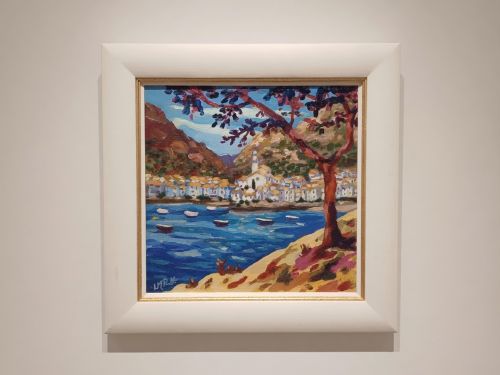
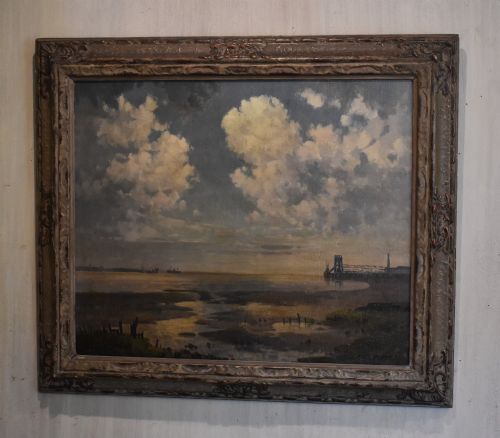
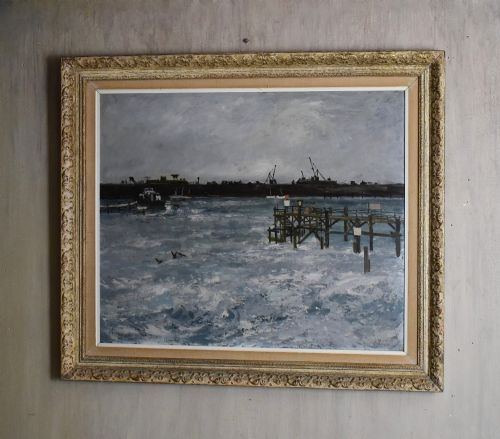
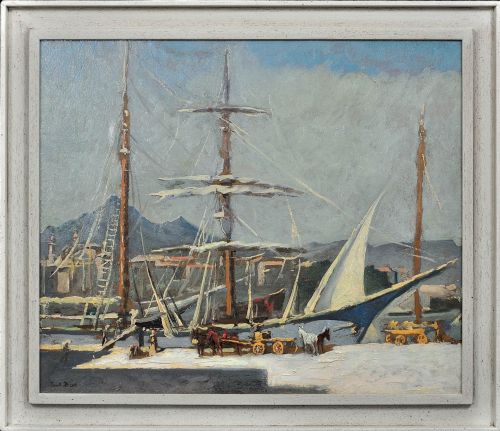
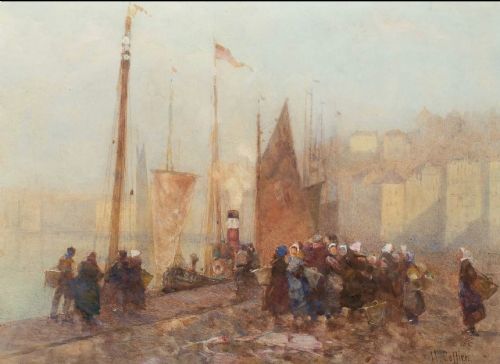
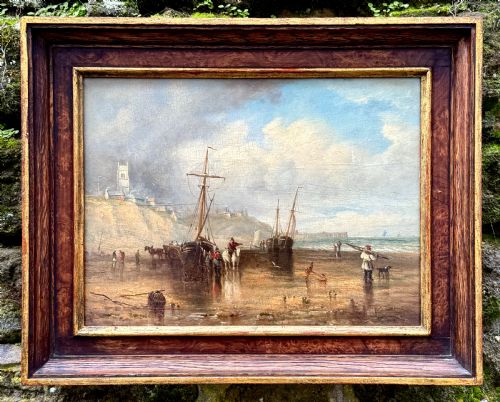
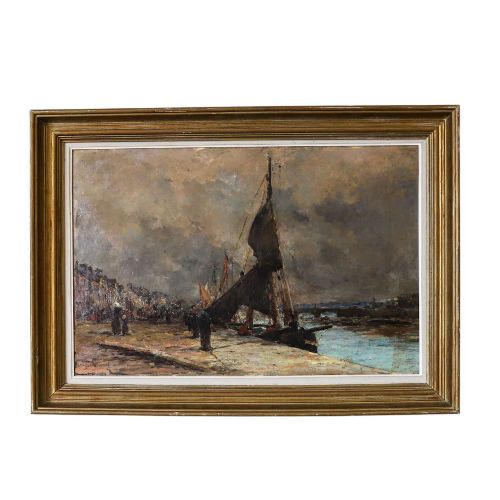
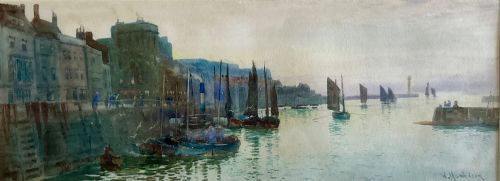
Coastal harbour landscape art encompasses oil and watercolour paintings that record maritime scenes, busy docks, and quiet fishing villages. Buyers searching this phrase meet works spanning from the nineteenth century through the mid-twentieth century, capturing British ports alongside continental scenes.
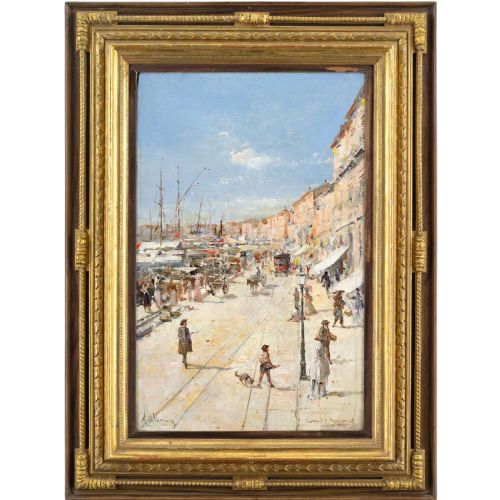
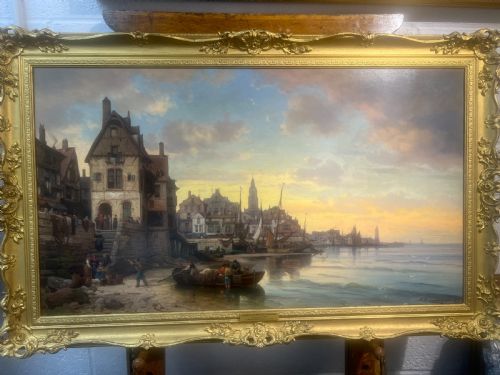
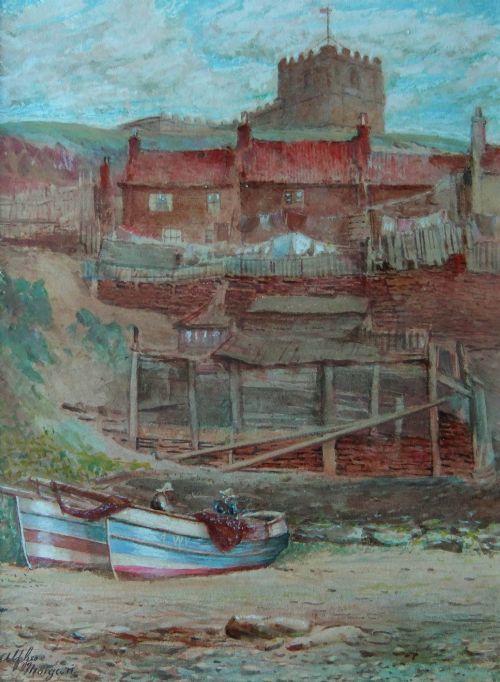
The selections on this page heavily feature traditional British seaports such as Whitby, St Ives, and Scarborough alongside French and Italian waterfronts. Common formats include framed oil paintings on canvas or board alongside delicate watercolours on paper.
Makers range from named regional artists associated with the St Ives School to continental painters documenting Mediterranean anchorages. These depictions vary from tight Victorian realism to mid-century modern interpretations of coastal topography.
Materials and methods
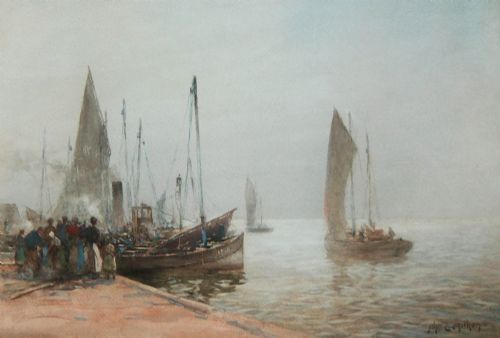
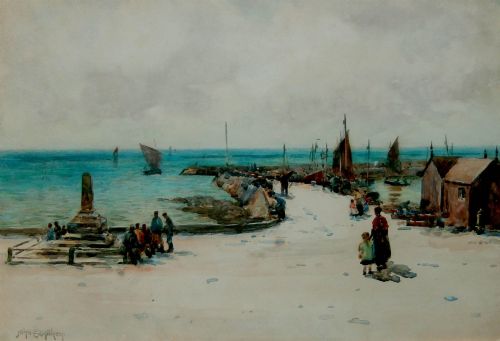
Artists relied primarily on oil paint applied to canvas or wood board, or watercolour pigments worked onto paper surfaces. Watercolours capture the translucent qualities of sea and sky, whilst oils allow for heavier impasto and richer texture.
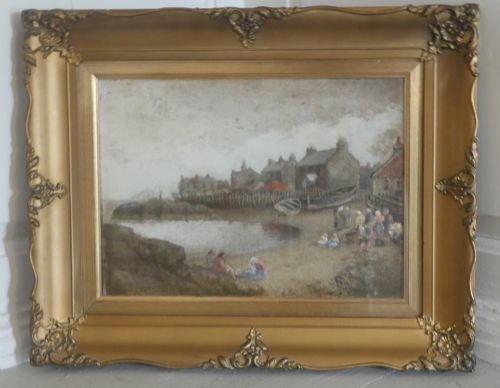
Framing often complements the work, with period gilt frames frequently housing nineteenth-century canvases. Support materials evolved from traditional heavy canvases to compact boards by the middle decades of the twentieth century.
Listings feature works created across eight different decades, spanning from the eighteenth century to the late twentieth century.
Qualities of execution
The strength of a coastal harbour landscape rests on the artist's handling of light upon water and atmospheric perspective in the sky. Superior pieces demonstrate confident brushwork that defines rigging, hulls, and stone quays without relying on laboured detail.
Compositional balance separates standard topographical records from compelling works of art, particularly in how maritime traffic anchors the view. The integration of period frames and clear signatures or documentation further elevates certain examples within the range.
Kenneth Cozens·Edward Mills·James E. Aitken·John E. Aitken·William Banks Fortescue·Augusto Alberici·Lucy Pratt·Clive Browne·Peter Brannan·Paul Bret·Hector Caffieri·Thomas Creswick·Charles Euphraisie Kuasseg·Alfred G. Morgan·William Matthison·Frank Kelsey·Walter Goodin·F A Roylance·George F Pennington·William Edward Webb·Edward Matthew Elliott·Gyrth Russell·Jean-Baptiste Olive·Raymond Picque·James Fry
The Coastal Harbour Landscape Art Glossary
- Impasto
- Paint applied thickly to a canvas or board, standing out from the surface so that the marks of the brush or palette knife remain visible. This technique adds tactile depth to crashing waves and weathered wooden boats.
- Watercolour
- A paint consisting of pigment suspended in a water-based solution, traditionally worked on paper. It relies on the white of the paper to provide luminosity and light.
- Gilt frame
- A wooden picture frame coated with a thin layer of gold leaf or metallic paint. These frames were frequently used during the Victorian and Edwardian periods to enhance oil paintings.
- Woodblock print
- An image printed from a block of wood carved in relief, used alongside paintings to depict landscapes. It offers distinct graphic qualities compared to fluid brushwork.
- Seascape
- A work of art that depicts the sea, ships, or coastal views. It forms a primary category within maritime painting.
Coastal Harbour Landscape Art: Frequently Asked Questions
What subjects appear in these coastal works?
These paintings typically display working harbours, moored fishing boats, loading docks, and surrounding coastal cliffs. Artists frequently documented tidal estuaries, quayside buildings, and maritime traffic.
Views range from busy Yorkshire fishing ports to quiet Mediterranean anchorages and French coastal towns.
How do I date a harbour painting?
Dating relies on stylistic evidence, clothing of figures on the quayside, types of vessels depicted, and artist biographical dates. Victorian works often show meticulous detail, while mid-century pieces adopt looser brushwork.
Signatures, framing styles, and backend inscriptions also provide clues to the period of creation.
Where were these scenes usually painted?
Painters recorded locations across the British coastline, notably Cornwall, Yorkshire, and Dorset. Continental harbours in France, Italy, and the Netherlands also feature prominently in the selection.
Artists often travelled to established art colonies and fishing communities to capture local maritime activity.
How should I display watercolour coastal art?
Watercolours require mounting behind glass with conservation-grade materials to protect the paper from humidity and atmospheric pollutants. Direct sunlight causes pigments to fade over time, making shaded wall placement essential.
Proper framing preserves the delicate balance of tone and colour inherent in works on paper.