




Coastal Fishing Scene Art
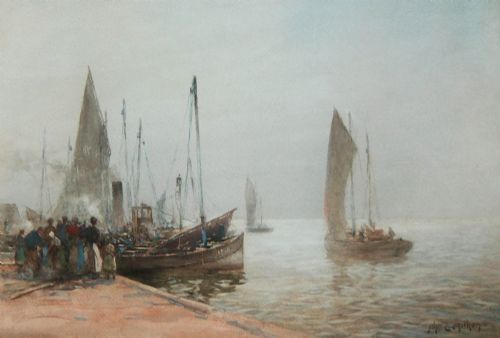
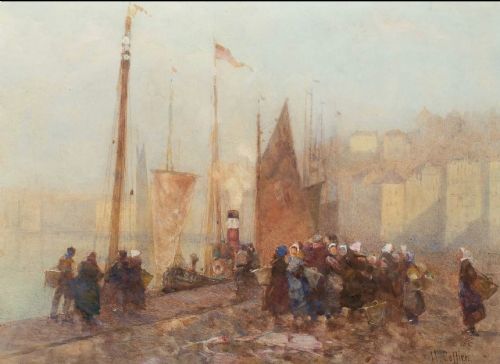
Coastal fishing scene art captures the maritime labour, harbours and coastal villages recorded by painters across the nineteenth and twentieth centuries.
Coastal Fishing Scene Art
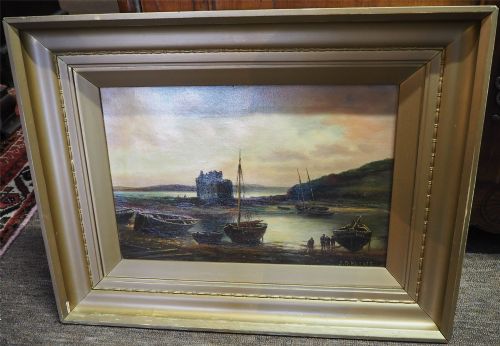
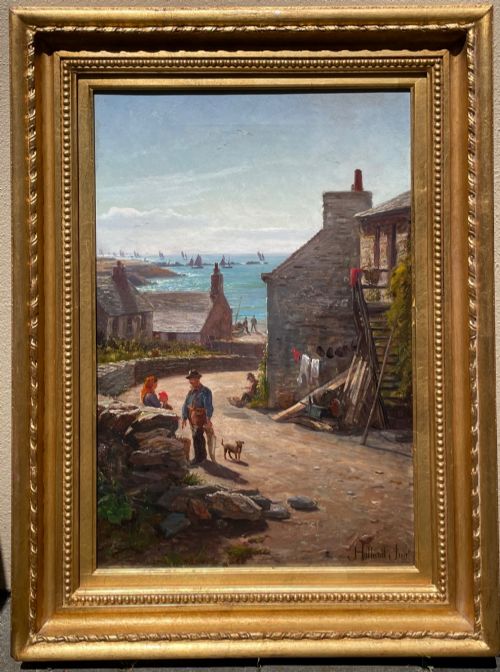
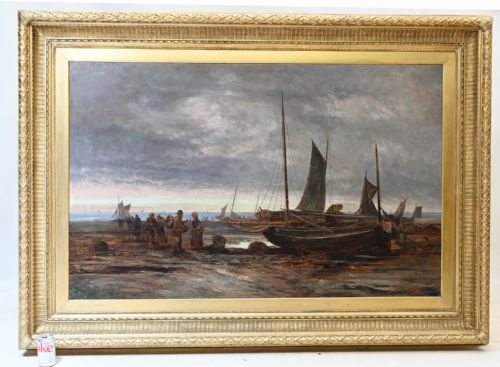
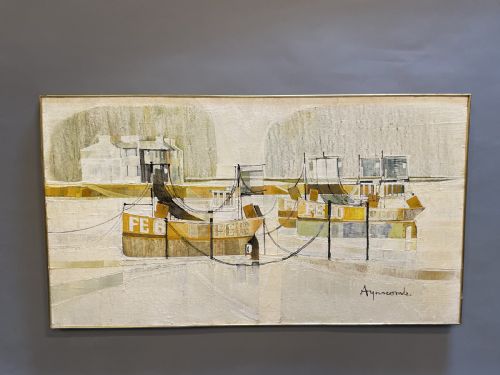
When you search for coastal fishing scene art, you encounter works depicting harbours, vessels, and shorelines from the nineteenth and twentieth centuries. The selection spans Victorian canvases, Edwardian views, and mid-century modern interpretations of working ports.
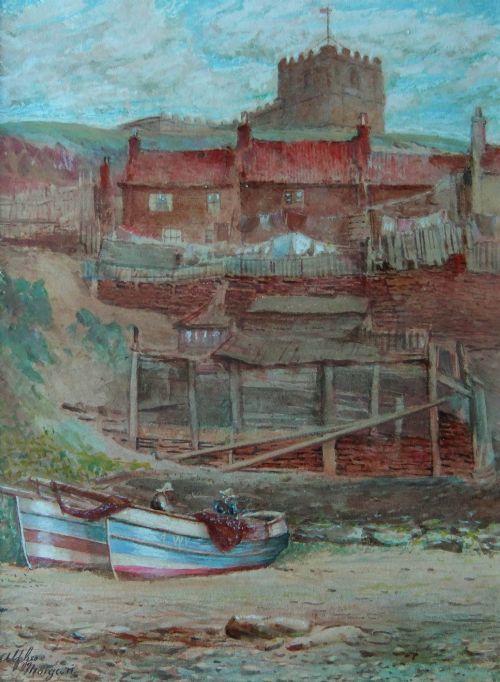
You are most likely to meet watercolours and oil paintings on canvas, board, or paper showing British locations such as Whitby, St Ives, and Mousehole. These pieces record the daily routines of fishing communities, from landing the catch to mending nets.
Materials and technique
Artists worked primarily in oil paint and watercolour, applying pigments to stretched canvas, wooden panels, heavy paper, or card. Oil paintings often utilise thick brushwork to capture the movement of choppy seas, while watercolours rely on fluid washes for atmospheric coastal light.
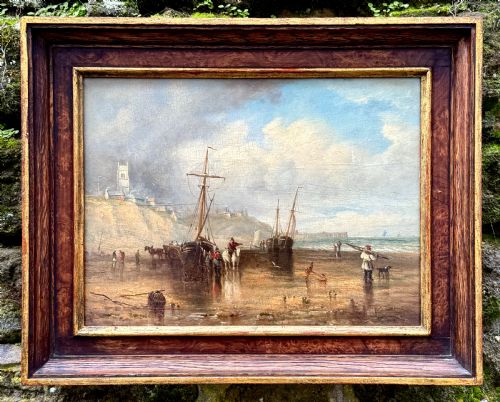
Surviving works frequently retain original wooden or giltwood frames that complement the period of the painting. Support materials range from sturdy canvas over wooden stretchers to compact boards suited to plein air painting.
Several artists preferred painting stormy seas over calm harbours, capturing boats tossed about in surprisingly choppy waters.
Judging quality
Quality rests upon the artist's command of light, composition, and maritime detail rather than the mere presence of a marine subject. Stronger works convey the atmosphere of the harbour and the weight of the sea with confident, expressive brushwork.
The sensitivity of the palette and the precision with which figures and vessels are integrated into the coastal landscape separate accomplished professional works from routine topographical records.
James Orrock·Thomas Creswick·Gustave De Bréanski·William Lee Hankey·Henri Ottman
The Coastal Fishing Scene Art Glossary
- Oil on canvas
- Pigment bound in drying oil applied to a woven fabric stretched across a wooden frame. This surface supports heavy impasto and rich colour blending.
- Watercolour
- A paint consisting of water-soluble pigments used on paper or board to create translucent washes. It allows for rapid sketching of transient coastal light.
- British Impressionism
- A painting style influenced by French movements that focuses on natural light and everyday scenes. Practitioners often worked outdoors to capture coastal weather.
- Newlyn School
- An artist colony based in Cornwall during the late nineteenth and early twentieth centuries. Painters focused on realistic portrayals of local fishermen and coastal life.
Coastal Fishing Scene Art: Frequently Asked Questions
What periods do these paintings cover?
The works span from the eighteenth century through the Victorian era into the mid-twentieth century. Later pieces incorporate mid-century modern and post-impressionist approaches.
Most examples date from the late nineteenth and early twentieth centuries when maritime subject matter drew widespread artistic attention.
Where were these coastal scenes painted?
Many depict British fishing ports, particularly in Yorkshire, Cornwall, and Scotland, including Whitby, St Ives, and Anstruther. Other works record continental harbours in France and Norway.
Artists frequently travelled to working fishing communities to observe local vessels, docks, and maritime labour firsthand.
How do I care for an antique painting?
Keep paintings away from direct sunlight, high humidity, and rapid temperature fluctuations to protect the canvas and paint layers. Avoid using chemical cleaners on the painted surface.
Dust frames gently with a dry, soft cloth and consult a professional conservator if the canvas requires cleaning or tension adjustment.
How are watercolours and oils different?
Oils use pigment suspended in drying oil on canvas or board, allowing for textured brushwork and deep colour saturation. Watercolours use water-soluble pigments on paper to produce luminous, transparent effects.
Watercolours require protective glass framing, whereas oil paintings on canvas are typically displayed open or within decorative wooden frames.