


Coastal Beach Landscape Canvas
A coastal beach landscape canvas brings the vast expanse of the shore and sea directly onto the wall through the rich medium of oil paint.
Coastal Beach Landscape Canvas
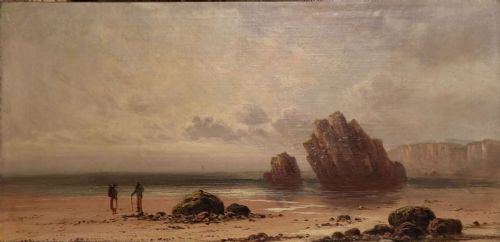
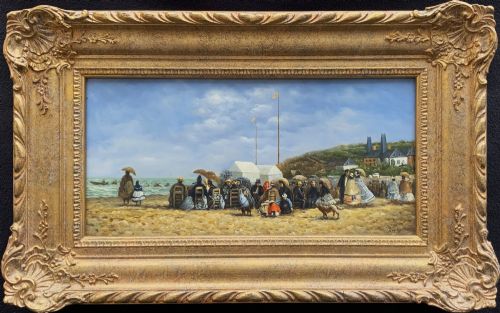
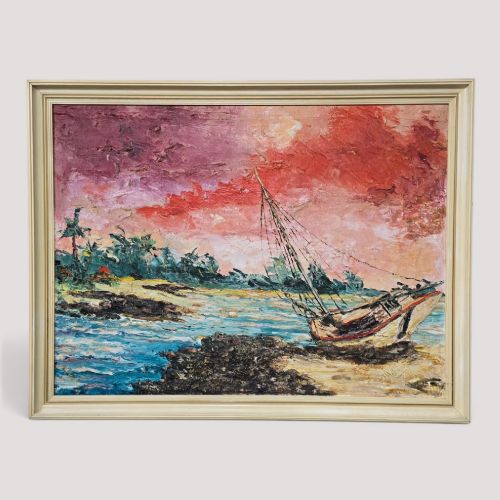
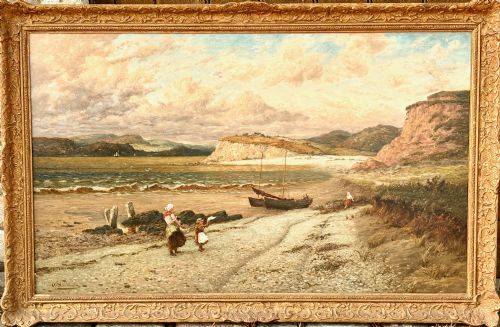
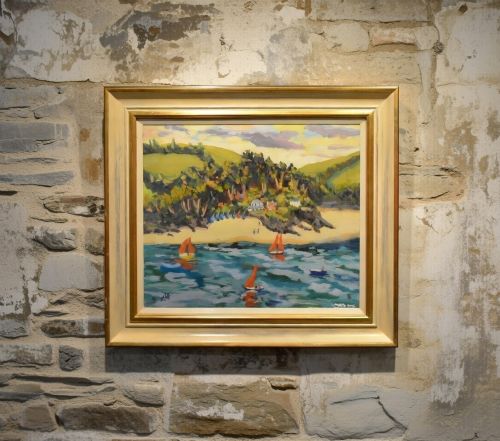
A coastal beach landscape canvas captures maritime views, sandy shores, rocky cliffs, and bustling coastal gatherings through oil paint applied to stretched fabric. These works range from sweeping 19th-century marine views to brighter 20th-century impressionist interpretations of the shore.
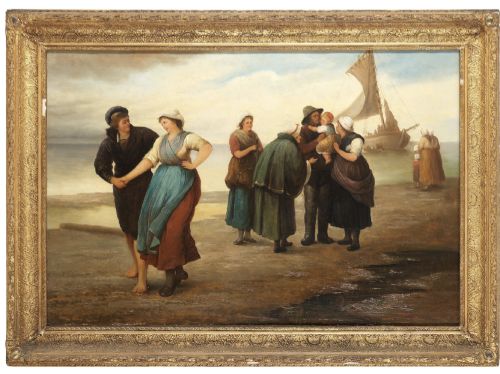
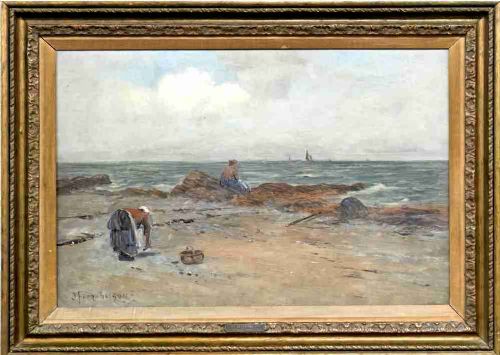
The most common form on this page is the framed oil painting on canvas, depicting figures on the beach, fishing boats, shipwrecks, or quiet tidal inlets. These works span periods from the Victorian era through the mid-20th century, reflecting changing approaches to light and atmosphere by the sea.
Collectors encounter scenes stretching from British bays like Morecambe and Salcombe to French coastal spots, executed in styles from strict realism to mid-century modern and post-impressionism. Each piece records a specific stretch of coast, whether populated by oyster pickers and fisher folk or left wild and empty.
Materials and technique
These works are painted primarily in oil paint on woven canvas stretched over wooden frames, often supported by underlying gesso layers to prepare the surface. The oil medium allows artists to build rich textures and blend tones smoothly, capturing the shifting light of the sea and sky.
Many of the older canvases sit within heavy wooden frames finished with gold leaf or gilt, which complements the warm tones of the oil painting within. Painters use varied brushwork, from tight realist detail in 19th-century marine scenes to looser, expressive marks in later impressionist and fauve works.
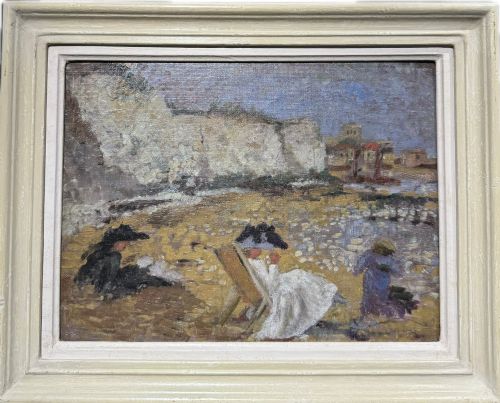
One canvas preserves a quiet seaside day populated by a boxer, a photographer, and a lady in white.
Judging quality
Quality rests upon the artist's command of light, atmosphere, and composition, distinguishing a vital coastal scene from a mechanical record. Stronger works demonstrate confident brushwork and a convincing sense of space, weather, and salt air.
The integration of the canvas with its original frame plays a part in the overall integrity of the piece, particularly with 18th and 19th-century works where giltwood frames were chosen to complement the painting. Provenance and attribution to a recorded hand elevate a piece, separating works by established painters from anonymous studio output.
Joseph Farquharson R.A.·Sir David Murray RA·William Shayer·Daniel Sherrin·Donald McIntyre
The Coastal Beach Landscape Canvas Glossary
- Canvas
- A heavy woven fabric stretched over a wooden frame to serve as a support for oil painting. It provides a textured surface that holds thick layers of pigment.
- Giltwood
- Wood carved and covered with a thin layer of gold leaf or gilt. It is commonly found on traditional frames surrounding 19th-century oil paintings.
- Impressionism
- An art style focused on capturing light and movement with visible brushstrokes. Many beach scenes utilise this approach to render sparkling water and shifting clouds.
- Marine landscape
- A painting depicting the sea, ships, or coastal shores. These works often focus on maritime weather and coastal working life.
Coastal Beach Landscape Canvas: Frequently Asked Questions
Are these paintings original?
The works listed are original oil paintings created by hand on canvas, rather than mechanical prints or reproductions.
Signatures, artist attributions, and period framing help confirm the authenticity of individual pieces.
How should I hang a canvas?
Paintings on canvas prefer stable indoor wall spaces away from direct sunlight, high humidity, and sudden temperature shifts from radiators.
Secure picture hooks rated for the weight of the frame keep the painting safely balanced against the wall.
What periods do these paintings cover?
The selection spans from the 18th century through the Victorian era and into the mid-20th century, including post-impressionist and modernist works.
Victorian marine pieces sit alongside later 1960s interpretations of the coast.