

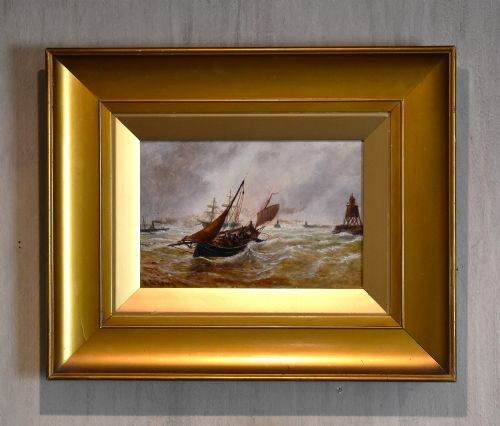


Brown Coastal Oil Painting
A brown coastal oil painting captures maritime life and open shorelines through muted earth tones and rich historical textures.
Brown Coastal Oil Painting
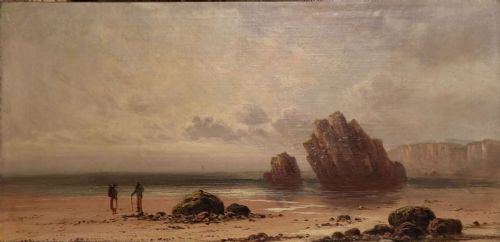
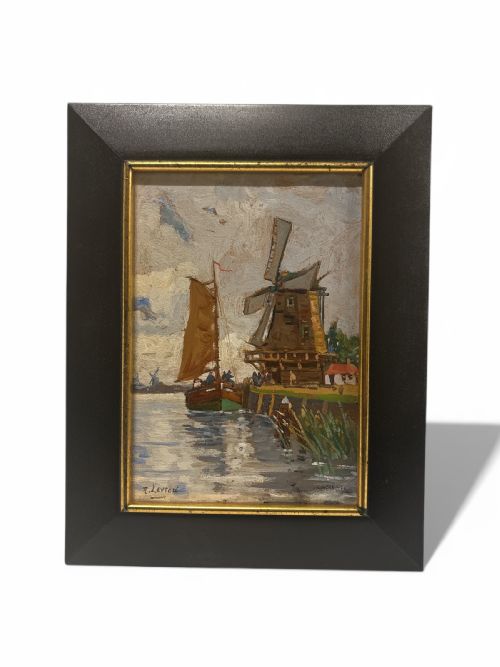
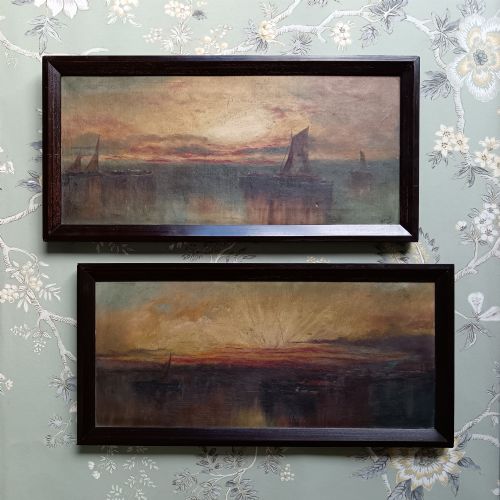
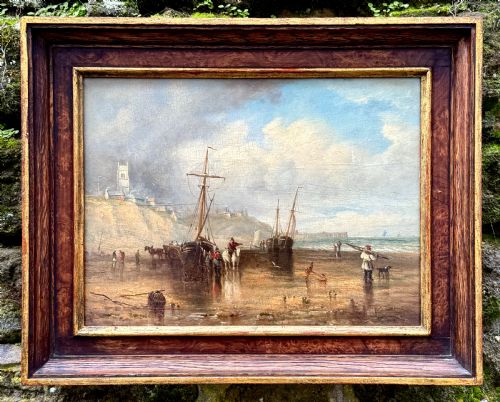
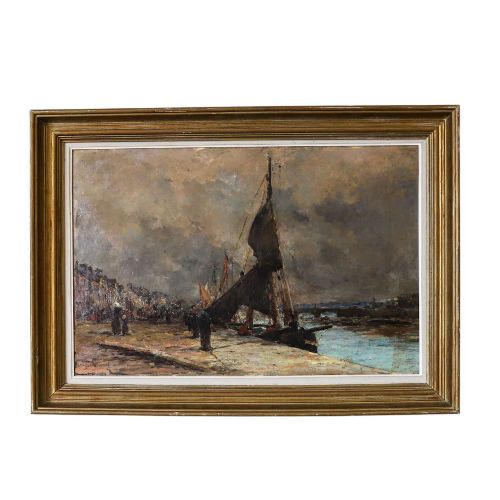
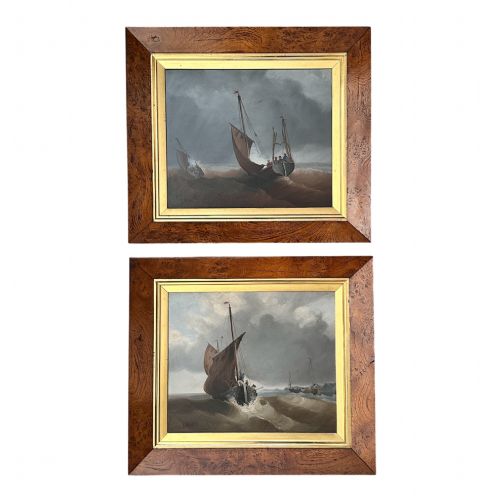
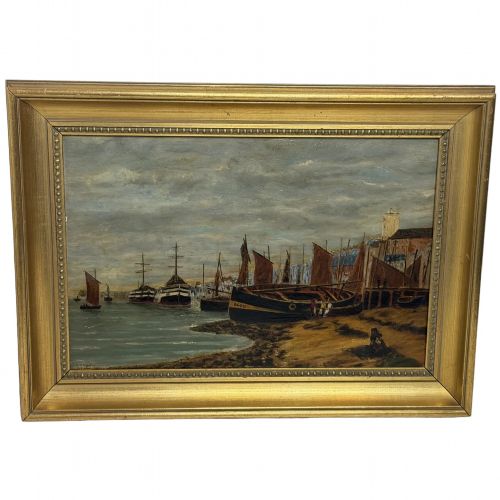
A brown coastal oil painting depicts harbours, estuaries, and rocky shores through the lens of nineteenth-century and twentieth-century British and European art. These works range from intimate depictions of fishing boats on wood panels to large maritime scenes on canvas.
The prevailing palette relies on deep ochres, umbers, and muted browns to render sea stacks, old barges, and coastal figures. Most pieces encountered date from the Victorian era through the mid-twentieth century, encompassing British Impressionism and 19th Century Marine Art.
Materials and construction methods
Artists applied oil paint using traditional brushwork onto prepared wood panels, boards, or canvas supports. The physical ground often consists of woven textile or timber, providing a stable surface for layered pigments.
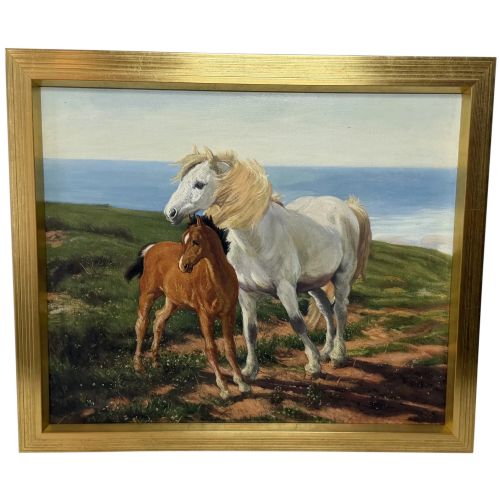
Many surviving examples retain their period gilt frames, which complement the darker maritime tones and protect the edges of the canvas or panel.
Listings span from the early nineteenth century through the mid-twentieth century, featuring oil on canvas, wood panels, and gilt framing.
Factors that distinguish individual works
The strength of composition and brushwork dictates the visual impact of each maritime scene. Confident handling of water reflections, shipping vessels, and atmospheric skies elevates a canvas above standard decorative production.
The integrity of the original surface and the harmony of the framing contribute significantly to the historical presence of the piece.
Thomas Creswick·John Moore of Ipswich·Bernard Benedict Hemy·Gustave de Breanski·Owen Bowen·Sir David Murray·William Shayer
The Brown Coastal Oil Painting Glossary
- Canvas
- A heavy woven fabric stretched across a wooden frame to serve as a painting surface. It provides texture that interacts with the dried oil pigments.
- Gilt
- A thin layer of gold leaf applied to wooden picture frames. This decorative finish enhances the warmth of darker marine compositions.
- Estuary
- The tidal mouth of a large river where the tide meets the stream. This subject appears frequently in nineteenth-century coastal works.
- Impressionism
- An art style characterised by relatively small, thin, yet visible brush strokes and an emphasis on accurate depiction of light. It influenced numerous maritime painters of the late nineteenth and early twentieth centuries.
Brown Coastal Oil Painting: Frequently Asked Questions
What subjects appear in these paintings?
The compositions focus on maritime and shoreline themes including harbours, fishing boats, sea stacks, and estuaries. Figures on beaches and historical sailing vessels also feature prominently.
Artists frequently recorded working ports and coastal architecture, documenting industrial and maritime heritage through varied regional viewpoints.
How do I date an antique oil painting?
Dating relies on stylistic evidence, stretcher construction, canvas types, and framing materials. Signatures and artist biographical dates offer further chronological markers.
Nineteenth-century works often employ heavier linen canvases and elaborate gilt mouldings, while mid-twentieth-century examples can utilise board panels.
Are these paintings signed by the artist?
Many examples bear artist signatures, monograms, or studio inscriptions on the front or reverse. Some pieces remain unattributed to a specific hand.
Attribution frequently links unsigned works to recognised schools, such as the British School or regional maritime traditions.
How should I display a vintage oil painting?
Displaying these works requires avoiding direct sunlight and excessive humidity fluctuations to protect the oil pigments and wooden supports. Appropriate wall placement preserves the stability of the canvas and frame.
Matching the painting with a compatible historical interior enhances the earthy tones characteristic of brown coastal scenes.