
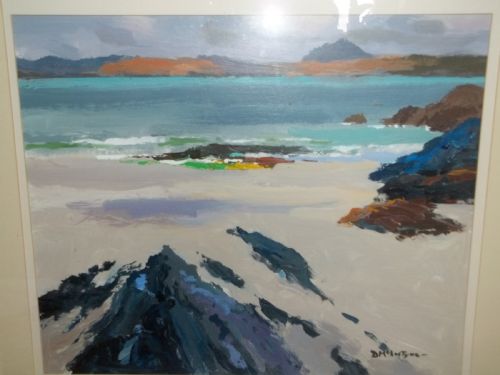

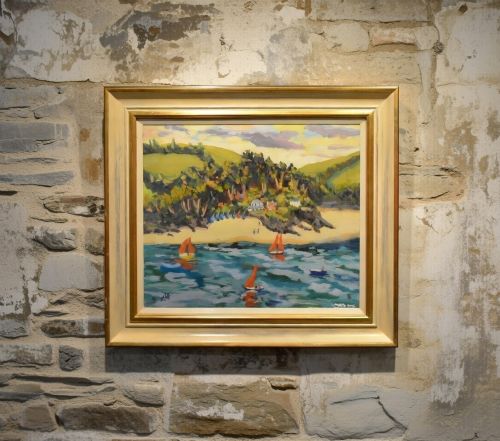
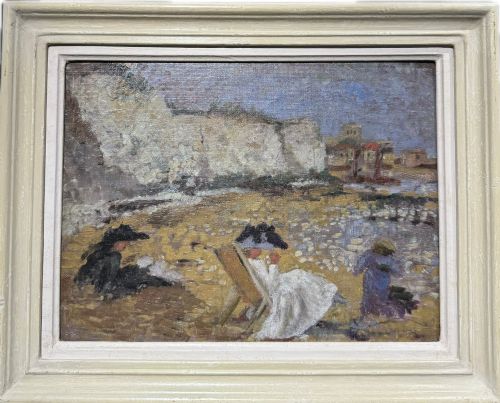


British Impressionist Beach Landscape
A british impressionist beach landscape brings coastal light and open air into a room through confident brushwork and oil or watercolour on canvas or paper.
British Impressionist Beach Landscape
A british impressionist beach landscape captures coastal scenes from the nineteenth century onwards, frequently recording harbours, shores and tidal inlets across Britain. These works range from traditional watercolours to textured oil paintings on canvas, reflecting the shifting light of the coast.
The selections available here lean towards coastal views rendered in the manner of the Newlyn School and British Impressionism. Buyers often encounter framed watercolours alongside larger oil paintings, spanning periods from the Victorian era through the mid-twentieth century.
How they were made
Artists apply oil paint or watercolour onto prepared canvas, paper or wood panels, often building texture with gesso beneath the surface. Paint is laid down with visible brushstrokes to capture immediate atmospheric effects rather than meticulous detail.
Framing typically involves gilt wood or painted wood surrounds that complement the palette of the coastal scene. The physical support relies on traditional stretching and mounting techniques appropriate to each period.
Salt air may have long since faded from the coast, but a well-preserved brushstroke can still make you squint against the glare.
What varies in quality
Quality rests in the handling of light and pigment, where confident brushwork conveys movement in water and sky with economy. Weaker examples rely on flat application and formulaic composition rather than direct observation.
The strength of the provenance and the clarity of the signature also separate works, alongside the preservation of the original paint layer and support.
William Banks Fortescue·Lucy Pratt·Ethel Sands·Joseph Edward Hennah·Donald McIntyre·Frederick William Hattersley·Ernest F Hill·Owen Bowen·William Greaves·Alfred Egerton Cooper
The British Impressionist Beach Landscape Glossary
- Newlyn School
- An art colony based in Cornwall that focused on plein air painting and naturalistic coastal scenes. Many works associated with this group capture local fishing fleets and harbour life.
- Gesso
- A mixture of binder and chalk or gypsum used to prepare wood or canvas surfaces before painting. It provides a stable and smooth ground for oils.
- Plein air
- Painting outdoors in natural light to capture the immediate visual effects of weather and atmosphere. This approach is central to impressionist landscape traditions.
- Gilt wood
- Wood carved and covered with a thin layer of gold leaf or metallic gilt. Frames of this material are common on nineteenth and twentieth century fine art.
British Impressionist Beach Landscape: Frequently Asked Questions
What defines a british impressionist beach landscape?
These works focus on coastal locations in Britain, using loose brushwork and atmospheric colour to record light, sea and sand.
Artists working in this tradition prioritised immediate visual impressions over rigid academic precision.
Where were these coastal scenes painted?
Locations span British shores, with particular concentrations around Cornish harbours like St Ives, Welsh beaches, and Devon coasts.
Painters often worked outdoors on site to capture the specific light and weather of these coastal communities.
How should I frame an older oil painting?
Choose a frame that matches the period of the artwork, such as a traditional gilt wood moulding that complements the canvas.
Ensure the painting is properly ventilated within the frame to protect the oil paint and canvas from moisture.
How do I care for a watercolour on paper?
Keep watercolours away from direct sunlight to prevent the pigments and paper from fading over time.
Use UV-filtering glass and acid-free mounts when framing to preserve the integrity of the paper.