




Antique Seaside Landscape Painting
An antique seaside landscape painting captures the salt air and shifting light of the coast, offering a direct window into nineteenth and twentieth-century shores.
Antique Seaside Landscape Painting
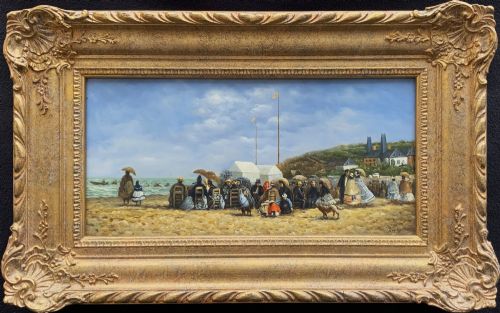
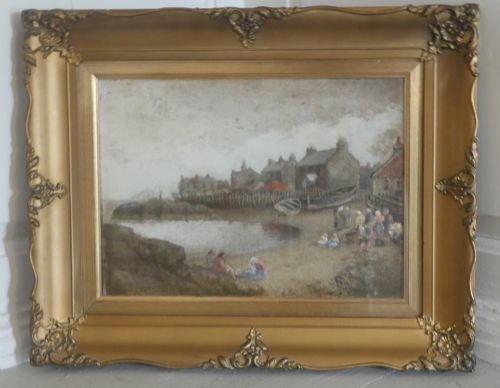
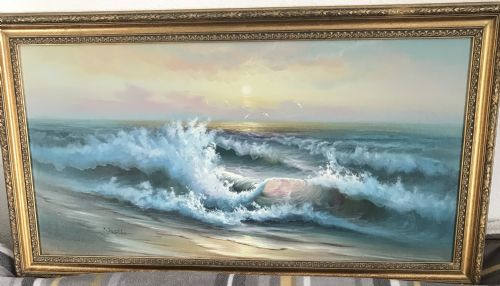
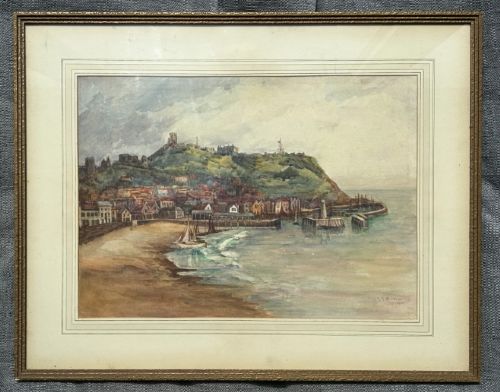
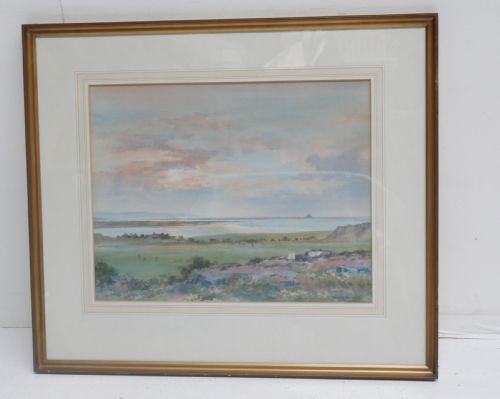
An antique seaside landscape painting depicts coastal views, fishing harbours, and beach scenes created during the nineteenth and early twentieth centuries. These works range from topographical records of English and French bays to expressive interpretations by regional schools.
The most common examples encountered in this collection are watercolours on paper and oil paintings on canvas, often housed in original gilt wood frames. Subjects frequently include specific locations such as St Ives, Scarborough, Whitby, and the Normandy coast.
The material spans the Victorian period through to the post-impressionist era, capturing changing social habits at the shore alongside traditional maritime labour.
Materials and Technique
Artists relied primarily on oil paint applied to canvas or wood panels, and watercolours laid onto paper, capturing the translucent quality of sea spray and the heavy texture of coastal cliffs. Brushes varied from fine sable tips for intricate rigging and figures to broad hog-bristle brushes for churning waves and open skies.
Supports were housed behind glass or within heavy gilt wood frames designed to complement the domestic interiors of the period. Pigments reflect the palette of the era, utilising earth tones alongside early synthetic colours to render sand, stone, and water.
A Victorian beach scene casually includes a boxer, a photographer, and a lady in white sharing the sand.
Distinctions in Quality
Quality rests upon the artist's command of natural light and atmospheric perspective, distinguishing a flat record from a work with genuine depth and movement. Superior pieces convey the specific humidity and illumination of a coastal region rather than relying on formulaic formulas for sea and sky.
Handling of detail in secondary elements, such as the posture of fisher folk or the architecture of harbour walls, separates accomplished hands from lesser jobbing painters. Preservation also plays a part, with intact paper surfaces free from heavy foxing and stable oil canvases holding higher regard.
Edward Mills·William Banks Fortescue·F A Roylance·John Bedloe Goddard·Sir Thomas Newenham Dean·Eugene Boudin·Alfred Henry Vickers·Percy Brooke·Alfred Robert Quinton·James George Bingley·John Sanderson Wells·Robert Macaulay Stevenson·James Watson·Edwin Bagshaw·James Kinnear·Yves Brayer·William Shayer·George Marks·Henry Valter·John Duvall
The Antique Seaside Landscape Painting Glossary
- Watercolour
- A painting method where finely ground pigments are suspended in a water-soluble binder and applied to paper. This medium allows for luminous washes that suit the pale skies and open water of coastal views.
- Gilt wood
- Timber frames treated with a thin layer of gold leaf or metal powder. These frames were standard for presenting fine art in nineteenth-century parlours.
- Impressionism
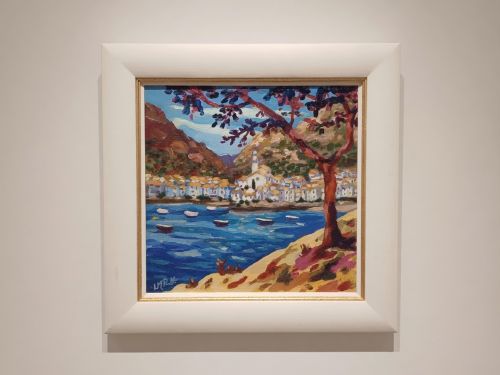
- An art style characterised by relatively small, thin, yet visible brush strokes and an emphasis on accurate depiction of light. In coastal works, it serves to capture the fleeting glare of sun on wet sand.
- Fauvism
- A style of painting that uses bold, non-naturalistic colours applied with expressive brushwork. In seaside scenes, it translates the ordinary coast into vibrant arrangements of hue and tone.
Antique Seaside Landscape Painting: Frequently Asked Questions
How do I date an antique seaside painting?
Dating relies primarily on the style of dress worn by figures on the beach, the framing materials, and any signatures or inscriptions on the reverse of the canvas or paper.
Comparison with known artist dates and regional painting societies active during the nineteenth and twentieth centuries also helps narrow the period.
Were these paintings made outdoors?
Many watercolours and oil sketches were painted directly on location to capture immediate effects of weather and light, a practice that grew increasingly common towards the end of the nineteenth century.
Larger oil paintings were typically finished inside a studio using these preliminary field studies as reference.
How should I frame and display them?
These works are best kept away from direct sunlight and damp environments to protect both the paper or canvas and the original gilt wood frames.
Watercolours require conservation mounting behind glass to prevent atmospheric damage and maintain the stability of the pigment over time.
What is the difference between oil and watercolour views?
Oil paintings on canvas generally offer richer texture and heavier impasto, allowing artists to build up the physical weight of waves and cliffs.
Watercolours on paper offer a lighter, more transparent quality that excels at rendering coastal haze, wide skies, and delicate shoreline light.