
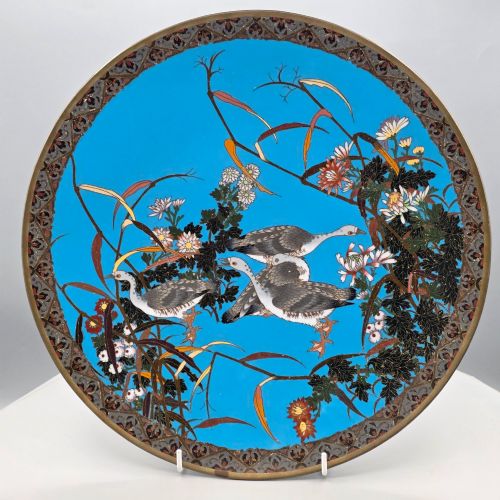
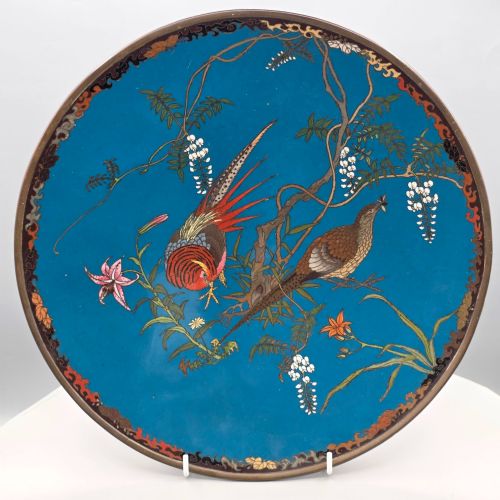
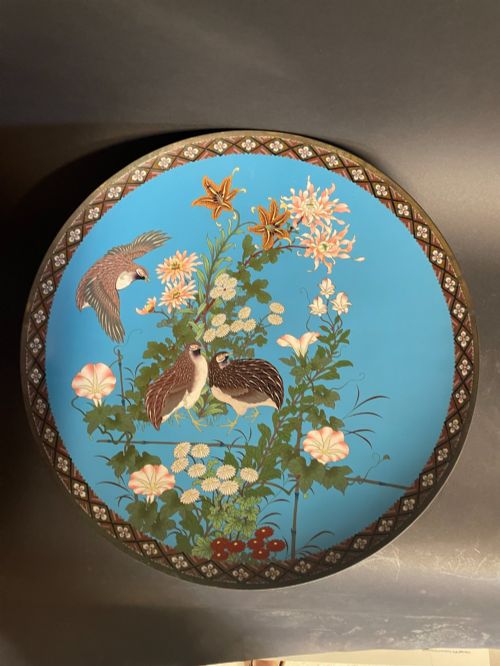
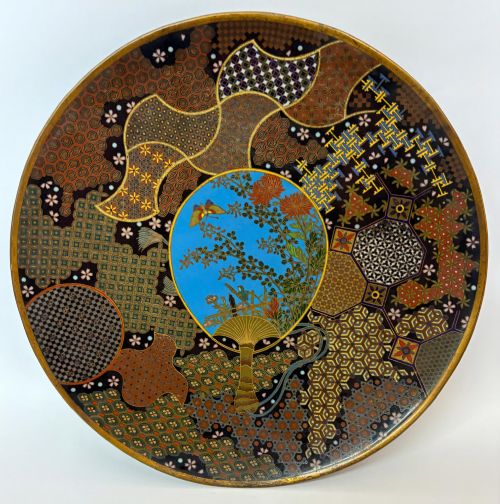


Cloisonne Wall Plate
When you search for a cloisonne wall plate, you uncover intricate metalwork panels designed to hang as decorative art.
Cloisonne Wall Plate
A cloisonne wall plate combines metal and vitreous enamel to form a decorative display object for interiors.
The selections here span the nineteenth century, with particular emphasis on Japanese Meiji period pieces and earlier Edo examples.
Forms range from medium decorative plates to large chargers and plaques depicting natural scenes and mythical subjects.
Materials and Techniques
Artisans soldered thin copper, brass, or bronze wire onto a metal or porcelain base to create raised compartments called cloisons.
Workers filled these outlined cells with coloured enamel paste before firing the piece in a kiln to vitrify the surface.
Specialist variations such as totai shippo utilised a porcelain body covered in cloisonne enamel and textured tree bark effects.
Listings feature copper and brass wire applied to metal and porcelain bases across the nineteenth century.
Assessing Quality
The precision and fineness of the wirework determine the clarity of the design and the skill of the maker.
Complex pictorial subjects involving animals, dragons, or human figures demand greater technical mastery than repeating geometric patterns.
Larger chargers present greater structural challenges during the firing process, influencing the overall execution.
The Cloisonne Wall Plate Glossary
- Cloisonne
- Enamelling technique where thin metal wires form cells to hold coloured paste. These wires remain visible on the finished surface.
- Charger
- A large decorative plate intended for display rather than dining use. They often measure over thirty centimetres across.
- Totai Shippo
- Japanese technique applying cloisonne enamel directly onto a porcelain body rather than metal. It often mimics organic textures.
- Meiji Period
- Era of Japanese history spanning from 1868 to 1912 noted for exceptional metalwork. Many surviving decorative items date from this time.
- Mon
- Japanese heraldic badge or emblem used to denote family lineage. These crests frequently appear within decorative borders.
Cloisonne Wall Plate: Frequently Asked Questions
How do I hang a heavy charger?
Large chargers require robust wall fixings designed to support substantial weight safely. Utilise specialised spring-loaded brass plate hangers that distribute pressure evenly around the rim without causing damage.
Ensure the mounting hook is secured directly into wall studs or appropriate masonry anchors. Avoid hanging heavy pieces above seating areas where accidental impacts might dislodge them.
Can these plates be cleaned safely?
Dust enamel surfaces gently with a soft, dry cloth to prevent the accumulation of grime. Avoid using liquid cleaners, abrasive cloths, or chemical solvents on antique metal and glass.
Moisture can seep into microscopic hairline fractures or affect exposed base metals over time. Professional conservation is advised for stubborn residue.
What motifs appear on these pieces?
Common decorative themes draw from nature, featuring birds, fish, dragons, and seasonal flowers like chrysanthemums. Mythological figures and auspicious symbols also feature prominently in nineteenth-century designs.
Specific birds such as the ho-o phoenix carry traditional cultural meanings of grace and prosperity. Landscapes often incorporate recognizable landmarks like Mount Fuji.
How are nineteenth-century pieces dated?
Stylistic shifts and manufacturing techniques help narrow the production era of unmarked items. Earlier nineteenth-century works often display heavier construction and distinct colour palettes compared to later Meiji output.
Signatures or workshop marks can occasionally provide further historical context. Comparison with documented examples from similar periods remains a reliable method.