



Meiji Dragon Dish
A meiji dragon dish brings dynamic mythic power into a room through intricate metalwork, enamel, and porcelain.
Meiji Dragon Dish
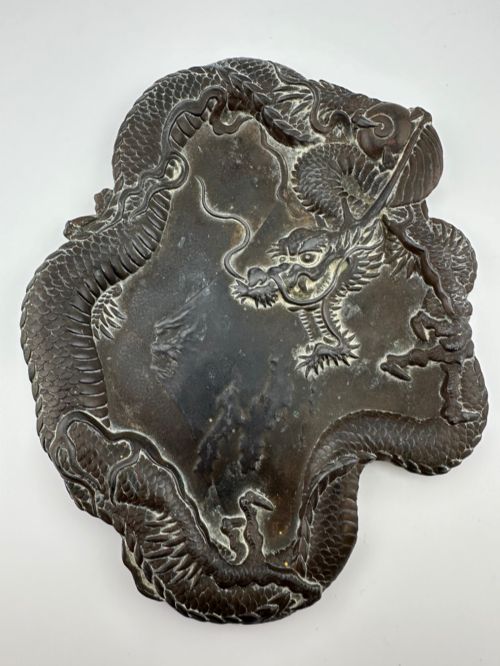
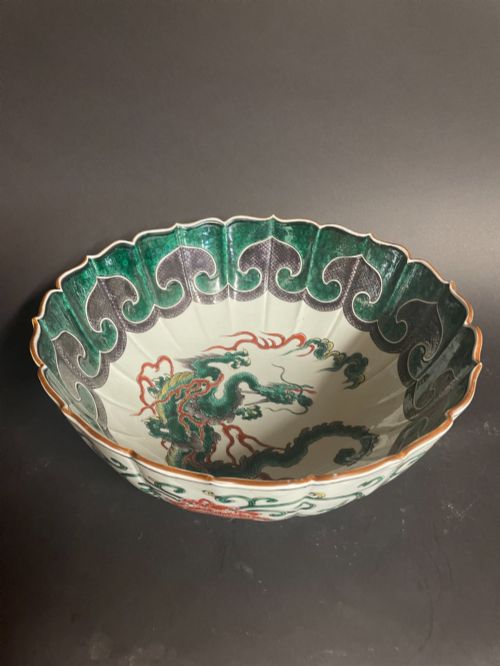
A meiji dragon dish encompasses decorative chargers, bowls, plates, and trays featuring fierce serpentine creatures rendered in traditional Japanese styles. These pieces range from square cloisonne enamel trays to large porcelain bowls and mixed-metal chargers.
Most examples found here date across the late nineteenth century, spanning the Edo transition through the Meiji period and into the Victorian era. Makers utilised varied forms including large chargers and dishes with single-dragon motifs.
The aesthetic bridges several classic traditions, featuring Imari palettes alongside meticulous cloisonne work and Komai style brass and mixed-metal inlay. Buyers encounter both circular plates and broad square trays built for display.
Materials and construction methods
The construction relies heavily on cloisonne enamel, utilising fine silver wire and brass wire to partition coloured glass pastes on copper or brass bases. Artisans fused these vitreous enamels through repeated firing and polishing to achieve smooth, luminous surfaces.
Porcelain and earthenware forms draw upon classical techniques from centres such as Arita, featuring painted cobalt and iron-red glazes characteristic of Imari wares. Mixed-metal dishes incorporate overlaid brass and contrasting alloys soldered or inlaid onto dark metal grounds.
Meiji Dragon Dish Retail Price Guide 2026
Typical asking prices for meiji dragon dish among the pieces listed under this phrase on Sellingantiques today, from the lower quarter to the upper quarter. They describe what is for sale here now, not the wider market.
Listings feature works spanning the late Edo period through the Meiji era, utilising copper, brass, porcelain, and silver wire enamel.
Assessing quality in dragon pieces
Quality reveals itself in the discipline of the wirework and the depth of the enamel, where tighter partitions and flawless polishing separate superior items from simpler production. The precision of the dragon's scales and claws indicates the maker's control over the medium.
Scale and ambition dictate distinction, with massive chargers and signed works demonstrating greater technical mastery than standard decorative plates. The complexity of mixed-metal inlay work or hand-painted Imari detail elevates certain pieces above standard domestic wares.
The Meiji Dragon Dish Glossary
- Cloisonne Enamel
- A metalwork technique where thin wires are soldered to a base to create compartments filled with enamel paste. This method defines many of the intricate dragon designs seen in this category.
- Charger
- A large ornamental plate or dish intended primarily for display rather than dining. These expansive surfaces often showcase the most elaborate dragon motifs.
- Imari
- A style of Japanese porcelain featuring a distinctive palette of underglaze blue, iron red, and gilt highlights. These wares originated from Arita and frequently appear alongside dragon imagery.
- Komai Style
- A method of inlaying gold and silver into a dark iron or brass ground to create pictorial scenes. Pieces in this style display exceptional metallic contrast.
- Meiji Period
- The era in Japanese history spanning from 1868 to 1912, marked by industrial expansion and unprecedented artistic output in decorative arts. Many of the finest metalwork and enamel dragon pieces date from this time.
Meiji Dragon Dish: Frequently Asked Questions
How were these dishes displayed?
Large chargers and heavy plates were traditionally set on wooden stands or hung on walls to showcase their intricate mythical motifs.
Smaller trays and bowls served as decorative mantel ornaments or receptacles for visiting cards in period interiors.
Are all these items made of cloisonne?
While cloisonne enamel on copper or brass forms a large portion of the selection, traditional Japanese porcelain and mixed-metal dishes also appear.
Materials range from silver wire enamel to hand-painted Imari ceramic bowls and brass plates.
How do I identify the Meiji period?
The Meiji period spans from 1868 to 1912, coinciding with the Victorian era in Britain and a surge in export art.
Pieces from this time often bear signatures, sophisticated wirework, and dynamic interpretations of traditional dragon mythology.
What is the difference between an Imari dish and a cloisonne charger?
An Imari dish is made of fired porcelain decorated with cobalt blue and iron-red glazes, often incorporating gilt highlights.
A cloisonne charger is constructed from metal with coloured glass pastes held within soldered wire cells to form the image.