


Cloisonne Wall Dish
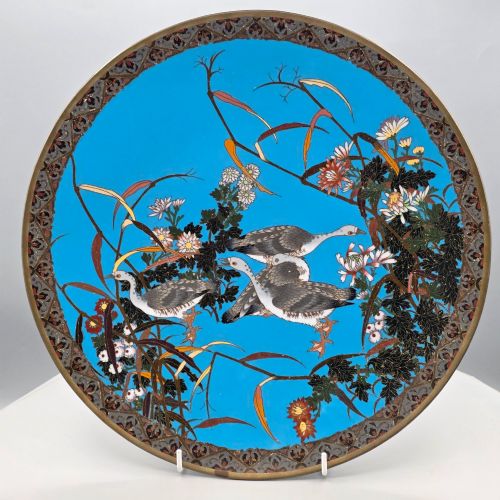
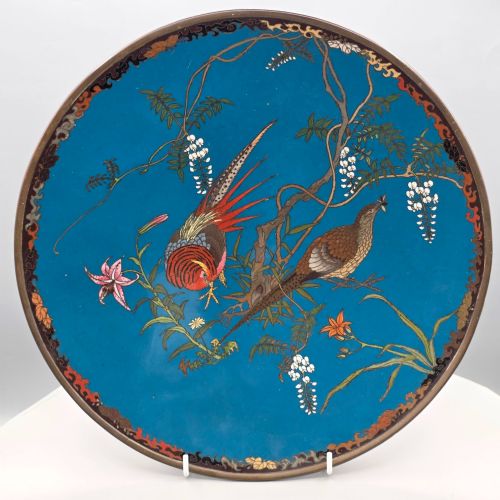
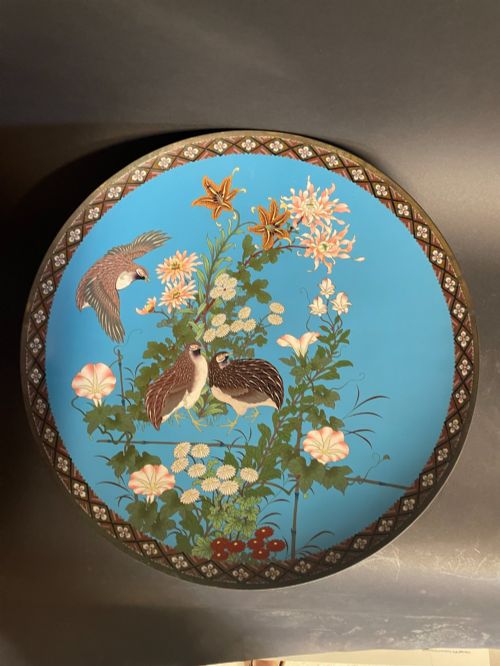
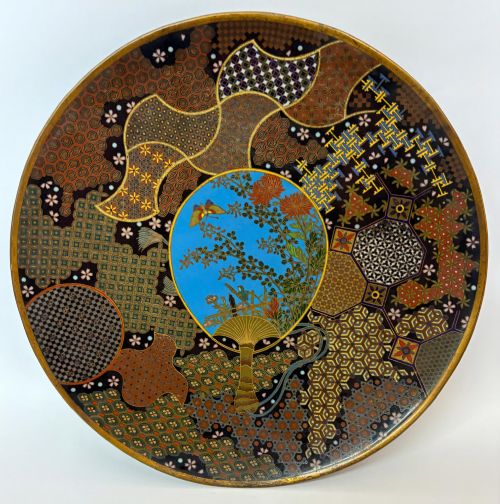
A cloisonne wall dish brings intricate metallic wirework and vibrant coloured enamels together in a commanding decorative form.
Cloisonne Wall Dish
When searching for a cloisonne wall dish, buyers encounter large decorative chargers, plates, and plaques originating primarily from the Japanese Meiji and Edo periods, alongside occasional Qing Dynasty examples.
The objects span the eighteenth and nineteenth centuries, with the majority dating from the eighteen-seventies through to nineteen hundred.
These pieces function primarily as display chargers, utilising heavy copper, brass, or porcelain bases designed to hang on walls or rest on surfaces.
Materials and Construction
Artisans formed the vessels using copper, brass, or porcelain foundations, often applying thin brass or copper wire to map out detailed pictorial designs.
Coloured enamel pastes filled the tiny cellular compartments created by the wire before the piece underwent firing and polishing to achieve a smooth finish.
Certain specialised variations, known as Totai Shippo, incorporated porcelain bases textured to resemble tree bark beneath the enamel and wire layers.
Base materials recorded across the inventory include copper, brass, bronze, and porcelain, frequently combined with fine brass wire.
Assessing Quality
Quality rests upon the precision and thinness of the metal wirework, where tighter, more complex geometric or pictorial cells indicate higher craftsmanship.
The complexity and execution of the subject matter distinguish standard production from masterworks, with detailed depictions of dragons, koi, and phoenixes requiring exceptional skill.
The finish of the enamel surface, uniformity of polishing, and the clarity of the colour palette also separate ordinary plates from finer examples.
The Cloisonne Wall Dish Glossary
- Cloisonne Enamel
- A decorative technique where metal wire is soldered to a base to form cells that are filled with enamel and fired. This method creates detailed, stained-glass-like patterns across the surface of a dish.
- Charger
- A large ornamental plate intended for display rather than dining. These substantial pieces often feature intricate pictorial compositions.
- Totai Shippo
- A Japanese technique where enamel is applied over a porcelain body rather than metal. The resulting pieces frequently feature textured surfaces that mimic organic materials like tree bark.
- Meiji Period
- A historical Japanese era spanning from eighteen sixty-eight to nineteen twelve. This period produced some of the finest and most technically ambitious enamelwork.
- Ho-o Bird
- A mythical East Asian phoenix frequently depicted in traditional metalwork and ceramics. It symbolises grace, virtue, and prosperity.
Cloisonne Wall Dish: Frequently Asked Questions
How do I hang a heavy cloisonne wall dish safely?
Displaying these heavy metal and enamel chargers requires sturdy, adjustable wall brackets designed to support considerable weight without gripping the rim too tightly.
Ensure the mounting hardware is secured directly into wall studs rather than plaster alone to prevent the piece from slipping.
What is the difference between an Edo period and Meiji period dish?
Dishes from the Edo period often display bold, classical motifs and heavier metal foundations dating prior to eighteen sixty-eight. Meiji era pieces tend to exhibit finer wirework and increasingly elaborate pictorial realism as techniques advanced.
Both periods produced exceptional large chargers, though Meiji examples appear more frequently in collections.
Can these plates be used to hold food?
These decorative objects serve primarily as visual display pieces rather than functional tableware. The metal wires and enamel compositions are unsuited for culinary use.
Cleaning should be limited to gentle dusting with a soft, dry cloth to protect the polished surface.
What do motifs like dragons and koi signify?
Dragons and leaping koi represent strength, perseverance, and auspicious energy in traditional East Asian iconography. Master craftsmen utilised these symbols to add cultural depth to the intricate enamel scenes.
Other common subjects include phoenixes, chrysanthemums, and landscapes reflecting natural harmony.