


Cloisonne Enamel Wall Plaque
These cloisonne enamel wall plaque examples bring intricate metalwork and vibrant glass into any room.
Cloisonne Enamel Wall Plaque
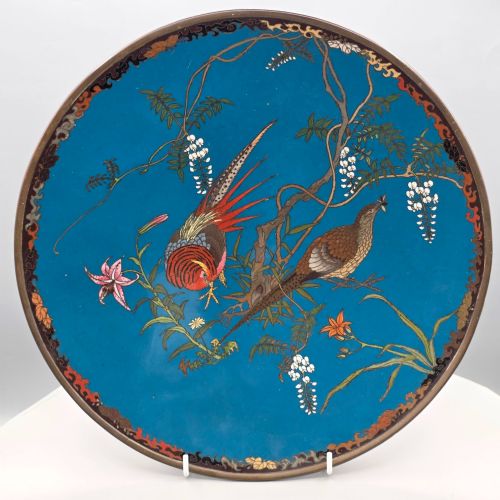
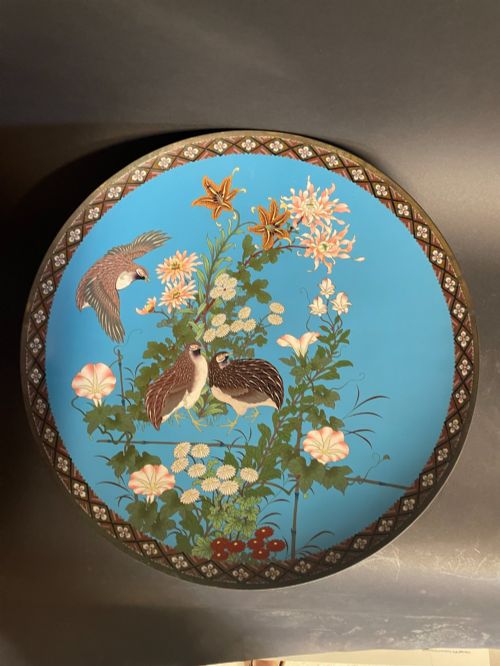
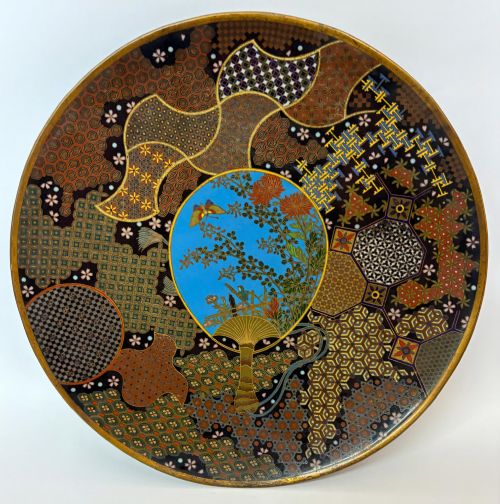
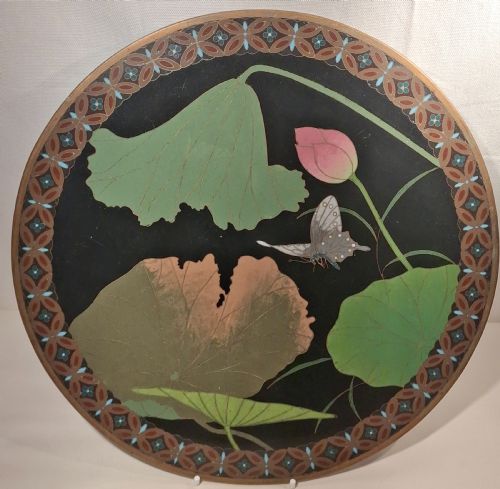
A cloisonne enamel wall plaque is a decorative dish, charger or tray intended for display rather than dining. The listings here primarily comprise Japanese chargers and plates from the Meiji and Edo periods, alongside examples attributed to the Qing Dynasty.
Most pieces take the form of large circular chargers, measuring up to fifty centimetres across, or distinct decorative plaques. Common visual subjects include birds, dragons, koi fish, insects and samurai figures rendered in colourful enamel cells.
Materials and construction
Artisans built these objects upon a base of copper, brass, bronze or occasionally porcelain, shaping wire to form the compartments of the design. These metal wires create the distinct outlines seen across the surface of each piece.
Coloured glass paste fills the resulting cells before the object undergoes firing and polishing. Totai shippo examples incorporate a porcelain body beneath the enamel and wire skin.
Frogs, butterflies and leaping koi frequently share surface space with formidable dragons and samurai.
Measures of quality
Quality rests upon the fineness of the wirework and the complexity of the pictorial subject. Masterpiece items display dense, controlled cell patterns forming intricate motifs such as leaping koi or detailed avian scenes.
The polish of the enamel surface and the depth of the colour palette also separate standard production from exceptional work. Signed pieces often reflect higher standards of workshop execution.
The Cloisonne Enamel Wall Plaque Glossary
- Cloisonne Enamel
- A technique where wire is soldered to a metal base to form cells, which are then filled with glass paste and fired. This method creates detailed, multicoloured surface designs.
- Charger
- A large decorative plate traditionally used for display rather than service. These items form the majority of the current wall plaque selection.
- Totai Shippo
- Japanese ware utilising a porcelain body decorated with cloisonne enamel and wire. This technique produces pieces that combine ceramic forms with metalwork.
- Meiji Period
- A Japanese historical era lasting from 1868 to 1912, associated with significant output in fine metalwork and enamel. Many pieces on this page originate from this time.
Cloisonne Enamel Wall Plaque: Frequently Asked Questions
How do I hang a heavy charger safely?
Large chargers require robust wall brackets designed to support substantial weight without slipping. Ensure the mount grasps the rim securely.
Professional framing or specialised spring clips distribute the load evenly across the metal or porcelain body.
Are these plaques meant for dining use?
These items serve strictly as decorative display objects rather than tableware. Their delicate wire and enamel surfaces are vulnerable to cutlery and heat.
Placing them on walls or stands preserves the polished finish and intricate detailing.
What does totai shippo mean?
Totai shippo refers to a specific Japanese construction method where enamel and wire are applied over a porcelain base instead of solid metal.
This technique creates pieces that bridge ceramic and metalwork traditions.
How are different periods identified?
Periods are recognised through stylistic cues, construction methods, and historical markers associated with Japanese and Chinese dynasties. Edo and Meiji pieces exhibit distinct aesthetic priorities.
Signatures and specific wire densities also help narrow down the production era.