


Clerical Oil Portrait
A clerical oil portrait captures the solemn gravity of churchmen, theologians and scholars through centuries of European painting.
Clerical Oil Portrait
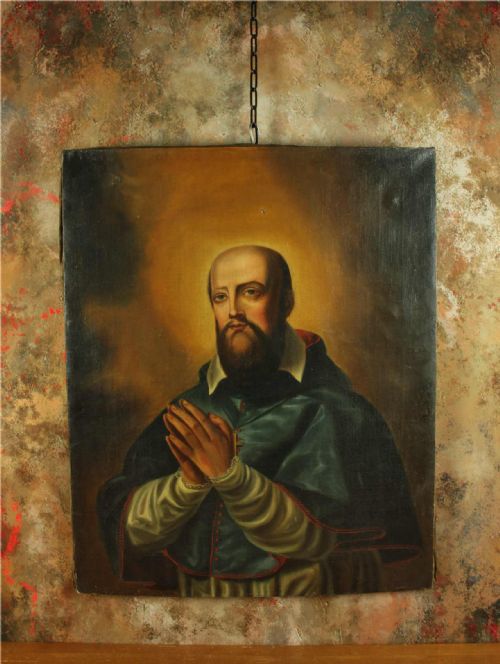
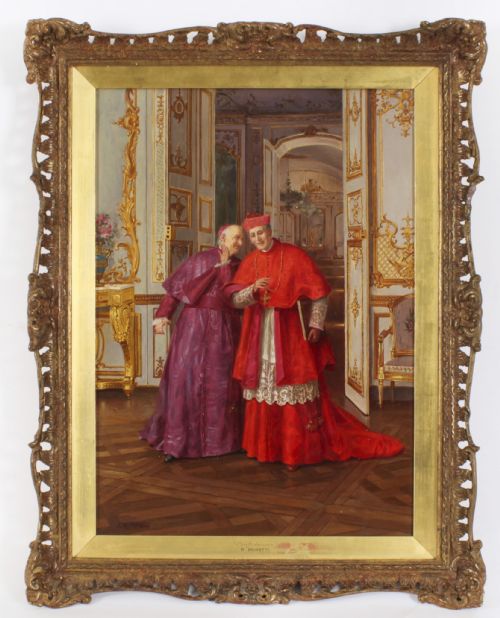
A clerical oil portrait depicts bishops, cardinals, vicars, monks and theologians in formal or contemplative settings. These works record the faces of figures from the seventeenth century through to the mid-twentieth century.
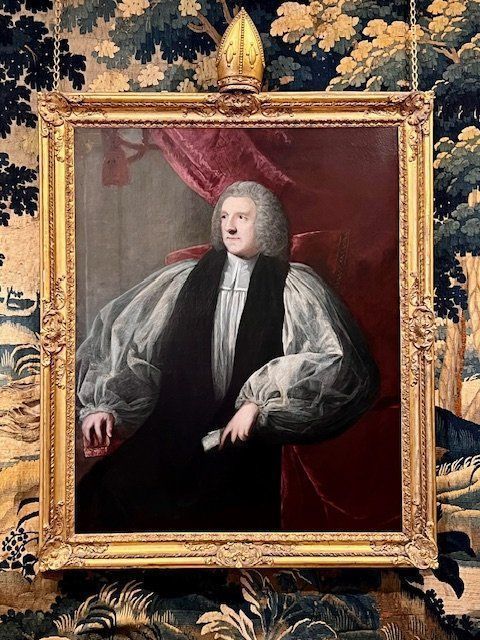
The subjects appear in various regional styles, including Italian Baroque, Spanish Baroque, Georgian portraiture and academic realism. British examples range from seventeenth-century Puritan ministers to eighteenth-century deans and nineteenth-century vicars.
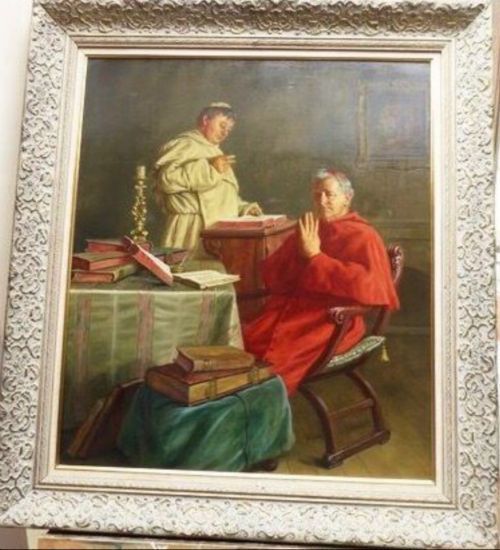
Many works show sitters in characteristic ecclesiastical dress, holding books or seated at tables within restrained interiors. The format varies from intimate copper panels to large canvas frames.
Materials and technique
Artists painted these works primarily with oil on canvas, though copper panels also appear among the earlier examples. The application of oil paint allows for subtle tonal gradations in the depiction of dark clerical robes and flesh tones.
Frames are frequently constructed from wood and gesso, often finished in giltwood or gilded wood to complement the painted canvas.
Listings feature works executed in oil on canvas and copper, spanning periods from the seventeenth century to nineteen fifty.
Distinctions in quality
Quality rests upon the artist's ability to render the psychological depth and individual character of the sitter rather than merely recording vestments. Skilled handling of light across the face and drapery separates accomplished works from routine studio output.
Condition remains important, particularly the stability of the paint surface on older canvases and panels. Works retaining their original or period-appropriate giltwood frames hold greater integrity.
Sir Joshua Reynolds·Frank Moss Bennett·Frank Hyde·Alan Ramsay·Adriaen Van der Werff·Ernst Stierhof·Beechey·George Dowdney·James Ward·Edward Penny·John Jackson
The Clerical Oil Portrait Glossary
- Oil on canvas
- A painting medium where pigments bound in oil are applied to a stretched woven fabric support. This combination provides durability and flexibility.
- Giltwood
- Wood carved and covered with a thin layer of gold leaf or metal powder. It is commonly found on traditional picture frames.
- Baroque
- An artistic style originating in Italy that utilises dramatic contrast, deep shadow and emotional intensity. It spans the seventeenth and eighteenth centuries.
- Academic realism
- A style of painting produced under the influence of European academies of art, emphasising accurate observation and traditional techniques.
- Gesso
- A plaster mix applied to a wooden panel or canvas to prepare a smooth surface for painting.
Clerical Oil Portrait: Frequently Asked Questions
How do I identify the sitter in a clerical oil portrait?
Sitters are often identified by contemporary inscriptions on the canvas, stretcher or frame, noting names, titles and dates. Clerical dress, such as specific robes, bands or episcopal rings, provides further clues to their rank.
Comparison with known prints, medals or historical records from the same period helps confirm the identity of bishops, deans and ministers.
What periods do these portraits cover?
The available pieces span from the seventeenth century through the eighteenth and nineteenth centuries up to the mid-twentieth century. Early works include seventeenth-century English and Spanish school paintings.
Later examples extend into Edwardian academic realism and mid-twentieth-century interpretations of ecclesiastical figures.
Where were these paintings displayed originally?
These portraits traditionally hung in cathedral libraries, college halls, vicarages and the private residences of aristocratic or ecclesiastical patrons. They served to commemorate church dignitaries and founders.
Today, they suit traditional studies, libraries and living spaces with classic interior decoration.
How should I care for an old oil painting?
Keep the canvas away from direct sunlight, high humidity and sudden temperature fluctuations to prevent cracking in the oil paint and warping of the wooden stretcher. Dust the surface gently with a dry, soft brush.
Avoid using water or chemical cleaners on the paint or the giltwood frame.