

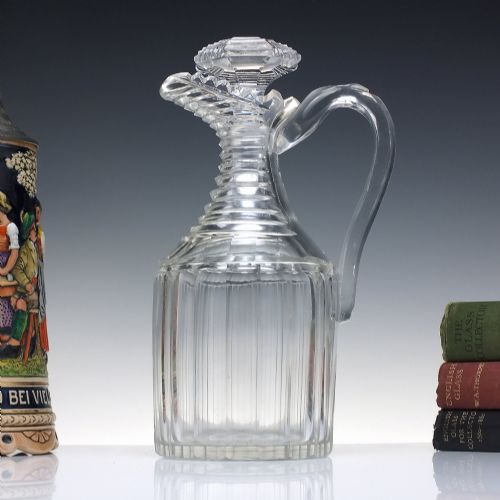
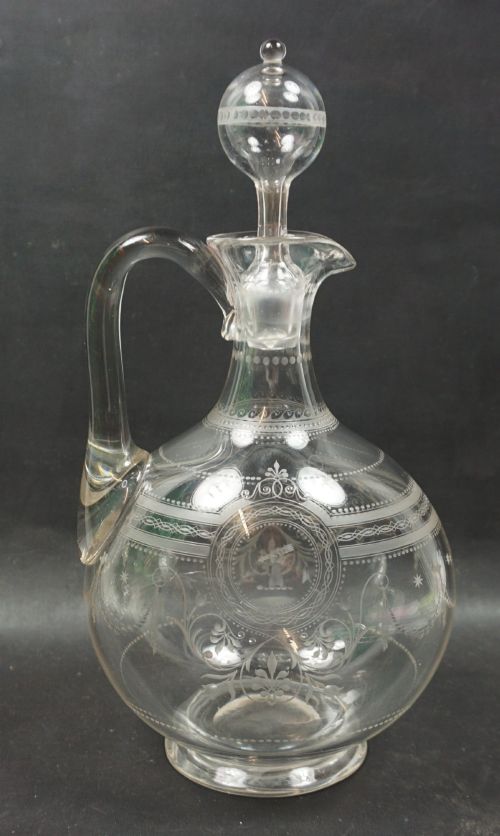
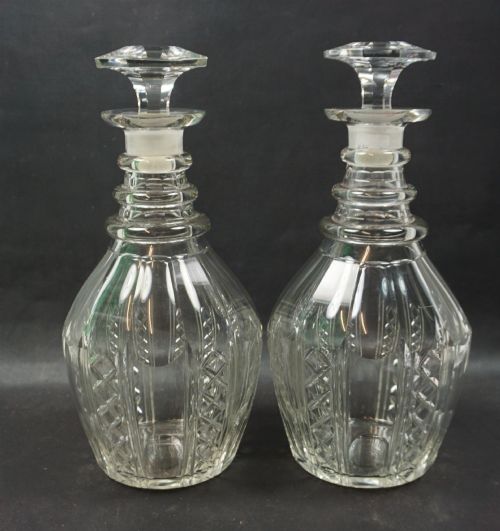
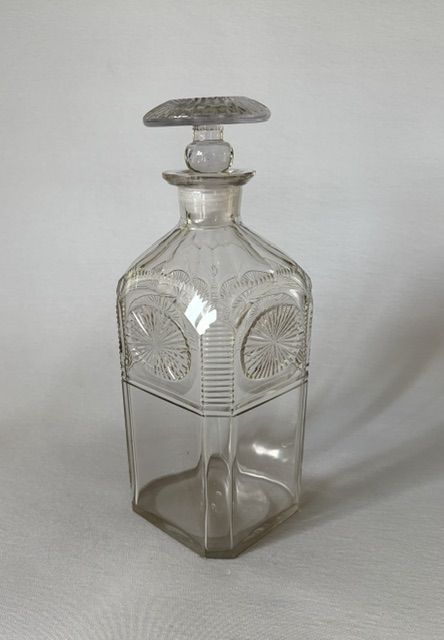
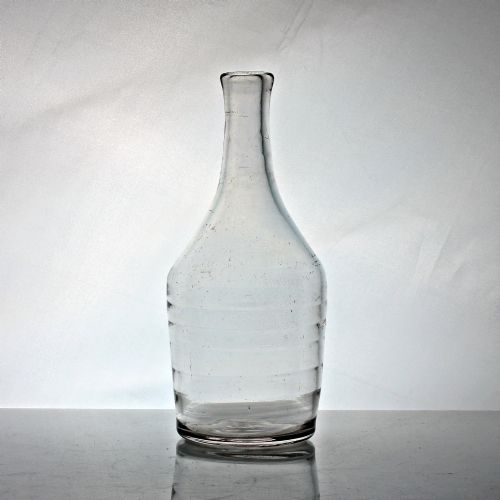
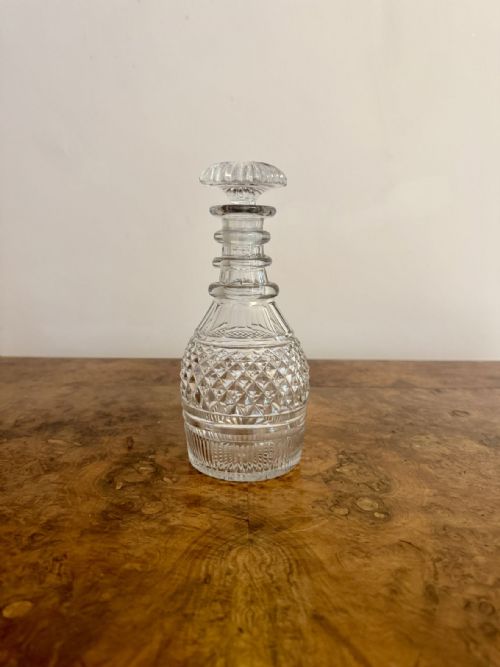
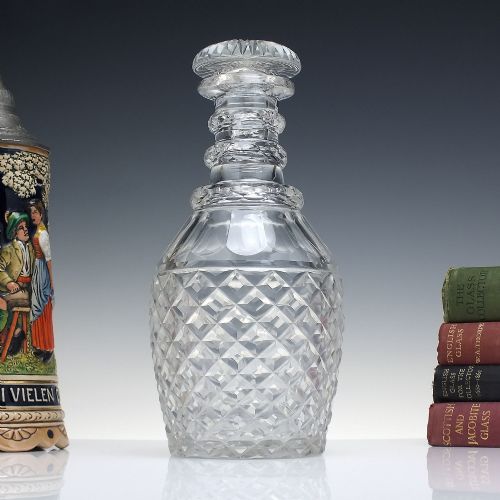
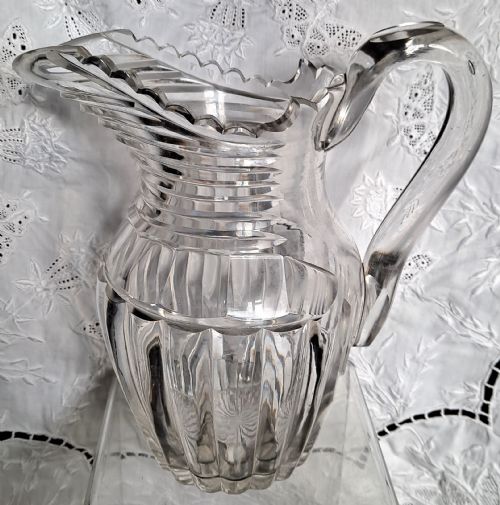
Clear Lead Glass Decanter
A clear lead glass decanter brings heavy weight and bright refraction to the sideboard, uniting practicality with period craftsmanship.
Clear Lead Glass Decanter
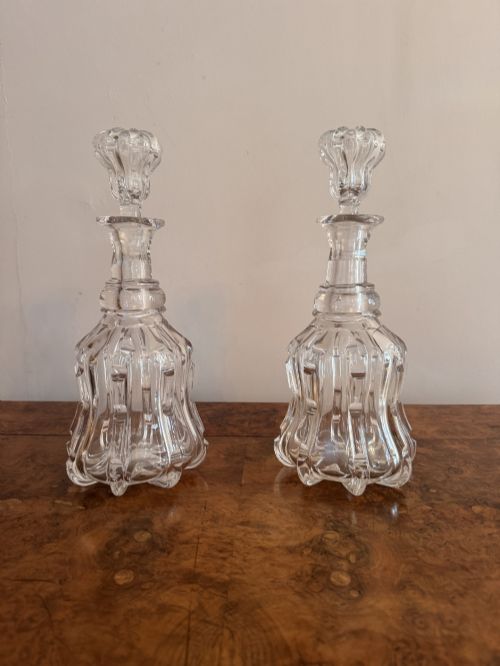
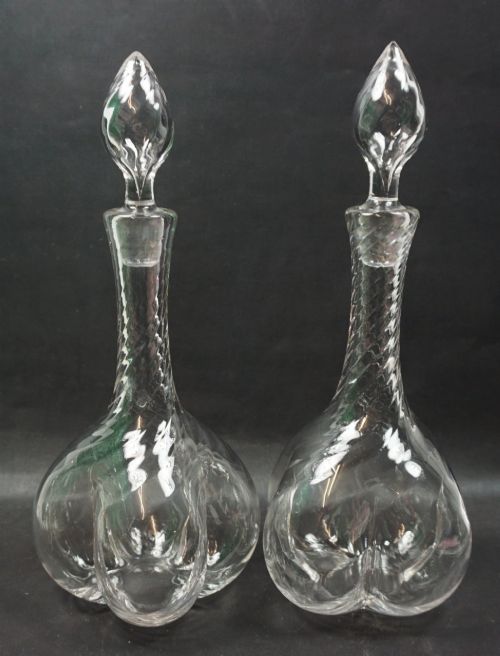
A clear lead glass decanter serves as a vessel for wine, spirits, and water, appearing across periods from the eighteenth century to the Edwardian era. These pieces range from tall carafes and claret jugs to shoulder decanters and pairs of Prussian style vessels.
Buyers on this page most frequently encounter Edwardian and Victorian cut glass examples alongside Georgian Regency pieces. Forms span ovoid decanters, sugarloaf bottles, and ewers, often accompanied by matching stoppers and neck rings.
How they were made
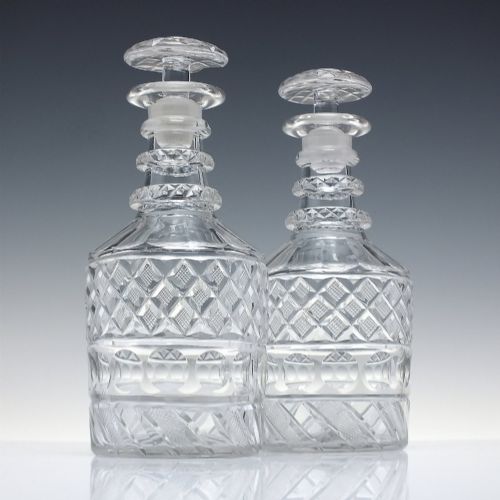
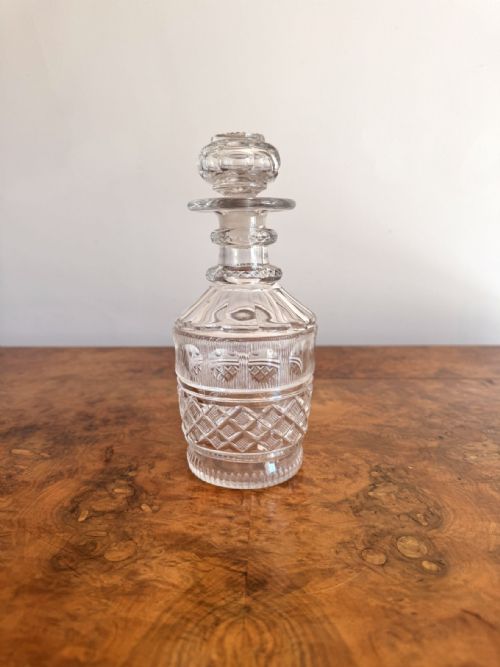
Makers utilised heavy lead crystal and clear glass, shaped by blowing and subsequent wheel-cutting to create facets, flutes, and pillar mouldings. These techniques impart a high refractive index and considerable heft to each vessel.
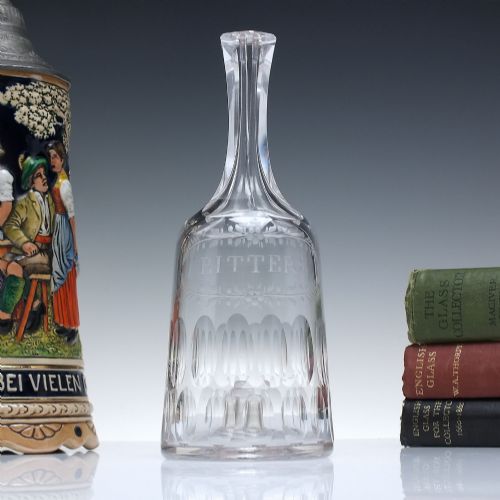
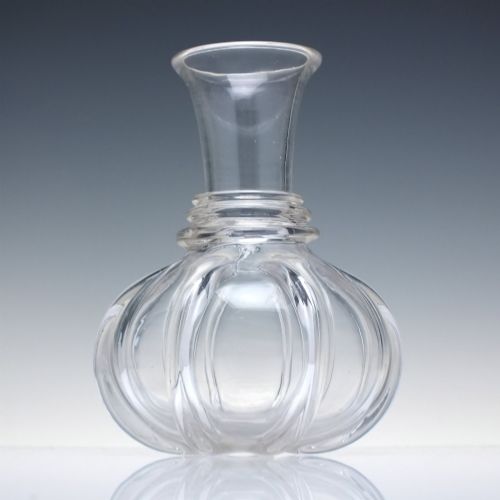
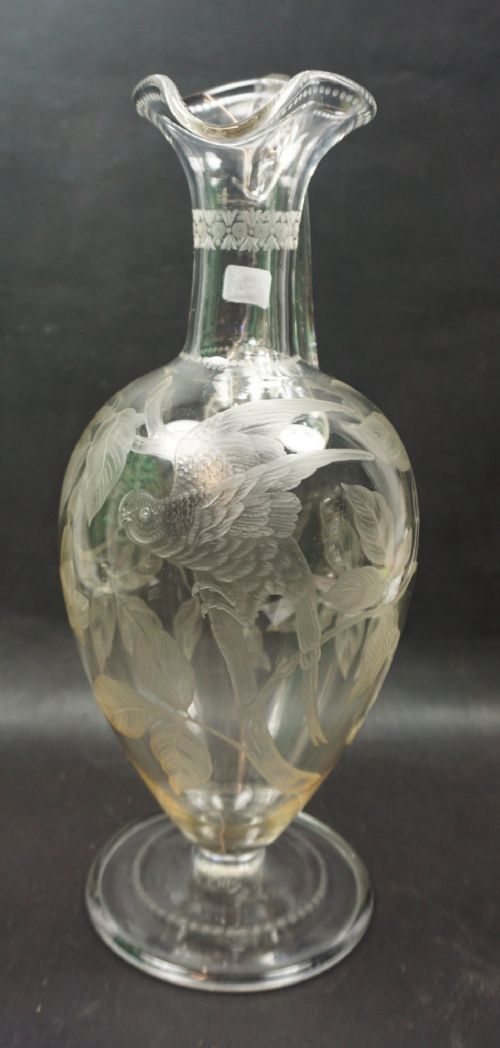
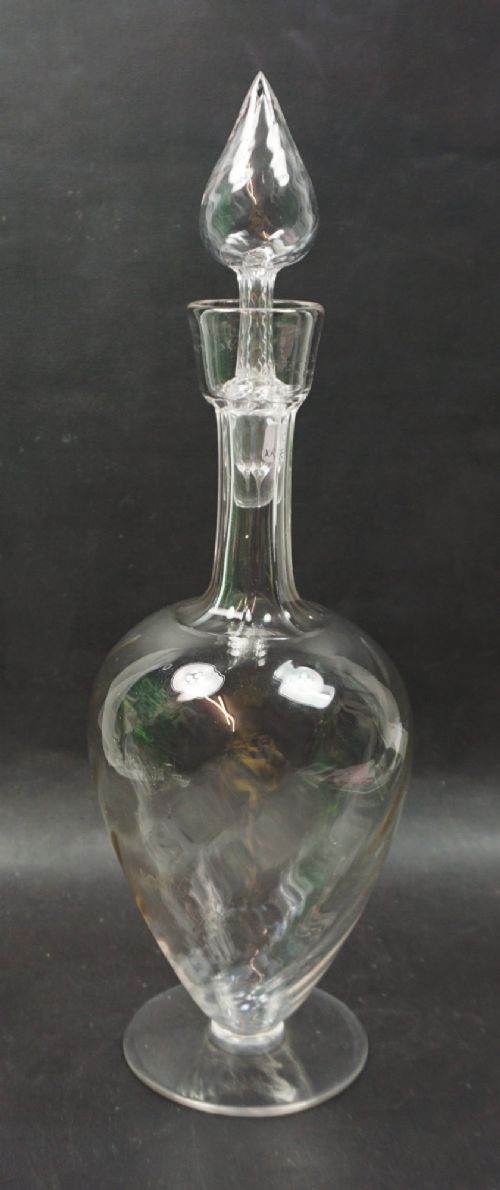
Decoration includes intricate engraving, such as parrots among leaves or specific spirit labels like Madeira, brandy, and whisky. Optically blown bodies and applied Lynn rings further distinguish the fabrication methods.
Clear Lead Glass Decanter Retail Price Guide 2026
Typical asking prices for clear lead glass decanter among the pieces listed under this phrase on Sellingantiques today, from the lower quarter to the upper quarter. They describe what is for sale here now, not the wider market.
Several Victorian jugs feature an engraved parrot perched among leaves, adding a surprisingly cheerful avian touch to formal dining.
What varies in quality
The degree of crispness in the wheel-cut facets and the depth of the engraving separate standard examples from finer works. Superior pieces display precise geometric patterns and brilliant clarity within the lead crystal.
The presence of original matching stoppers and the weight of the metal influence the overall standard of the vessel. Greater uniformity in the glass mass and sharper detailing on elements like pillar mouldings mark the upper tier.
James Powell·Walsh & Walsh
The Clear Lead Glass Decanter Glossary
- Lead glass
- A type of glass containing lead oxide, which increases weight, clarity, and the dispersion of light.
- Prussian style
- A nineteenth-century decanter shape characterised by a tapering cylindrical body and multiple neck rings.
- Lynn rings
- Horizontal raised bands encircling the neck of a decanter, originally designed to provide a secure grip.
- Pillar moulded
- A technique where vertical ribs or pillars are formed into the body of the glass for structural and decorative effect.
- Sugar loaf
- A tall, conical decanter form reminiscent of the traditional shape in which refined sugar was sold.
Clear Lead Glass Decanter: Frequently Asked Questions
How do I date a clear lead glass decanter?
Dating relies on stylistic clues such as shape, neck ring configuration, and cutting techniques. Georgian and Regency examples often feature distinct shoulder profiles and heavy pillar moulding, while Edwardian pieces display lighter overall cuts.
Examination of the pontil mark on the base also helps determine the manufacturing period. Older vessels typically show a rough, unpolished pontil scar from the maker's iron rod.
Were these decanters used for water or spirits?
They served multiple functions depending on their form and engraved labels. Tall carafes and ewers were suited for water and claret, while smaller spirit decanters held whisky, brandy, or Madeira.
Many period pieces include specific engraved titles on the body to denote the intended contents. Others remain unmarked to allow versatile use across different beverages.
What is the difference between glass and lead crystal?
Lead crystal contains a significant percentage of lead oxide, which alters the physical properties of the material. This addition increases the density, weight, and refractive index compared to standard clear glass.
As a result, lead crystal pieces produce a more resonant sound when struck and display sharper light dispersion through cut facets.