
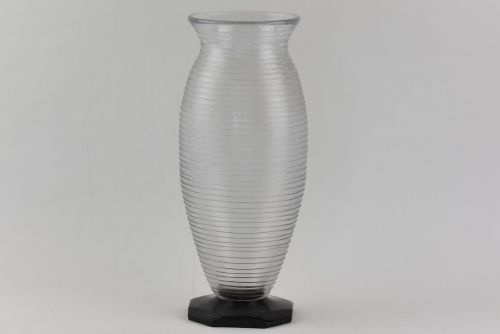
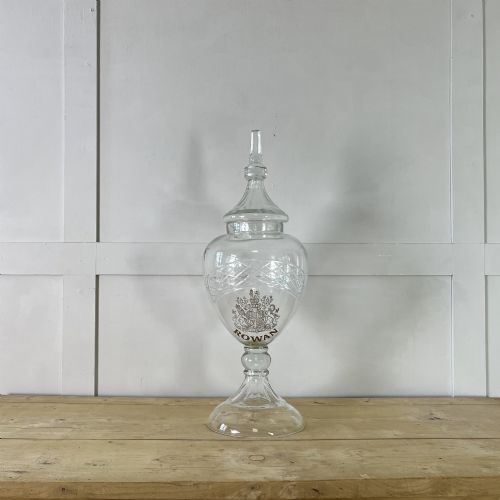

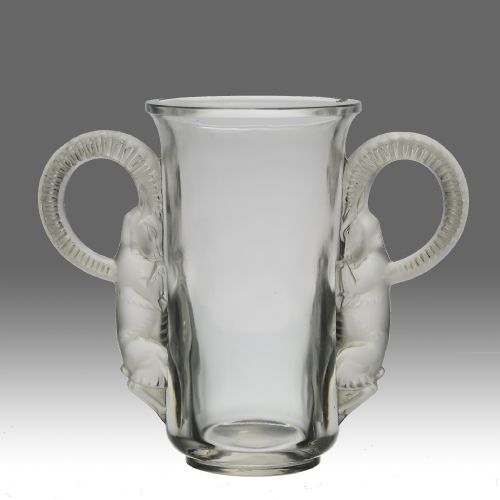


Clear Glass Urn
A clear glass urn is a display vessel of transparent brilliance, offering both decorative presence and the utility of holding flowers or dry goods.
Clear Glass Urn
When you search for a clear glass urn, you encounter objects spanning the nineteenth and twentieth centuries, originating from English, French, and Bohemian makers. These pieces take the form of lidded jars, apothecary vessels, and decorative bowls intended for display or storage.
The selection on this page ranges from Victorian cut glass lidded vases to Art Deco creations by René Lalique and Daum. Forms include pedestals, sweetmeat jars, and large decorative vessels designed to catch the light in a room.
Earlier examples lean towards heavy cut crystal and overlay techniques from the Victorian and Regency eras. Later twentieth-century pieces shift into streamlined Art Deco silhouettes, frosted surfaces, and moulded motifs.
Materials and Techniques
Makers utilised clear glass, lead crystal, and blown glass, shaping them through free-blowing, mould-blowing, and heavy cutting. Wheel-cutting and acid-etching created deep geometric patterns or frosted contrasts across the surface.
Detailing often involved paste gilding, enamel etching, and mounts of brass or Dutch silver. Overlay techniques combined clear material with coloured layers of ruby or cobalt blue before cutting through to reveal the transparent base beneath.
Clear Glass Urn Retail Price Guide 2026
Typical asking prices for clear glass urn among the pieces listed under this phrase on Sellingantiques today, from the lower quarter to the upper quarter. They describe what is for sale here now, not the wider market.
Certain Victorian spirit dispensers were labelled specifically for unsweetened gin, catering to very particular nineteenth-century drinking habits.
Craftsmanship and Distinction
Quality rests in the crispness of the wheel-cut facets and the weight of the lead crystal. Superior pieces display sharp, clean lines without surface ripples or internal bubbles in the glass body.
Signed works by established designers command attention through intricate moulding and deliberate contrast between clear and frosted finishes. The integration of silver or brass mounts also separates standard vessels from elite examples.
Daum·R Lalique·René Lalique·Graystan·Elizabeth Graydon-Stannus·Hukin and Heath
The Clear Glass Urn Glossary
- Lead crystal
- Glass containing metal oxides to increase weight, brilliance, and refractive index. This composition allows for deeper, sharper facet cutting.
- Overlay
- A technique where a layer of coloured glass is fused over a clear body. The outer layer is partially cut away to expose the transparent material underneath.
- Frosted glass
- A translucent surface created by acid-etching or sandblasting. It provides a matte contrast to polished transparent sections.
- Sweetmeat jar
- A covered vessel originally used for holding small confectioneries or preserved fruits. They often feature footed pedestals and matching domed lids.
Clear Glass Urn: Frequently Asked Questions
What is a clear glass urn used for?
These vessels served various functions historically, from apothecary storage and wine cooling to displaying cut flowers on a dining table.
Today, they act primarily as decorative centrepieces, bringing light and reflection into interior spaces while retaining their original capacity to hold objects.
How do I date a glass urn?
Dating relies on observing the weight, cutting style, and mounting materials. Heavy lead crystal with deep geometric cutting typically points to the nineteenth century.
Lighter, stylised motifs with frosted surfaces often indicate twentieth-century Art Deco production, particularly when associated with French workshops.
Are these pieces signed?
Some maker pieces carry etched signatures or stamped marks on the base, particularly twentieth-century works from prominent designers.
Many nineteenth-century and Victorian items remain unmarked, requiring attribution based on cutting patterns, form, and material composition.
How do I care for antique glass?
Wash pieces gently by hand using lukewarm water and mild soap, avoiding sudden temperature changes that can crack old material.
Dry them immediately with a soft lint-free cloth to maintain the brilliance of the cut facets and prevent water spots.