


Carved Glass Vase
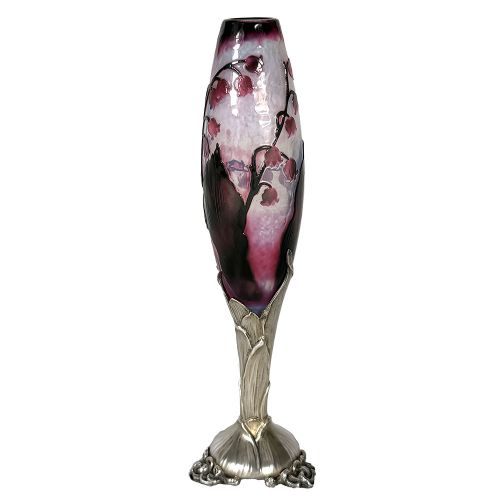
These carved glass vases bring together layers of coloured cameo, acid-etched crystal, and pate de verre to display intricate botanical or figural scenes.
Carved Glass Vase
When you search for a carved glass vase, you encounter vessels shaped from cameo glass, crystal, and pate de verre across periods from the nineteenth century into the twentieth. The examples on this page span styles such as Art Nouveau, Art Deco, and Victorian, taking the form of vases, table centrepieces, and epergnes.
The most common items you meet here combine heavy crystal bases with carved wooden mounts, or present multi-layered cameo glass featuring landscapes and floral motifs. Makers like Galle and Thomas Webb & Sons appear alongside French opaline works and English wheel-engraved pieces.
How they were made
Makers utilised cameo glass techniques by fusing layers of contrasting coloured glass together before carving away the exterior to reveal sharp relief designs. Acid-etched methods and wheel engraving further defined the surface details on crystal and glass bodies.
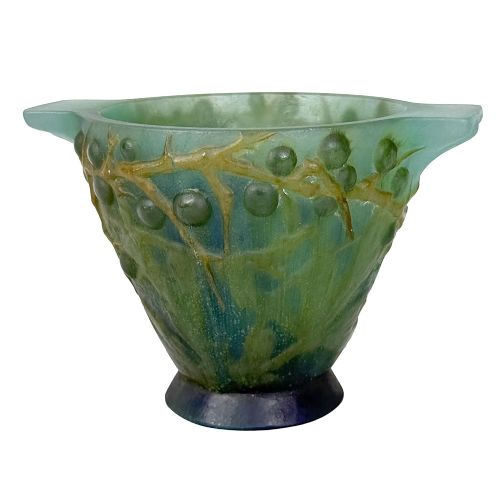
Many nineteenth-century centrepieces incorporate carved wood stands, particularly Black Forest productions, paired directly with Baccarat crystal vessels. Pate de verre involved packing crushed glass into a mould and firing it to achieve a textured, translucent finish.
Socrates gazes out from an English wheel-engraved glass vase, sharing space with delicate forest acorns and aquatic nymphs.
What varies in quality
The depth and precision of the carving dictate the visual impact of a piece, separating works with crisp, undercut cameo relief from those with shallower etching. The crispness of wheel engraving on crystal also marks the distinction between standard production and masterwork output.
The integration between glass vessels and their carved wooden or metal mounts reveals the maker's skill. Superior examples demonstrate harmonious proportion between the heavy crystal bodies and the surrounding frames.
Henry Berge for Amalric Walter·Thomas Webb and Sons·Lalique·Baccarat·Galle·Paul Nicolas
The Carved Glass Vase Glossary
- Cameo Glass
- Glass vessels formed of two or more distinct layers of colour, where the outer layer is carved down to create a raised design against a contrasting background. This demanding technique requires immense precision from the glassmaker and carver.
- Pate de Verre
- A method of glasscasting where finely crushed glass is mixed with a binder, packed into a refractory mould, and fused in a kiln. The resulting pieces possess a characteristic granular texture and dense colouration.
- Acid-Etched Glass
- Glass decorated by applying acid to eat away exposed surfaces, often used to create frosted patterns or to assist the rough shaping of cameo layers. It allows for consistent repeating textures across complex floral or geometric motifs.
- Epergne
- An ornamental centrepiece featuring a central bowl or vase surrounded by smaller hanging baskets or branching vases, typically utilised for table decoration. In nineteenth-century examples, these frequently combine Baccarat crystal with carved wooden stands.
Carved Glass Vase: Frequently Asked Questions
What is Black Forest wood?
Black Forest wood refers to intricately carved wooden decorative items, often featuring naturalistic animal or botanical motifs, originating from the mountainous region of central Europe. These carvings frequently served as stands or frames for crystal glassware.
The dark wood frames display deep relief carving that contrasts against the clear brilliance of associated crystal bowls and vases.
How are pate de verre vases different?
Pate de verre vessels are formed by packing crushed glass into a mould and firing it, rather than being blown or shaped on a metal rod. This creates a dense, frosted appearance without transparent clarity.
The resulting objects show mottled colours and a tactile, sugary surface texture unique to kiln-fused glass.
Where were these pieces made?
The pieces originate primarily from European workshops, with French glassmakers and English manufacturers dominating the field. Centres such as Nancy in France and English glasshouses produced the majority of cameo and engraved works.
Regional styles often dictate the aesthetic, from the botanical landscapes of French makers to the heavy wheel-engraved classical motifs of English production.