


Frosted Crystal Vase
These frosted crystal vase pieces bring tactile texture and sculptural form to a room, offering the classic appeal buyers seek.
Frosted Crystal Vase
A frosted crystal vase combines the clarity of fine lead crystal with an etched or acid-treated surface that diffuses light softly across the room. When buyers search for a frosted crystal vase, they encounter items ranging from Victorian table lustres and centrepieces to twentieth-century French masterpieces. The examples appearing on this page span the Victorian era, the Edwardian period, and the 1920 to 1930 Art Deco years.
The primary forms on this page include traditional vases, table centrepieces, and table lustres alongside carved wood and crystal combinations from the Black Forest. Pieces emerge from French workshops and British Victorian settings, showing a strong presence of opalescent glass and clear glass alongside frosted finishes. Each object serves both a decorative and a functional purpose within traditional and period interiors.
Materials and construction methods
Makers shaped these objects using high-lead crystal and standard glass, applying techniques such as moulding, cutting, and carving. Surface frosting was achieved through acid-etching or mechanical abrasion to create the characteristic opaque, velvety texture that contrasts against polished highlights.
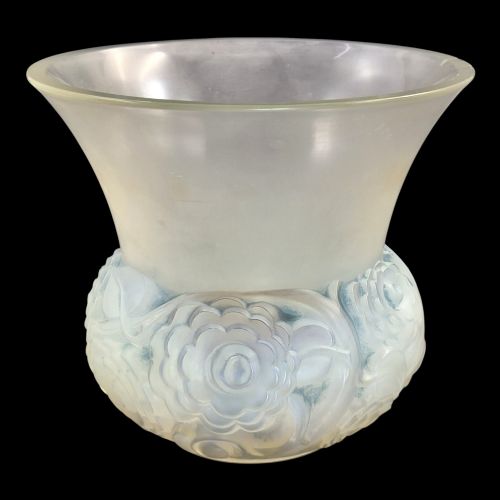
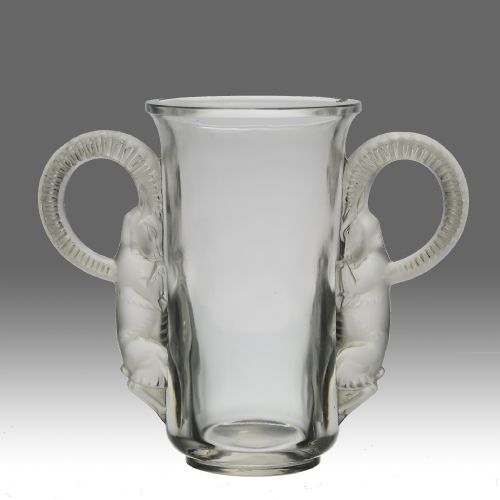
Moulded production allowed makers like René Lalique to achieve deep relief ornamentation, particularly floral and botanical motifs like 'Renoncules', 'Acacia', 'Guirlande de Roses', 'Gui', and 'Soucis'. Other pieces incorporate carved wood mounts paired with Baccarat crystal, uniting organic timber elements with brilliant glasswork.
Current listings span the Victorian, Edwardian, 1900, 1920, and 1930 periods, featuring materials such as opalescent glass, cut crystal, and carved wood.
Assessing quality and craftsmanship
Quality in these items rests upon the crispness of the moulded relief and the depth of the frosted finish against clear glass accents. Finer examples display meticulous attention to detail in the botanical or figurative modelling, ensuring that the transition between polished and frosted areas remains sharp and deliberate.
The weight of the crystal and the integrity of signatures or factory marks also influence the standing of a piece. Earlier works show superior handling of light and form, whereas lesser examples lack the subtle gradation of translucency found in leading French and Baccarat productions.
René Lalique·Lalique·Baccarat
The Frosted Crystal Vase Glossary
- Frosted glass
- Glass treated by acid-etching or sandblasting to create a textured, translucent surface that diffuses light. This treatment softens the appearance of the material and highlights decorative relief.
- Crystal
- Glass manufactured with a proportion of lead oxide, increasing its weight, refractive index, and clarity. It allows for deeper cutting and sharper mould definition than standard glass.
- Opalescent glass
- Glass containing ingredients that cause it to milky-blue or fire-opalescent when light passes through it. It appears frequently in twentieth-century French decorative objects.
- Table lustre
- A decorative tabletop vessel hung with cut glass prisms, popular during the Victorian era. They were designed to reflect candlelight and gaslight.
- Epergne
- A large table centrepiece featuring a central dish with branching arms for holding fruit, flowers, or small vessels. These often combine carved wood or metal bases with crystal bowls.
Frosted Crystal Vase: Frequently Asked Questions
How do I clean a frosted crystal vase?
Wash the item gently in lukewarm water with mild soap, avoiding harsh brushes that might scratch the frosted surfaces. Dry it carefully with a lint-free cloth to maintain the clarity of any polished highlights.
Take care with pieces featuring carved wood mounts or delicate crystal prisms, keeping moisture away from non-glass components. Regular dusting with a soft cloth is usually sufficient for maintenance.
What is the difference between frosted glass and crystal?
Crystal contains lead oxide, which gives it greater weight and refractive brilliance compared to standard glass. Frosted glass refers to the surface texture achieved through acid-etching or sandblasting rather than the chemical composition of the material itself.
Many high-end decorative objects use frosted crystal, combining the heavy, clear material with an opaque surface finish. This creates a strong contrast between polished edges and textured backgrounds.
How do I identify Art Deco pieces?
Art Deco items, particularly those from the 1920 and 1930 periods, feature stylised botanical motifs, symmetrical geometric forms, and strong sculptural relief. Works by René Lalique often display dense floral patterns such as acacia, roses, and mistletoe.
These pieces typically embrace a modern aesthetic that moved away from Victorian ornamentation while retaining exceptional craftsmanship. Look for moulded signatures and crisply defined relief work characteristic of French studios from this era.
Where were these pieces made?
The listings show items originating primarily from French and British workshops, spanning the nineteenth and twentieth centuries. French makers produced notable moulded crystal and opalescent vessels, while British and European makers created Victorian lustres and Black Forest pieces.
Regional styles varied from the ornate cut crystal of the Victorian period to the refined, tactile forms of the twentieth-century Art Deco movement. Each region contributed distinct manufacturing techniques and aesthetic preferences.