


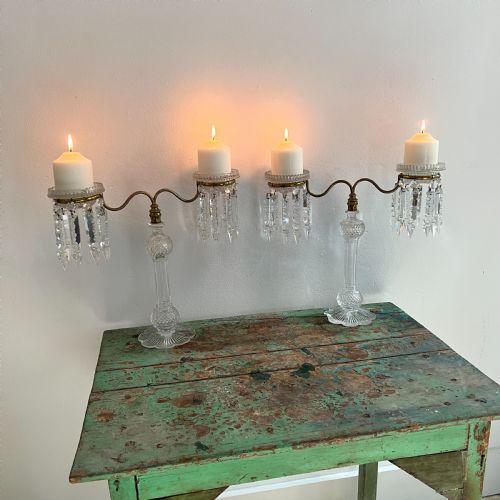


Clear Glass Lustres
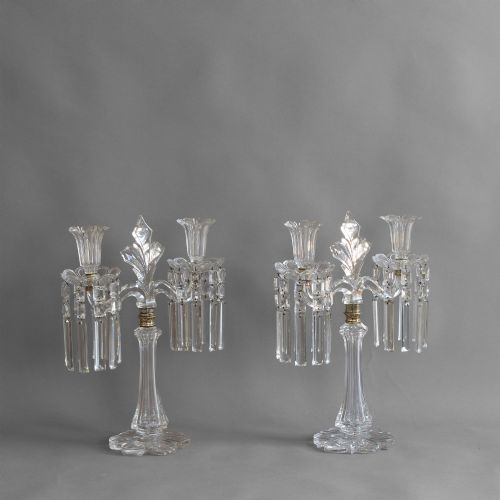
Clear glass lustres are decorative tabletop and hanging light fittings that catch the light through suspended crystal drops, bringing elegance to a room.
Clear Glass Lustres
When you search for clear glass lustres, you encounter lighting and mantel ornaments designed to refract candlelight or daylight through glass drops. The examples on this page span the Regency period, the Victorian era, and the Edwardian years up to 1930.
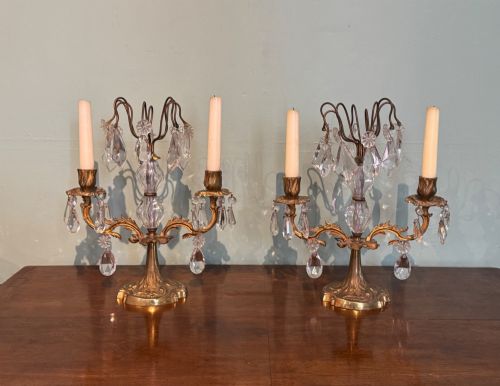
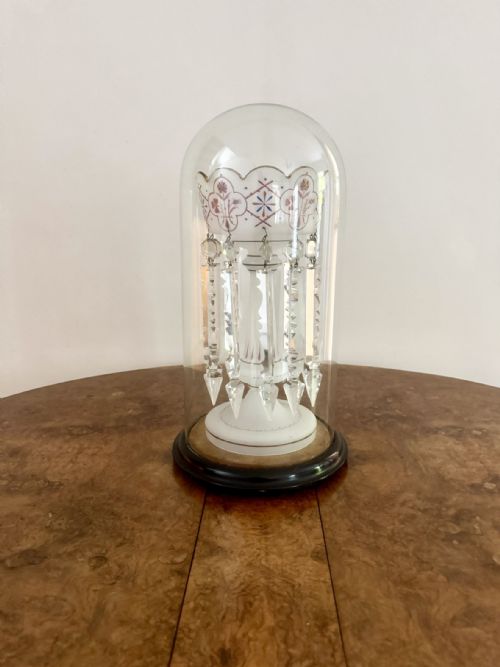
Pairs of table lustres and mantel lustres dominate the selection, often accompanied by candelabras and chandeliers. You will frequently find Victorian and early 20th-century pairs intended for placement on mantelpieces or side tables.
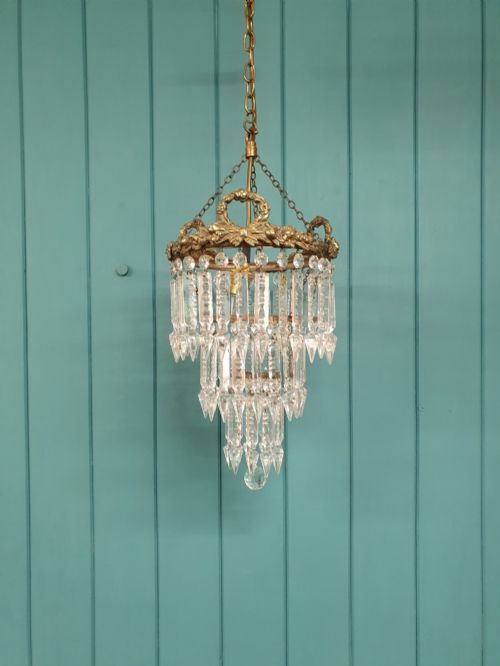
Origin styles vary from French Rococo Revival and French Classical to Scandinavian and English designs. These pieces range from small table lamps and nine-inch chandeliers to large nineteenth-century statement fixtures.
Assessing Quality and Execution
Quality rests in the crispness of the glass cutting and the clarity of the crystal material itself. Heavier metal mounts in brass and gilt brass indicate sturdier construction.
The completeness and matching nature of the glass drops influence the integrity of the piece. Matching pairs with intact drops command greater interest than assembled or incomplete sets.
The listings on this page span from the Regency period through Victorian and Edwardian eras up to 1930, utilising brass, cut crystal, and glass.
The Clear Glass Lustres Glossary
- Lustre
- A decorative tabletop or hanging vessel fitted with pendant glass drops designed to reflect light. They typically function as mantel ornaments or candle holders.
- Drop
- A suspended piece of cut glass or crystal attached to a light fitting or lustre. These refract the light from candles or bulbs.
- Candelabra
- A branched candlestick holder designed to hold multiple candles at once. Examples on this page often incorporate cut glass drops.
- Cricklite
- A brand of patented table lamp or candelabra associated with Clarke's, utilising glass domes and bases in conjunction with fitted candles.
- Regency
- An architectural and decorative style period spanning the early nineteenth century. Pieces from this era emphasise classical symmetry and refined cutting.
Clear Glass Lustres: Frequently Asked Questions
What are clear glass lustres used for?
Clear glass lustres function primarily as decorative mantel ornaments or tabletop display pieces that enhance interior lighting. Their cut glass drops reflect natural daylight and candlelight to brighten a room.
Historically, they added sparkle to formal rooms before electric lighting became common. Today, collectors place them on mantelpieces, sideboards, and tables as focal points.
How do I tell Victorian lustres from Edwardian ones?
Victorian lustres often feature heavier proportions, deeper hand-cut facets, and ornate brass or gilt brass mounts. Edwardian and 1930s examples frequently lean towards lighter chandelier formats and simplified French styles.
Examining the metalwork and the specific style of glass cutting helps determine the manufacturing period. Consulting the listed dates provides a reliable guide for attribution.
How do I clean and care for glass lustres?
Cleaning requires removing the delicate glass drops carefully to wash them in warm, soapy water by hand. The brass and crystal body needs gentle dusting with a soft cloth to preserve the finish.
Avoiding harsh chemical cleaners protects the gilt brass and metal wire components. Reattaching the drops securely after drying ensures the piece remains stable.
Are these pieces electrified?
Many items listed as lustres, candelabras, and mantel lustres are designed for use with candles rather than electric wiring. Some chandelier formats from the early twentieth century integrate electrical fittings alongside glass drops.
Checking the specific listing details reveals whether a piece retains its original candle-holder configuration or has been adapted. Professional rewiring is recommended if an antique light fitting requires electricity.