
Clear Glass Drinking Stemware
Clear glass drinking stemware brings tactile weight and historic clarity to the table, uniting Georgian twists with Art Deco flutes.
Clear Glass Drinking Stemware
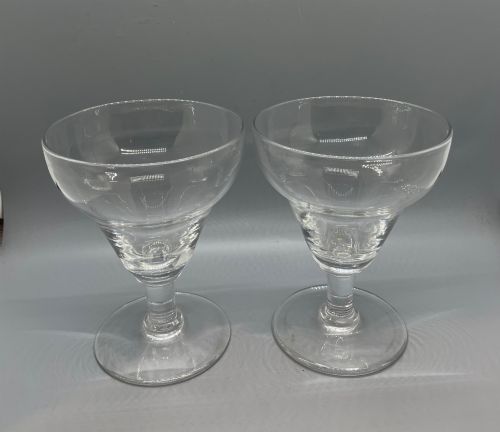
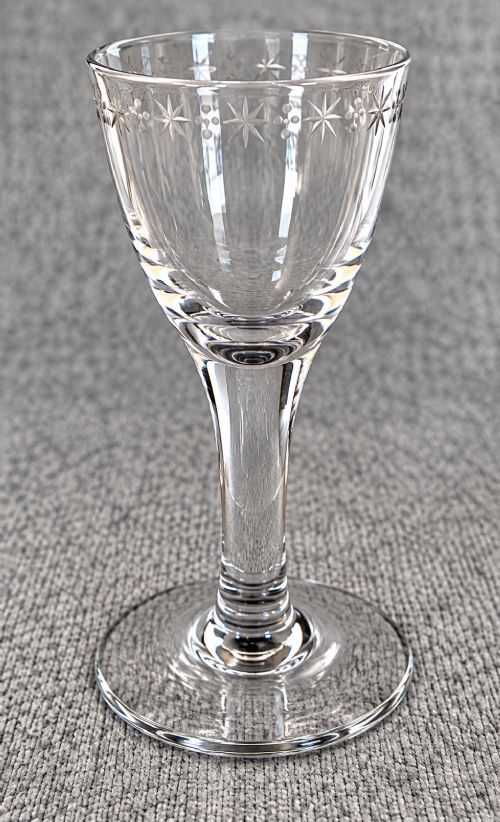
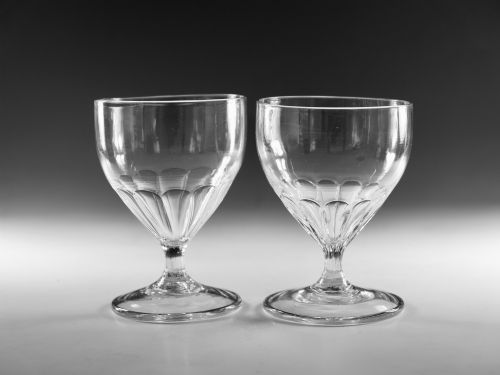
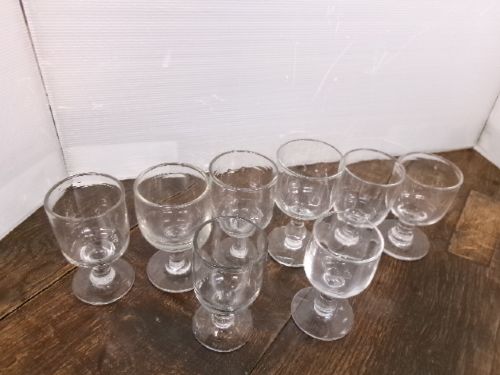
Clear glass drinking stemware encompasses drinking vessels raised on stems, ranging from eighteenth-century dram glasses to twentieth-century suites. When searching for clear glass drinking stemware, buyers encounter historic forms intended for wine, ale, rummer, and dram consumption.
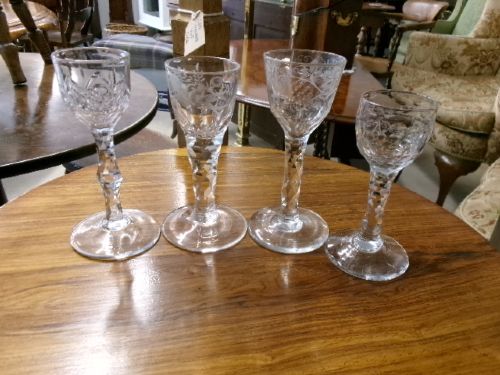
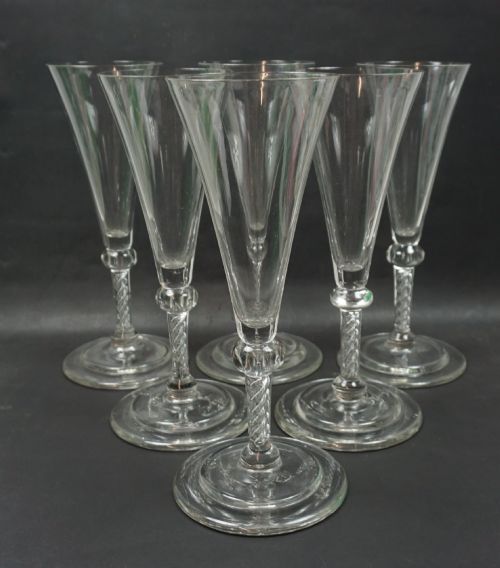
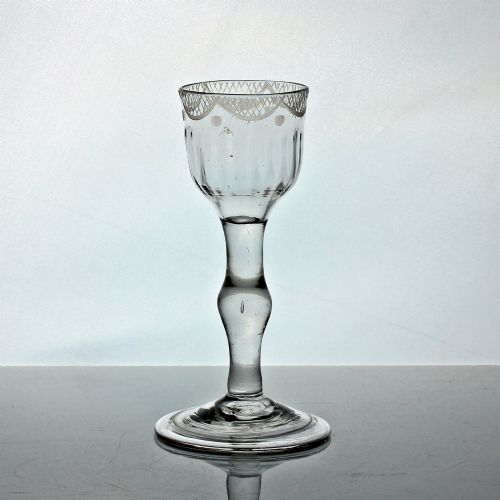
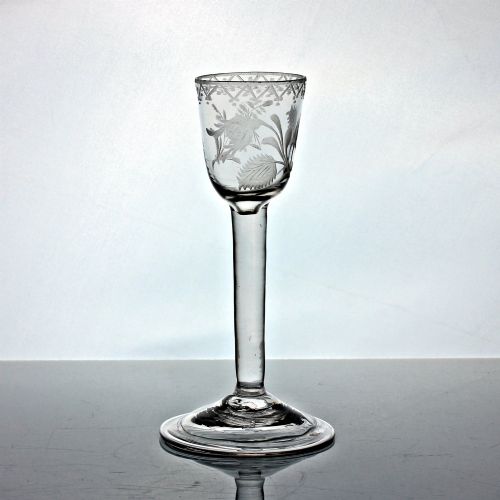
The material spans lead glass, lead crystal, flint glass, and plain glass across periods like the eighteenth century, Georgian era, Regency, Victorian period, and nineteen-thirty. Eighteenth-century examples frequently feature balustroid, air twist, or opaque twist stems supporting engraved bowls.
Later Victorian and nineteen-thirty pieces introduce faceted stems, tall wine flutes, and large suites of matching drinking vessels. These objects bridge functional tableware and collectible historic glass.
Materials and construction
Makers utilised lead glass, flint glass, and lead crystal to achieve clarity and weight in clear glass drinking stemware. Enamel and white enamel occasionally decorate the surface.
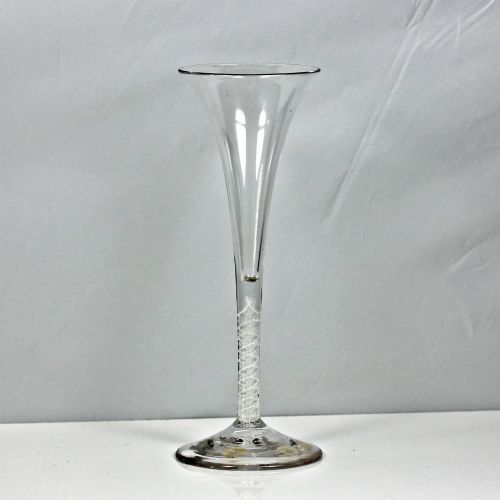
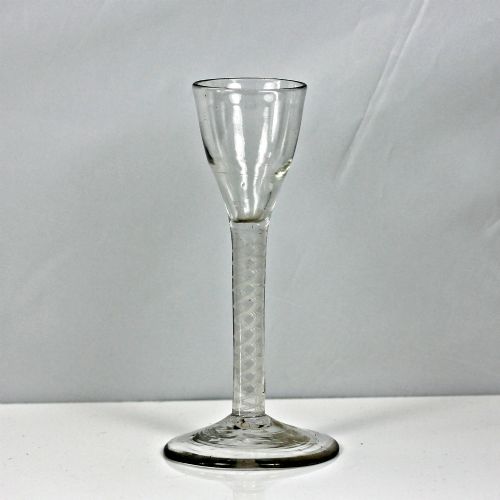
Stems were formed using air twist, opaque twist, mixed twist, or balustroid techniques, sometimes incorporating double knops or folded feet.
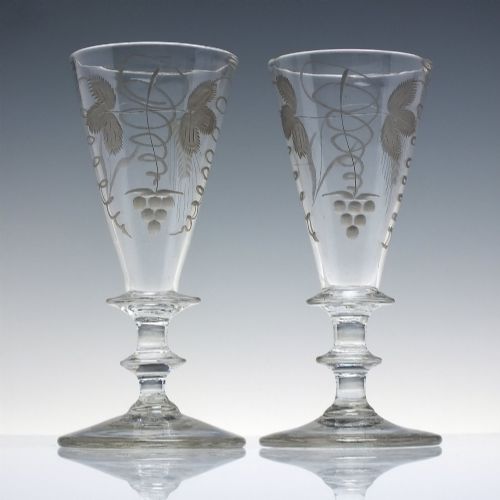
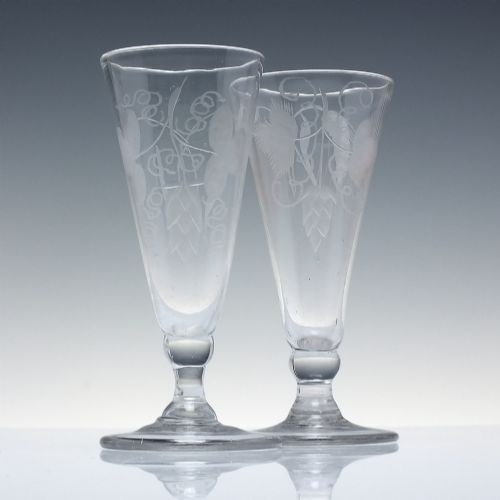
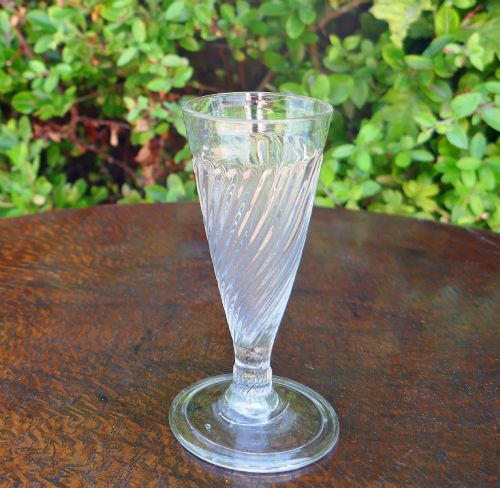
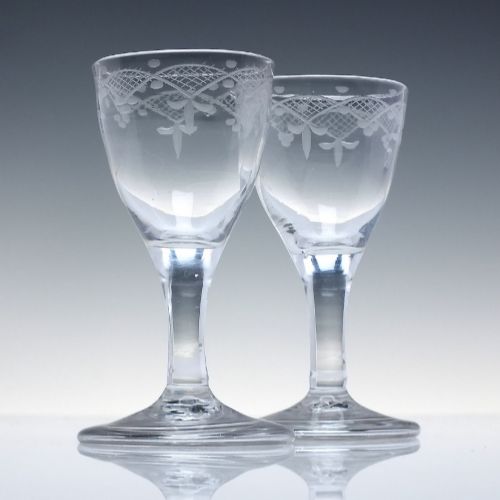
Bowls received engraved decoration, rococo engraving, or wrythen and ribbed moulding before assembly.
Listings feature lead glass, flint glass, and lead crystal across eighteenth-century, Georgian, Victorian, and nineteen-thirty periods.
Judging quality in stemware
Quality rests in the precision of the stem formation and the crispness of the engraved decoration on the bowl. Air twists and opaque twists require considerable skill from the glassblower to maintain uniformity.
The resonance and weight of the lead glass or flint glass signal the purity of the metal. Proportion between the bowl, stem, and foot dictates the visual balance of the piece.
The Clear Glass Drinking Stemware Glossary
- Air twist
- A stem containing spiral channels of trapped air created during the glass drawing process. This technique gives lightness and movement to eighteenth-century drinking glasses.
- Opaque twist
- A stem enclosing threads of white enamel twisted within the clear glass rod. These threads form single or double series patterns.
- Balustroid
- A stem style mimicking architectural balusters, featuring knops and swelling profiles characteristic of early English drinking vessels.
- Folded foot
- A base formed by turning the outer rim of the foot under itself to create a thickened, rounded edge for strength.
- Rummer
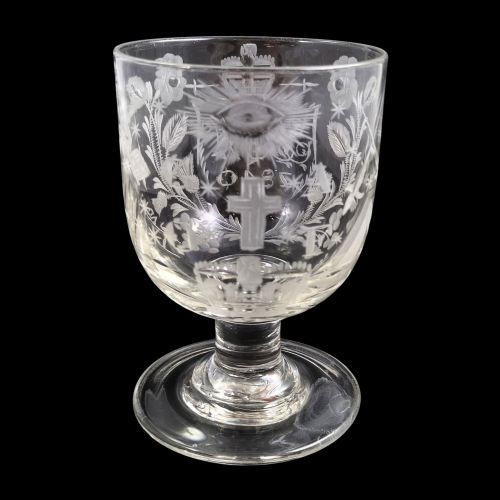
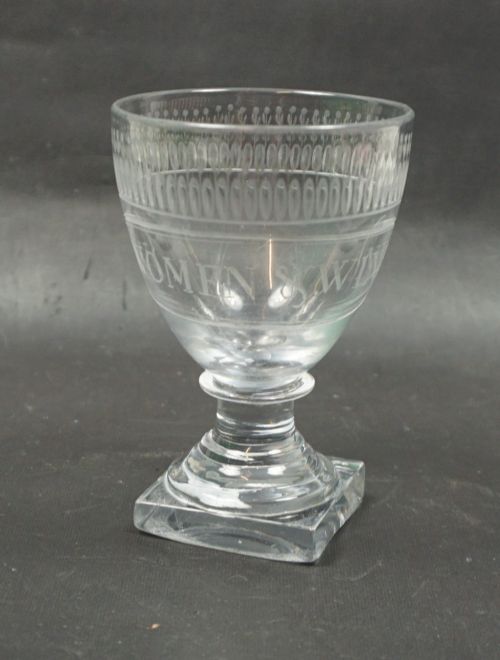
- A capacious drinking glass popular in the Georgian and Victorian eras, used for ale, wine, or punch.
- Wrythen
- Moulded with spiral ribs that twist around the body of the bowl or glass.
Clear Glass Drinking Stemware: Frequently Asked Questions
How do I date an antique wine glass?
Dating relies on combining the form of the bowl, the construction of the stem, and the treatment of the foot. Eighteenth-century examples often display air twists or heavy baluster stems with folded feet, whereas later nineteenth and twentieth-century pieces shift toward faceted stems and taller flutes.
Examining the metal itself helps; lead glass and flint glass of the Georgian period possess a distinct weight and surface character that differs from later pressed or moulded wares.
What were rummers used for?
Rummers served as heavy, capacious drinking vessels during the Georgian and Victorian periods, accommodating ale, wine, or punch. Their sturdy proportions made them practical for everyday tavern or household use.
Many surviving examples feature engraved decoration commemorating events, toasts, or personal sentiments, such as specific social drinking slogans.
Are twist stem glasses fragile?
Twist stem glasses are surprisingly resilient due to the high lead content in the glass metal, but they require careful hand washing. The slender stems and folded feet demand gentle handling to prevent impacts against hard surfaces.
Storing them securely on their bases prevents stress on the joints between the bowl, stem, and foot.
What is the difference between air twist and opaque twist?
Air twists contain spiral threads of trapped air inside the clear glass stem, achieved by pulling and twisting bubbles within the metal. Opaque twists incorporate solid white enamel rods drawn into similar spiral patterns.
Both techniques represent high levels of eighteenth-century glasshouse skill, though opaque twists offer a brighter, more opaque contrast against the clear glass bowl.