
Clear Georgian Glass
Clear georgian glass brings tactile weight and bright refractive brilliance to the table, uniting drinking vessels and heavy decanters from the eighteenth century onwards.
Clear Georgian Glass
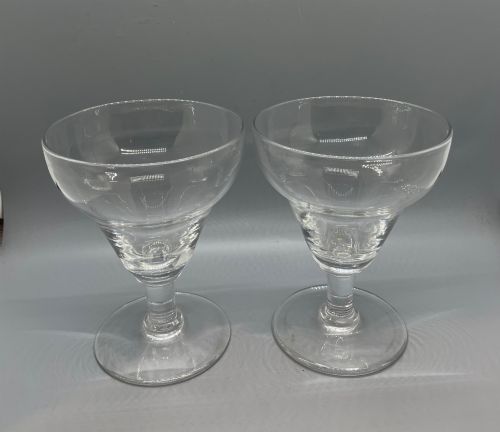
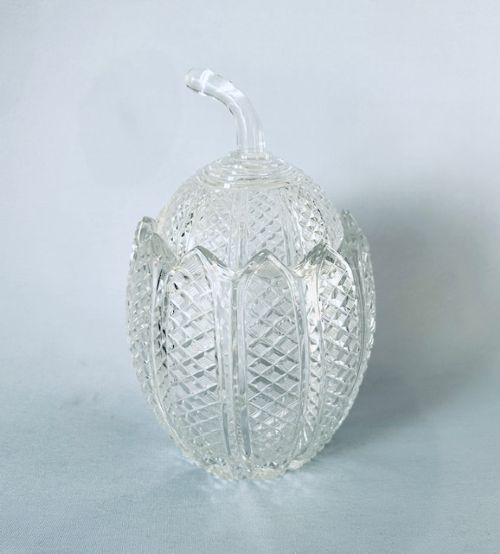
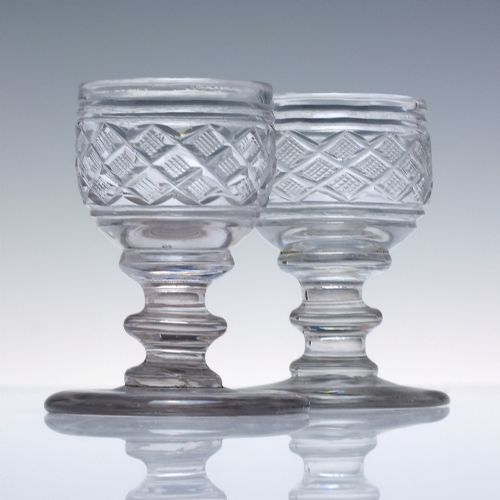
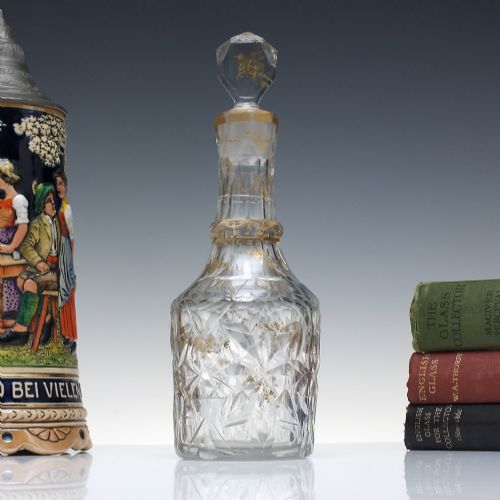
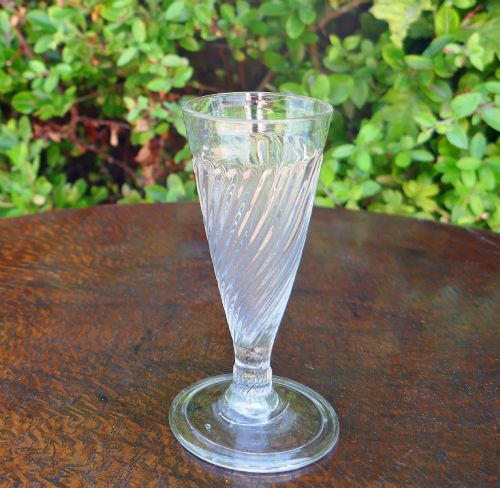
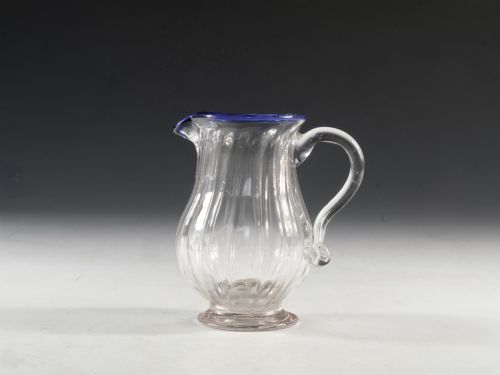
When you search for clear georgian glass, you encounter drinking vessels, decanters, and serving pieces produced across the eighteenth and early nineteenth centuries. These objects range from tavern rummers and dram glasses to tapered carafes and sweetmeat glasses intended for formal dining and everyday hospitality.
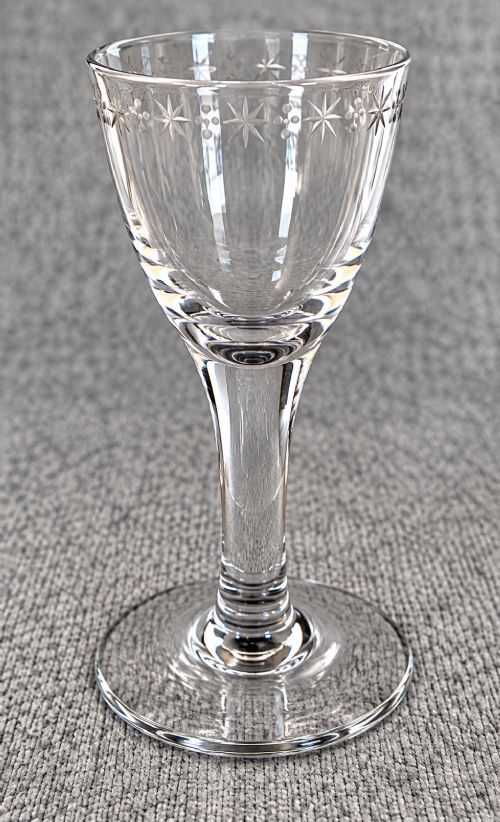
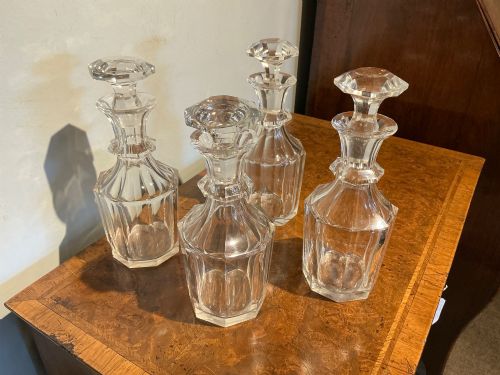
The most frequent examples on this page are drinking glasses with balustroid or twist stems, alongside heavy cut glass decanters and jugs. Many pieces date from the reigns of the Georges, though the stylistic grouping extends to include pieces from the late eighteenth century into the Victorian era.
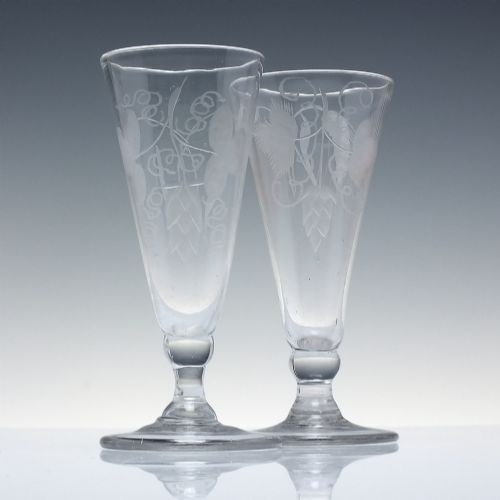
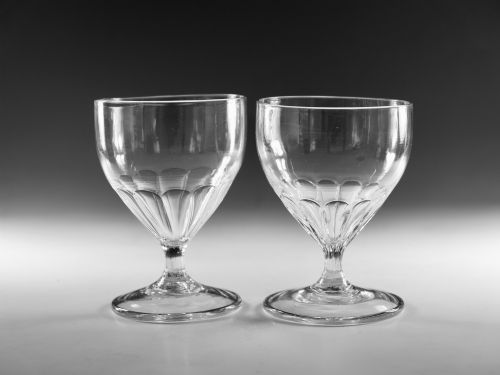
Forms span from simple tavern rummers with folded feet to elaborate faceted wine glasses and engraved baluster tazzas. The selection reflects domestic and social habits of the period, preserving vessels that served wine, beer, spirits, and sweet dishes.
Materials and manufacture
Maker workshops utilised lead glass and flint glass, formulations heavy in lead oxide that increased refractive index and gave the material its characteristic heft and brightness. This dense medium permitted deep wheel-cutting and sharp faceting without losing structural integrity.
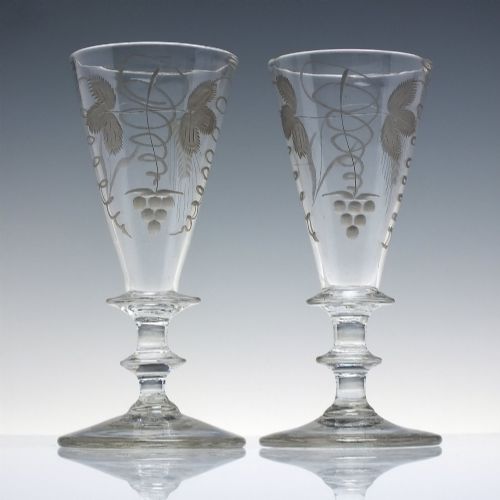
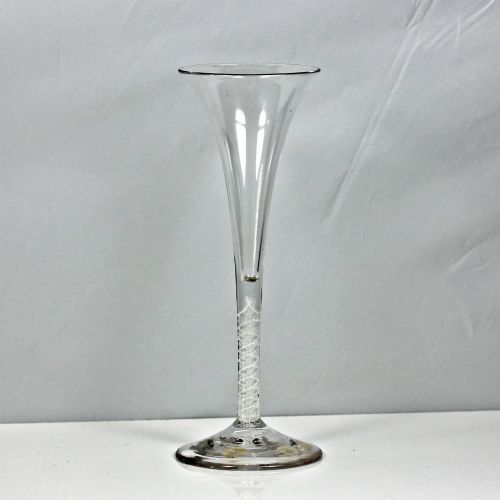
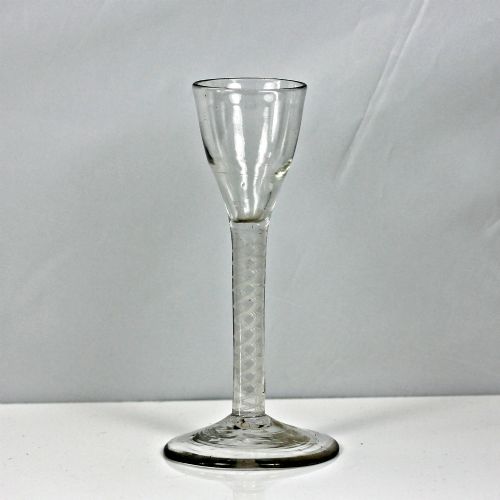
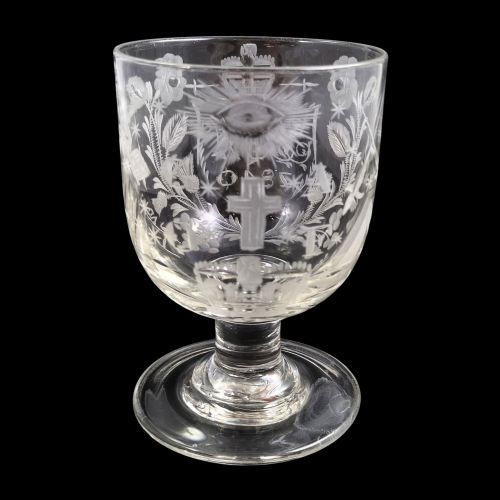
Blowing techniques shaped the foundational bowls and stems, often incorporating air twists or opaque white enamel threads drawn through the molten metal. Finishing touches involved applied handles, folded feet to strengthen rims, and surface engraving executed by hand on copper wheels.
A tiny feeding cup from eighteen-thirty reminds us that even historical drinking vessels had to tend to the unwell.
Markers of quality
Quality rests upon the purity of the metal and the precision of the handwork. Superior lead glass displays a deep, resonant ring when struck and an absence of heavy cloudiness or excessive internal impurities.
Artistry in cutting and engraving separates standard vessels from exceptional works. Crisp facets with sharp intersections, well-balanced proportions in stems, and fluent, detailed wheel-engraving distinguish the work of skilled glasshouses and independent decorators.
Atelier of James Giles
The Clear Georgian Glass Glossary
- Lead glass
- A heavy glass composition containing lead oxide that increases brilliance and weight. This material became the standard for English table glass from the late seventeenth century onwards.
- Air twist
- A decorative stem formation containing spiralling elongated air bubbles trapped within the glass. Makers created these by drawing and twisting molten metal before it cooled.
- Rummer
- A capacious, heavy-stemmed drinking glass used for ale, wine, or punch during the eighteenth and nineteenth centuries. They typically feature a round or bucket-shaped bowl set on a short stem and foot.
- Tazza
- An elevated shallow dish or shallow bowl raised on a central foot or stem. These pieces served sweetmeats, fruit, or small cakes at formal dessert courses.
- Folded foot
- A glass base where the outer rim is turned underneath to form a double layer of glass. This technique added structural strength to vulnerable edges.
Clear Georgian Glass: Frequently Asked Questions
What was clear georgian glass used for?
These vessels served various drinks at the table, from heavy ales and drams of whisky to fine wines poured from matching carafes and decanters. Specialised forms like jelly glasses and tazzas held rich sweet courses served at the end of a meal.
Their substantial weight and brilliant refraction also added visual splendour to candlelit dining rooms, reflecting the candlelight across the surfaces of the table.
How do I date an 18th century wine glass?
Dating relies on observing changes in stem construction, bowl shape, and foot profile across the decades. Earlier examples often feature heavy baluster stems or folded feet, while mid-century pieces frequently introduce air twist or opaque twist threads inside the stem.
Later Georgian and Regency drinking vessels tend toward faceted stems, cut bowls, and wider, plain feet. Comparing the weight of the metal and the profile of the pontil mark on the base provides further chronological clues.
Why do some glasses have air bubbles in the stem?
Controlled air bubbles were often deliberately introduced by glassmakers as a decorative feature within drawn stems. These internal cavities caught the light and added texture to otherwise plain glass.
While random bubbles can occur naturally as an impurity in older metal, skilled blowers manipulated air inclusions to enhance the visual appeal of air twist and plain stem drinking glasses.