


Clear Crystal Stemware
Clear crystal stemware brings together centuries of fine drinking vessels, from Georgian air twists to Art Deco suites.
Clear Crystal Stemware
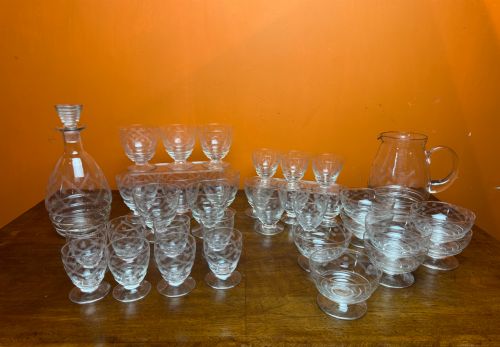
When you search for clear crystal stemware, you encounter drinking vessels spanning the eighteenth century through to the twentieth century. These objects comprise wine glasses, rummers, champagne coupes, ale glasses, and large suites of matching drinkware.
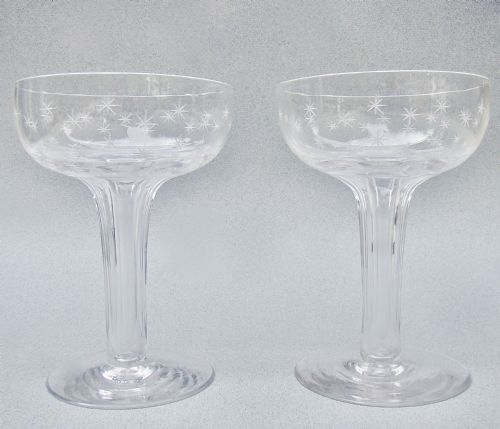
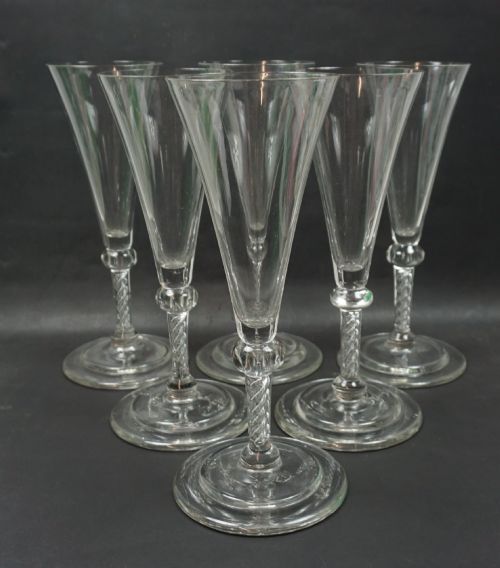
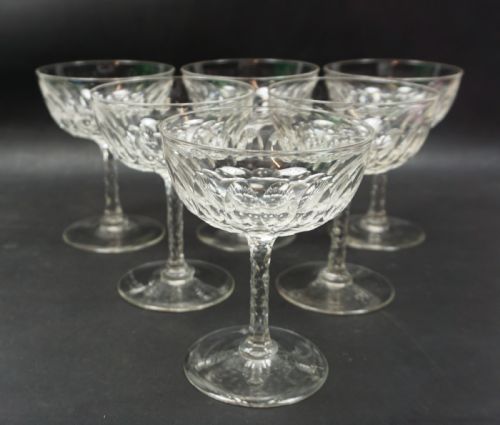
The selection ranges from early eighteenth-century baluster dram glasses and opaque twist wine glasses to Victorian star-etched champagne glasses and French Art Deco drinking glasses. Forms vary from simple conical bowls on plain stems to faceted champagne bowls and engraved goblets.
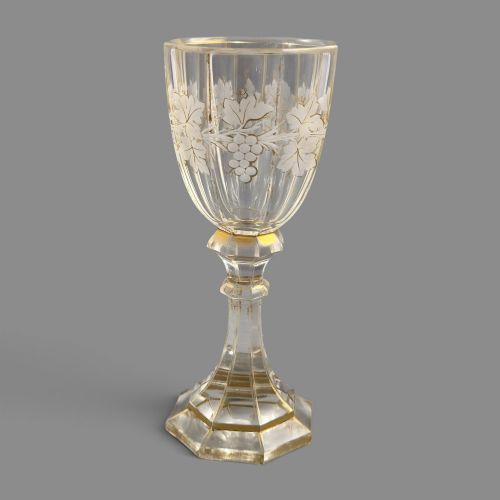
Origin points span English, Irish, Bohemian, and French workshops, showing diverse regional tastes in cutting, engraving, and enamel decoration.
How They Were Made
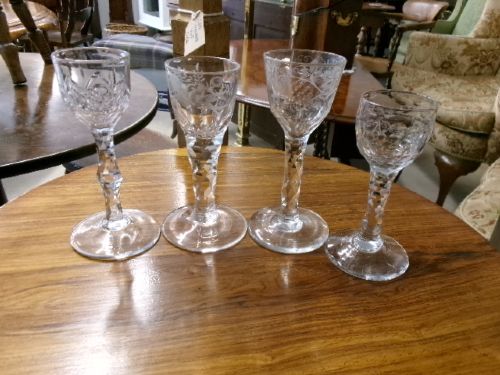
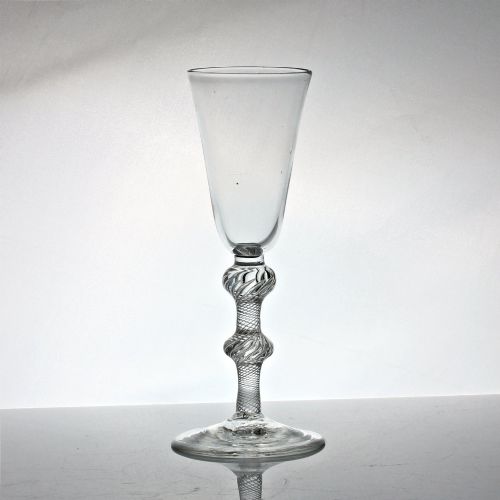
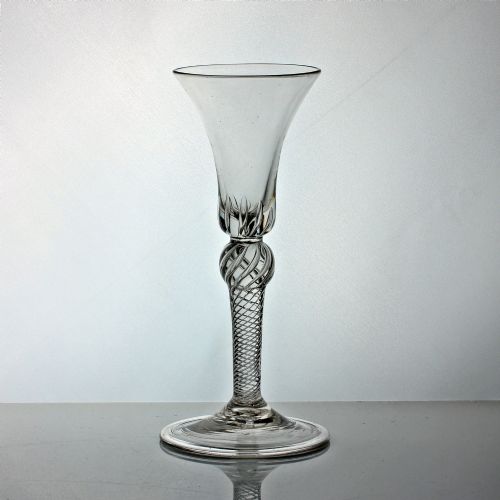
Maker operations utilised lead crystal, flint glass, and lead glass, yielding heavy, luminous vessels with exceptional clarity. Twist stems were formed by drawing air bubbles or opaque white enamel threads through the molten metal before shaping.
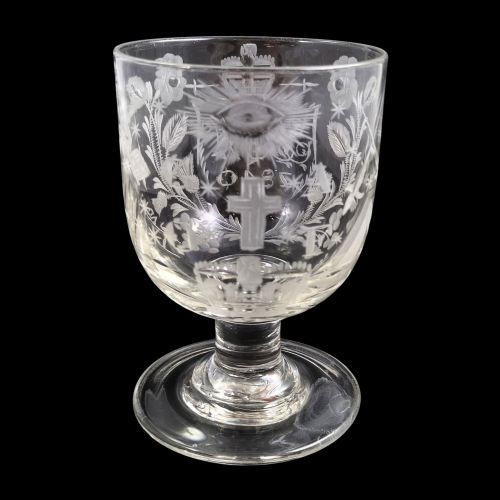
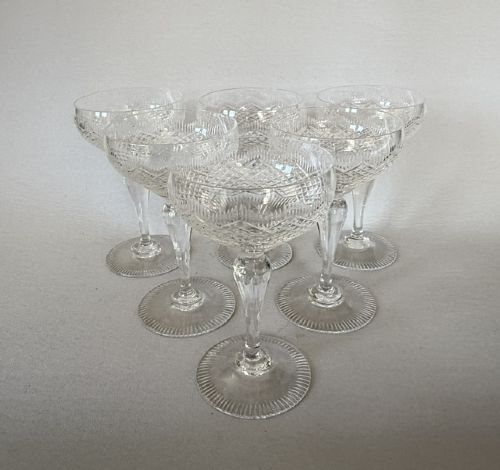
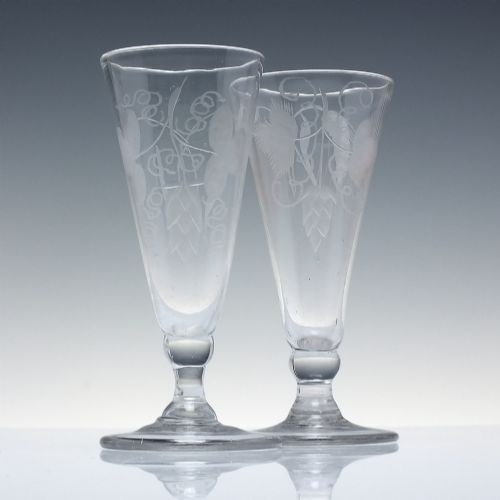
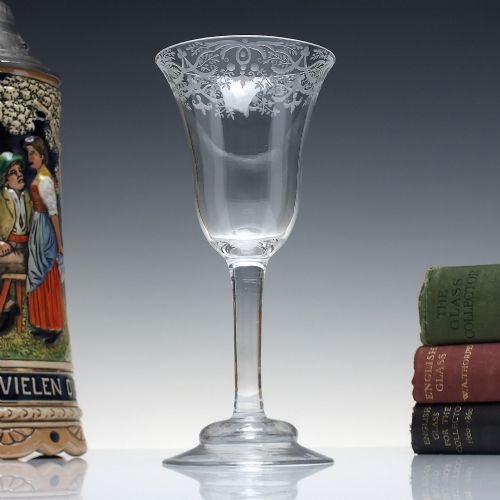
Decoration relied on wheel engraving, star-etching, facet cutting, and surface gilding, alongside mould-blown techniques such as rib moulding and petal moulding. Feet were frequently folded for extra strength at the rim during an era when glass was exceptionally precious.
Listings feature clear crystal stemware spanning the 18th Century, Georgian, Regency, Victorian, Edwardian, Art Nouveau, and Art Deco periods.
What Varies in Quality
The distinction between ordinary and exceptional clear crystal stemware rests upon the precision of the glassmaker's hand and the weight of the metal. Heavier lead crystal with sharp, clean facet cutting or deeply pulled air twists commands greater attention than lighter, softer glass forms.
Proportion and symmetry define the finest pieces, where bowls balance harmoniously against knopped stems and wide foot bases. Clarity of the material, absence of distracting bubbles in daily wares, and crispness of wheel-engraved motifs separate standard production from masterwork output.
Moser Bohemian·Theresienthal
The Clear Crystal Stemware Glossary
- Air twist
- A stem containing spiral threads of trapped air created by drawing bubbles through hot metal before pulling and twisting.
- Opaque twist
- A stem featuring internal threads of white enamel glass twisted into complex single or double series patterns.
- Rummer
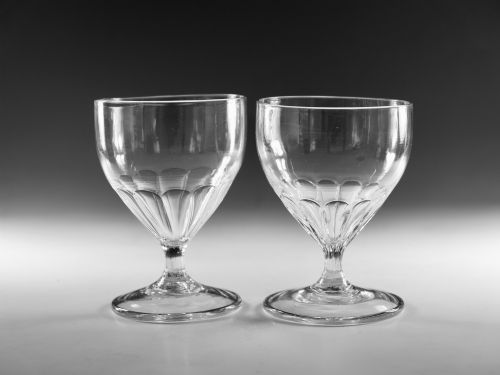
- A large, sturdy drinking glass originating in the Georgian era, frequently used for ale, wine, or punch.
- Baluster
- A thick, swelling stem form reminiscent of architectural columns, common in early eighteenth-century English drinking vessels.
- Coupe
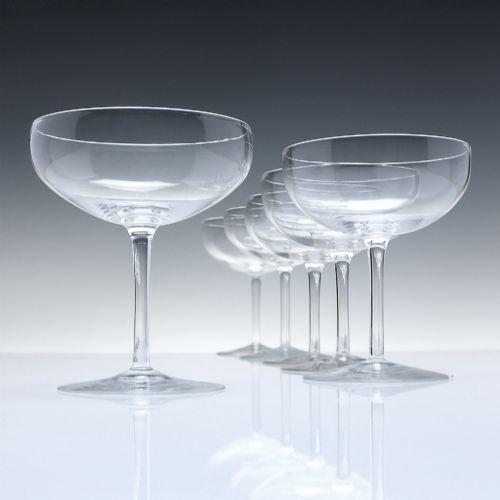
- A broad, shallow-bowled glass designed for champagne, appearing in Edwardian and later twentieth-century settings.
Clear Crystal Stemware: Frequently Asked Questions
How do I date an air twist wine glass?
Air twist glasses largely date from the mid-eighteenth century, particularly between 1740 and 1770. Examine the formation of the stem, the shape of the bowl, and whether the foot is folded.
Early examples often feature domed or folded feet paired with heavy balustroid elements, whereas later eighteenth-century pieces display slender multi-spiral stems beneath ogee or trumpet bowls.
What is a rummer glass used for?
Rummers served as substantial drinking vessels for ale, beer, or punch in Georgian and Regency households. Their generous capacity and sturdy build made them practical for everyday tavern or domestic use.
Many surviving examples feature facet cutting, bucket bowls, or engraved decoration reflecting regional British manufacture.
Can I use antique crystal stemware daily?
Many people enjoy using antique glass for special occasions, treating the pieces with careful hand-washing. Lead glass and flint glass are durable, but historical vessels require gentle handling to prevent thermal shock or rim damage.
Avoid dishwashers entirely, as harsh detergents and heat will cloud the historic crystal surface over time.
How do I distinguish lead glass from normal glass?
Lead glass typically possesses greater weight, a higher refractive index that scatters light brilliantly, and a resonant ring when gently tapped. Eighteenth-century flint glass and lead crystal show deep clarity compared to standard soda glass.
Examining the piece under natural light reveals the heavier density and luminous quality inherent to lead formulations.